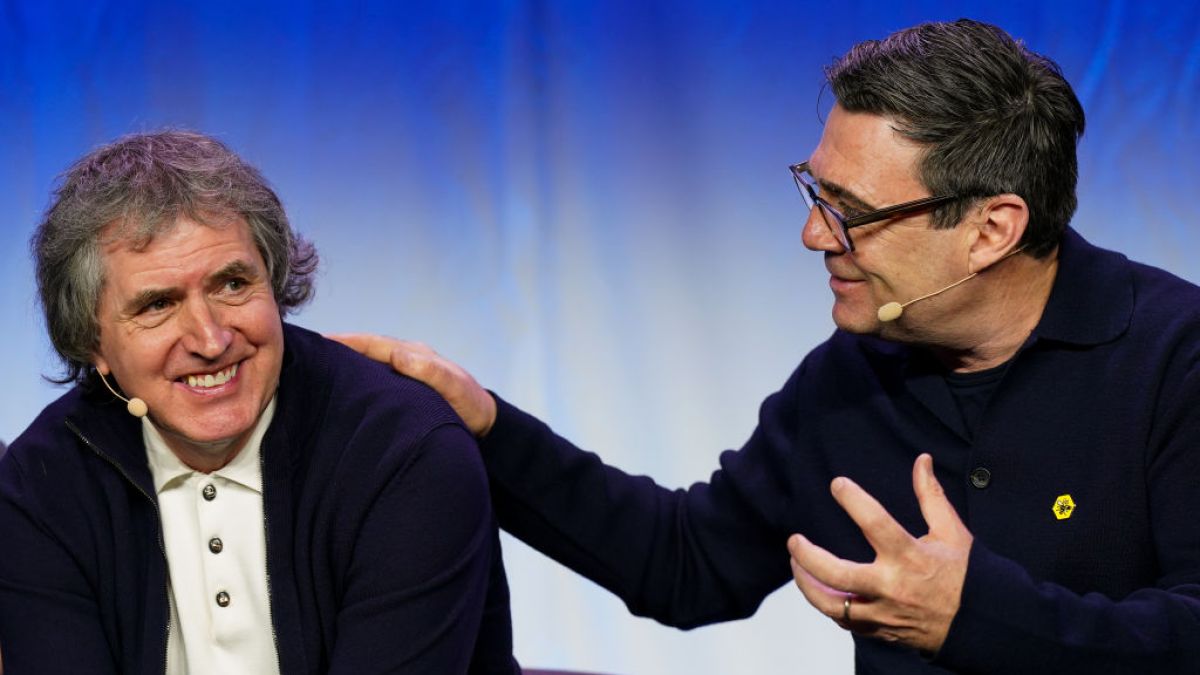
Andy Burnham should make the case for a wealth tax as a way to improve the country, not punish success, one of his closest political allies has said. In an interview with The i Paper, Steve Rotheram, the Liverpool City Region Mayor, has given the strongest hint yet that the incoming prime minister is considering introducing a wealth tax. It comes just days after Burnham refused to rule it out, suggesting his government may have to “ask for a little more” tax at some point. Shorts Rotheram, who co-authored the book Head North with Burnham, told this newspaper that voters must be told what a wealth tax would “achieve” for Britain, warning it could come across as simply being punitive towards people who had done well. The argument should not be “we’re going to tax you because you’ve got a few bob”, Rotheram said, and that it should instead clearly explain the need for investment in a particular “sector or area”. If that case was made, he said, “you can take people with you”. The comments offer a rare insight into how Labour figures close to Burnham are thinking about the politically difficult question of raising more money to deliver the changes he has promised. No matter the argument, taxes on the wealthy could still be politically toxic for the incoming prime minister as opponents are likely to argue that it would punish aspiration. But Rotheram suggested Labour could learn from the mistakes it made over the decision to cut the winter fuel allowance for all but the poorest pensioners and its plans to reduce the welfare bill. He argued that difficult decisions were more likely to win public support if they were tied to a clear outcome. Rotheram said measures affecting pensioners who are better off, for example, could be more acceptable if they were linked to a tangible benefit, such as a guarantee to create a million apprenticeships for young people across the country. But he sounded a note of caution over plans to replace council tax and stamp duty with a proportional property tax, asking whether the reform would create “more losers than winners”. He warned that the incoming government must consider the impact on people who may be “capital rich” but not necessarily have high incomes. “The fairness thing is going to be one of the overriding drivers and everything that Andy will do,” the Liverpool Mayor and former Labour MP added. It is a measure of Rotheram’s proximity to Burnham that, when asked who the next chancellor would be, he joked that he probably knew more than he was allowed to say. One of the few people with insight into the new Labour leader’s biggest decisions, he refused to give anything away, saying Burnham “would literally kill me” if he spilled the beans. Rotheram’s relationship with Burnham stretches back to 2008, when they first crossed paths as politicians. Their early conversations were complicated slightly by Rotheram’s then-role as lord mayor of Liverpool. Burnham assumed, wrongly, that he must be a Liberal Democrat because the party controlled the council at the time. “You do know I’m Labour as well, don’t you?” Rotheram eventually had to tell him. The relationship has since grown into a friendship that extends well beyond politics, built around shared interests including music, football and family life. Rotheram said they have still found time to catch up away from the Westminster spotlight, including meeting for drinks and watching football on two occasions in recent weeks. He is also due to be with Burnham in Downing Street on Monday as the new prime minister begins his first full week in office. In many ways, Rotheram and Burnham have made the same political journey: from Westminster politicians to regional mayors, trying to prove that power does not have to flow through London. Rotheram left Parliament in 2017 to become Liverpool City Region’s first Metro Mayor, while Burnham made the same leap that year in Greater Manchester. Both men have long argued for shifting power and resources away from Whitehall and towards the regions. Rotheram, who built a close working relationship with the current chancellor Rachel Reeves as she explored greater fiscal devolution, said the challenge so far had been one of pace rather than ambition. In his first weeks as Labour leader and prime minister, Burnham is expected to set out a series of interventions outlining his vision for the country. This is likely to include measures to address the cost of living crisis and further proposals on devolution, building on his speech last month, where he set out his ambition to “rewire” the British state. Andy Burnham and Steve Rotheram leaving the People’s History Museum in Manchester after the incoming prime minister delivered a speech. The relationship has grown into a friendship that extends well beyond politics (Photo: Toby Shepheard/AFP via Getty) Rotheram said that speech represented the “skeleton” of what Burnham wanted to do, with the detail to be developed through a broader strategic vision. The next stage, he said, would be showing “how things could be done differently”. “That’s what we did when we moved into the roles as metro mayors,” he added. Rotheram said the UK needed to move away from an economy overly reliant on London and instead create a model where regions are empowered to develop their own strengths. He argued that the North’s cities should not try to replicate the capital but should be allowed to “forge their own identities” around the assets and industries they already have. He said investment decisions had been historically skewed towards places like London and the South East, and that decisions must move towards a “place-based” approach, with regions given greater power to decide what is best for their communities. Rotheram backed a model of fiscal devolution in which regions would be rewarded for growing their economies, arguing they should be able to keep a share of the additional tax revenues they help generate. However, he said any system would need safeguards to protect places from economic shocks. He argued that growth could also be driven through practical interventions that improve people’s everyday lives, pointing to £2 bus fares as an example. Cheaper transport, he said, can ease pressure on household budgets while helping people access jobs, particularly outside London where public transport is often less accessible and the cost of commuting can make lower-paid work financially unviable. The key Burnham ally is also an advocate for giving regions a greater say over housebuilding, saying the priority should be removing barriers so councils and mayors can get spades in the ground more quickly. He argued that established mayoral combined authorities should be given greater control over delivery, including potentially absorbing functions currently carried out by bodies, such as Homes England, to reduce duplication and bureaucracy. He and Burnham also share a belief that public money should be used to deliver wider benefits for local communities – taking into account factors such as apprenticeships, jobs and supply chains – and not simply be awarded to the cheapest bidder. The thinking behind this approach is expected to be that skills, housing, investment and devolution cannot be tackled in isolation. Training more people is only part of the challenge; the bigger question is whether the education and skills system is aligned with what employers need, so that shortages in key sectors do not hold back growth.
How a wealth tax can work, by key Burnham ally
Full Article
Original Source
Read the full article at Inews →KhanList aggregates and links to publicly available news content. We do not host full articles from third-party sources. Always verify important information with original sources.