
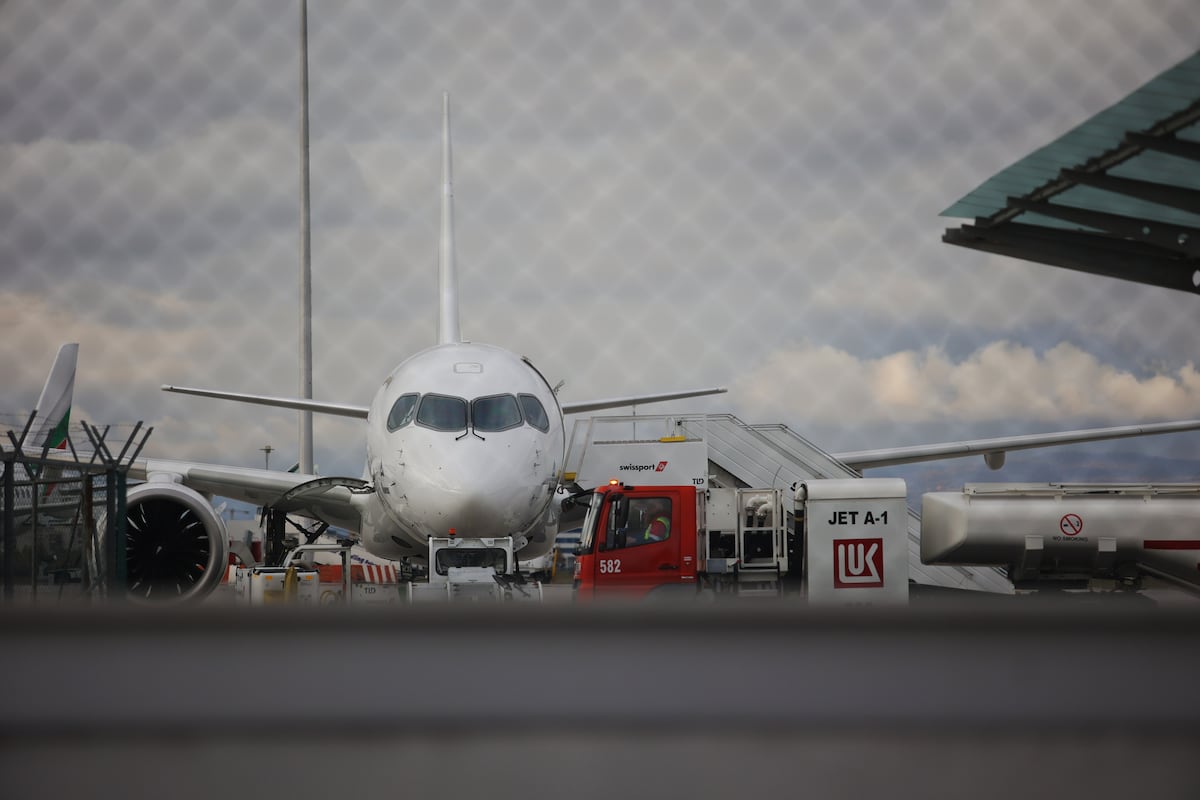
At least 35 flights bound for European cities have received false bomb threats since Monday, 27 of them on Thursday alone, according to a Reuters tally. The International Civil Aviation Organization (ICAO), the U.N.’s aviation agency, said by email that at least 16 countries have been affected, either as the origin, destination, or an unscheduled stop for those flights.No explosives have been found on any of the aircraft, but the warnings have been enough to force planes to divert and be evacuated. Four countries also scrambled fighter jets to escort affected flights. No government has identified those responsible, and no group or individual has claimed responsibility for the wave of threats, according to ICAO.In the known cases, everything started with an email. That is how the warnings reached the airports in Rome, Prague and Madrid, according to airport operators and Spain’s Civil Guard. The message warning of two flights bound for Rome included flight numbers, airlines and arrival times, according to the Italian press. In the case of the Aer Lingus flight from Dublin, the alert was passed from the Italian authorities to the office of French Prime Minister Sébastien Lecornu, which notified air traffic control, which in turn alerted the crew, according to public broadcaster France Inter and aircraft communications published by the BBC. “It is the easiest form of harassment in the world, because when you receive a threat, you have to react,” Commander Soren Sorensen of the Danish Defence Academy told Danish public broadcaster DR.No one can afford to ignore a warning. The threshold for taking one seriously is “quite low,” explained Rhys Jones of aviation risk consultancy Osprey Flight Solutions in a phone interview, because the consequences of an incident on an aircraft “can be enormous.” If the airline and security authorities consider the threat credible, pilots prepare to land within a maximum of 30 minutes, according to Francisco Cruz, a captain with the Spanish Airline Pilots Union (SEPLA). Once on the ground, bomb-disposal teams inspect the aircraft as quickly as possible.The European Union Aviation Safety Agency (EASA) said by email that the risk posed by each individual false threat is low, but that the increasing number of flights being diverted places “additional pressure on the system.” Diverting an aircraft “costs many millions,” according to Sorensen, while sending a false bomb-threat email costs nothing.It is not clear who is behind the threats, but the warnings have followed a pattern of arriving in batches. In Madrid, where three flights were affected, three emails were received in less than 20 minutes, according to the Civil Guard. Their close timing points to either an automated or coordinated campaign, although that alone is not enough to determine how many people may be involved, Eliran Almog of aviation cybersecurity firm Cyviation explained in an email exchange. And the incidents are escalating: the first alert appeared on Monday, followed by seven on Tuesday and at least 27 on Thursday. “We have not seen this kind of incident frequency in the aviation sector before,” said Jones.Only one of the known emails was signed: the message sent to Rome airport bore the name of a Russian ultranationalist and misogynistic movement. Jones cautions that an organization can claim responsibility for something it did not do and that the group using the name is not necessarily Russian. The experts consulted place the threats within the broader context of Russia’s hybrid warfare campaign, but they stop short of directly attributing them to Moscow. Javier Argomaniz, a terrorism specialist at the University of St Andrews, said by email that he is unaware of any intelligence service or official body publicly stating that a state actor is behind the threats.Identifying those responsible requires more than tracing the email address. Investigators must determine who created the account, who controlled it when the message was sent and whether intermediaries were involved, Almog explained. The process can take months. In September 2024, thousands of emails threatened bomb attacks on schools in the Czech Republic, Slovakia and Latvia. The alleged perpetrator was not arrested until July 2025 in Ukraine, following an investigation coordinated by European authorities.If identified, the perpetrator could face prison time. In Spain, Article 561 of the Criminal Code punishes anyone who fabricates a dangerous situation that mobilizes police or emergency services with a prison sentence ranging from three months and one day to one year. Alternatively, a judge may impose a fine based on the offender’s income, which can reach as much as €216,000 ($240,000). In France, making a false bomb threat carries a sentence of up to two years in prison, while in the United Kingdom the penalty can be as high as seven years.Sign up for our weekly newsletter to get more English-language news coverage from EL PAÍS USA Edition
How a wave of false bomb threats is disrupting air travel in Europe
Full Article
Original Source
Read the full article at English →KhanList aggregates and links to publicly available news content. We do not host full articles from third-party sources. Always verify important information with original sources.