
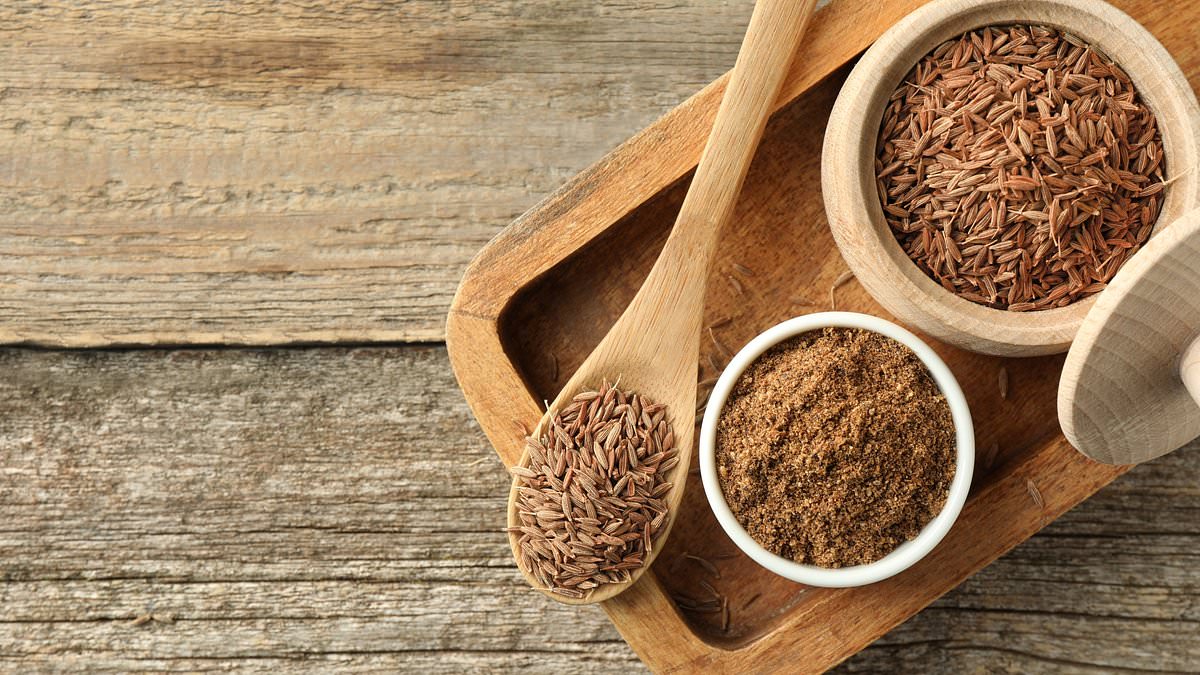
That jar of cumin in your spice rack may do more than add an extra kick to your tacos or curry.Could it also help with weight and cholesterol? Early clinical studies suggest it might, with about a teaspoon linked to measurable drops in pounds and LDL (bad) cholesterol. 'Cumin contains several naturally occurring compounds that may influence how the body processes fats and sugars,' Dr Colleen Tewksbury, a registered dietitian and assistant professor in Nutrition Science at Penn Medicine and Penn Nursing, told the Daily Mail. Experts caution not to expect a miracle in a spoonful, but they do note that it could be well worth adding some more cumin to your next dish. And while there seems to be a supplement for everything, take caution with cumin pills, leading doctors told the Daily Mail. Here is what the science shows – and how you can add more cumin to your diet. Cumin has been shown to potentially boost weight loss and lower cholesterol The teaspoon trick: what studies showThe buzz around cumin was kickstarted a few years ago with a landmark three-month randomized trial that followed overweight and obese women.In the study, 88 women were assigned to one of two groups: one was asked to add 3g cumin powder with yogurt at two meals a day for three months, while the other ate the yogurt without the added spice.The group that added the cumin powder ended up losing more weight and inches off their waistline. They also showed greater improvements in their cholesterol and triglycerides.'Three grams of ground cumin per day is roughly a teaspoon,' Tara Schmidt, lead dietitian from the Mayo Clinic Diet at Mayo Clinic, told the Daily Mail. But before rushing to buy cumin in bulk, Schmidt urges getting a reality check on whether a spice alone can overhaul metabolism.More recently, a small 2025 pilot study offered additional evidence. After 29 healthy adults consumed 2g of cumin powder daily for two months, LDL cholesterol decreased in both men and women, while blood glucose remained unchanged.However, the small sample and lack of a control group mean larger randomized trials are needed to add some more bulk to the claims. Can a pinch of cumin really turbocharge weight loss? Cumin contains several compounds linked to cholesterol and digestion, though experts caution it is not a magic fixCumin contains plant compounds that may influence cholesterol absorption and digestion.Thymoquinone, found in black cumin, has been shown to decrease inflammation and cellular stress, boosting metabolism. But experts cautioned that the spice is no magic fix. Because participants in the landmark yogurt trial followed a calorie-controlled diet, the results should be viewed in a broader context. Tewksbury told the Daily Mail that while the study 'found promising improvements in weight and cholesterol, we have much stronger evidence supporting established dietary changes.She notes these include 'increasing fiber, eating more fruits and vegetables, replacing saturated fats with unsaturated fats, improving overall dietary quality and calorie reduction leading to weight loss.'But the results do demonstrate notable health upticks. A systematic review published in Phytotherapy Research evaluated pooled clinical data and confirmed that while cumin supplementation produces modest improvements in cholesterol, it can't replace fundamental lifestyle habits. Pills vs. pantry: when health trends get riskyCulinary cumin is generally considered safe, but concentrated supplements warrant caution. 'There's a big difference between seasoning your dinner and treating a medical condition,' Tewksbury said. Cumin is thought to help lower blood sugar and slow blood clotting, so taking high doses without a doctor's indication could lead to serious health effects. Unlike prescription medications, these supplements are not strictly regulated by the Food and Drug Administration, so it can be difficult to know exactly how much you're getting. Experts urge checking with a healthcare professional before using high-dose products. How to make the most of cumin in your diet Cumin is versatile and pairs well in lentil soup, on chicken or on roasted cauliflowerIf you want to tap into cumin's potential without choking down dry spoonfuls, the secret lies in how you cook with it. Because several of cumin's active compounds are fat-soluble, pairing it with healthy fats, such as extra virgin olive oil, avocado or Greek yogurt, can naturally aid absorption. But don’t feel pressured to meet rigid standards to reap cumin’s benefits. 'Herbs and spices can make nutrient-dense foods flavorful without relying on large amounts of sodium, added sugar or saturated fat.' Schmidt said. The good news is that cumin is easy to work into everyday meals. Sprinkle it on roasted cauliflower, stir it into a hearty lentil soup or stews or use it to season chicken. The takeaway: smart spice, not a miracle cureCumin earns its place in the pantry: it's affordable, full of flavor and may offer a modest health boost. Just keep expectations realistic. A sprinkle cannot outwork an unbalanced diet or a sedentary routine, and anyone with diabetes or taking blood thinners should check with a doctor before trying concentrated extracts. 'The practical takeaway is not take 3g of cumin and expect your cholesterol or weight to fall,' Schmidt told the Daily Mail. Instead, use cumin to make nutritious meals more flavorful – and rely on regular exercise, quality sleep and a balanced diet for lasting results.
How a teaspoon of cumin could slash your weight and banish high cholesterol
Full Article
Original Source
Read the full article at Dailymail →KhanList aggregates and links to publicly available news content. We do not host full articles from third-party sources. Always verify important information with original sources.