
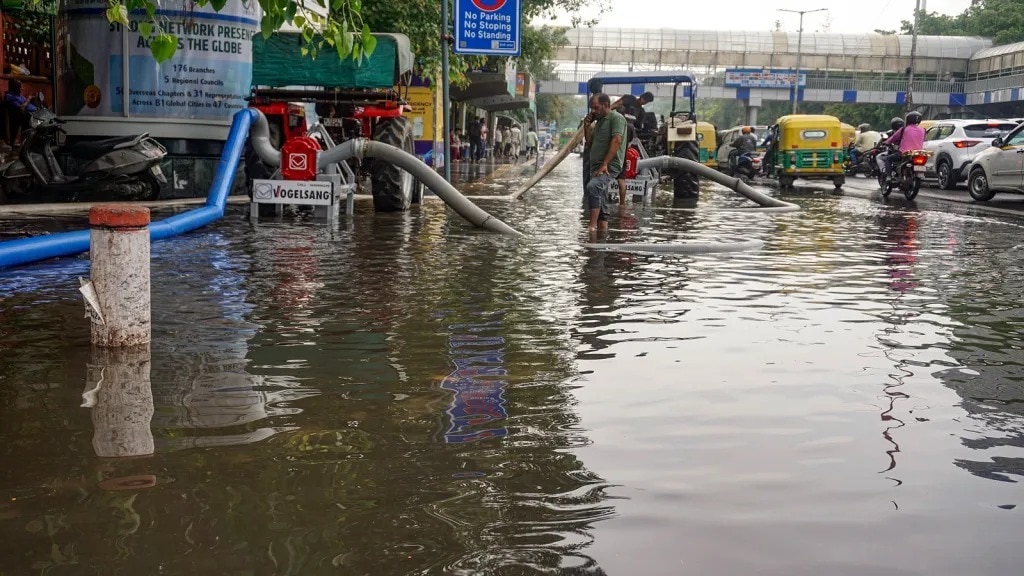
I will be frank. This is my own case.I am 81. My wife is three years younger. We live in a modest house in a city. Our children are away — two abroad and another in a different city. We therefore manage largely on our own.OUR PLIGHTFor more than three years, we have been living with a seemingly minor but persistent civic problem. Whenever it rains, water accumulates on the road immediately in front of our house. When it eventually recedes, it leaves behind mud and slush.At our age, this can virtually confine us to the house during periods of waterlogging. Morning walks become impossible. Even stepping outside has to be done with care. Our domestic help has to negotiate the accumulated water to enter the house. I recount this experience not merely as a personal grievance, but as a case study of how a public grievance-redressal system works — or fails to work.THE BEGINNINGThe problem began around September 2023. Initially, I approached the local sanitary staff. My verbal requests continued until September 2024. From October 2024, I began sending written representations through WhatsApp and email to the Municipal Commissioner, the Zonal Commissioner and engineering officials of the Municipal Corporation.On October 16, 2024, the Ward Sanitary Inspector assured me that the site would be inspected the following day along with the concerned Assistant Engineer.The promised joint inspection did not take place.My subsequent WhatsApp messages mostly received the following standard response:“Dear citizen we will inform to the concern department.”The response came promptly. What did not come was any indication that my grievance had been formally registered in a system where it could be identified and tracked.Only on February 11, 2025, did the wording change:“Dear citizen we will follow up.”Then, on February 28, in response to another representation, I received:“Dear citizen provide your complaint nature.”I complied, explaining the problem again and forwarding my earlier messages.Yet the problem remained.This, in retrospect, was the first weakness I encountered in the grievance-redressal process: for months my representations were acknowledged, but no complaint registration number was communicated to me.An acknowledgement tells a citizen that a message has been received. Registration gives the grievance an identifiable existence within the administrative system.TAKING THE MATTER DIRECTLY TO THE COMMISSIONEROn May 19, 2025, the Ward Sanitary Inspector visited the site and again assured me that he would return the following day along with the concerned Assistant Engineer.Instead, on May 20, the Sanitary Supervisor informed me over the telephone that the matter concerned another wing of the Corporation.That evening, I sent a detailed email addressed by name to the Municipal Commissioner. I recounted my unsuccessful efforts since October 2024 and said that the course of events led me to wonder whether my earlier representations had ever received the Commissioner’s personal attention.I expressed the hope that at least this email would reach him and enclosed two photographs showing the waterlogging.The response on the ground was immediate.VISIT BY THE ZONAL COMMISSIONERThe very next morning, May 21, the Zonal Commissioner personally inspected the situation, spoke over the telephone to the concerned engineering official and assured me that the problem would be resolved within three months.I appreciated the intervention and hoped that the matter would now receive the necessary follow-up.It rained again on June 5. That evening, I sent another email and WhatsApp message seeking intervention.This time the response was:“Dear citizen we will follow up.As the rains continued, I sent another WhatsApp message on June 12, enclosing a photograph of the accumulated rainwater.Promptly came the familiar response:“Dear citizen we will inform to the concern department.”The three months promised after the Zonal Commissioner’s visit passed without a permanent solution.I continued my representations.A complaint number — and fresh hopeOn September 8, 2025, I again sent a WhatsApp message seeking redressal.In response, I was glad to receive the following response:“Dear citizen Your complaint has been registered and your complaint number is 1008092500084.”Nearly eleven months had passed since I began sending written representations.For the first time, I had been informed that the grievance had formally entered a registration system.I hoped that this would make a difference.The hope did not last long.A HOSPITAL APPOINTMENT BRINGS THE PROBLEM HOMEOn October 6, 2025, my wife and I had a hospital appointment at 11:20 a.m.Rainwater had once again accumulated outside our house.At 7:31 that morning, I sent another message explaining our predicament and saying that we had to leave for the hospital.At 9:06 a.m., the familiar response came:“Dear citizen, we will inform the concerned department.”At 10:03 a.m., I wrote again, appealing for personal intervention and explaining the difficulties faced by two elderly persons living largely by themselves.Fortunately, the water receded sufficiently for us to leave with assistance and reach the hospital.The episode brought home a simple fact: what may appear in administrative records as a small drainage problem can determine whether elderly citizens are able to leave their home even for medical consultation.HARD TO BELIEVE: THE COMPLAINT HAD BEEN CLOSEDLater that month, an officer from the Town Planning Department came to the area on a scooter and stopped in front of our house.On seeing the condition, the officer expressed surprise that the complaint had already been treated as resolved and spoke to someone over the telephone.That was how I came to know that, in the official system, the grievance had apparently ceased to be pending even though the condition that gave rise to it remained.On October 22, I wrote to the Municipal Commissioner:“If your good self was informed that my grievance was resolved, it was not based on facts. The water logging problem in front of our house continues, as your good self may kindly see from the photos enclosed.”On October 28, the accumulated rainwater was cleared. I acknowledged the action with gratitude, but requested measures to remove the underlying cause.The distinction was important.Removing stagnant water after rainfall is not the same as correcting the deficiency that causes it to accumulate whenever it rains.So I continued my representations.THE ENGINEERING PROCESS BEGINSOn March 6, 2026, the Deputy Executive Engineer visited the site and assured me that the problem would be addressed as early as possible.Nearly two months later, on May 3, following another representation, I received the first clear indication of what was happening administratively:“We have sent the file for sanction, it is still under budget sanction. Once it gets administrative sanction we will go for tenders and start the work."For the first time, I knew that a proposal had moved into the sanction process and that tendering was contemplated after approval.Yet the sanction did not come quickly.On May 20, the Deputy Executive Engineer confirmed that budget sanction was still awaited.That day, in another representation to the Municipal Commissioner, I referred to newspaper reports about directions from the Chief Minister for expeditious disposal of public grievances and wrote that, despite repeated representations, my grievance remained unresolved.I again wondered whether my WhatsApp messages and emails were reaching the Commissioner personally.Following further representations, a fresh complaint was also registered.ANOTHER SENIOR OFFICER VISITSOn May 27, the Executive Engineer personally inspected the location and assured me that the problem would be addressed.Meanwhile, the monsoon was approaching.On June 15, after seeing a municipal announcement publicising a telephone number for grievance redressal, I tried calling it. Nobody answered. I brought this too to the Commissioner’s notice.A few days later, after reading reports about the Municipal Commissioner’s field inspections concerning sanitation and drainage works, I requested that similar attention be given to our problem.On June 23, the Deputy Executive Engineer replied that the matter had been sent for approval.Then, on June 25, came the message that seemed finally to bring the process close to action on the ground:“File sanction ayindi, tender ki pedthunnam eeroju.”The file had been sanctioned and, I was told, was being put to tender that very day. I thanked the officials.By then, inspections had taken place, a proposal had been prepared, sanction had been obtained and the matter had reached the tender stage.What remained was execution.As the rains returned, so did the waterlogging.A helping hand — and a specific directionA friend, who is also a journalist, offered to help. With my authorisation, he personally presented my grievance on a Public Grievance Day on August 31, 2026.The noting on the representation is significant.My age had been underlined.More importantly, the officer who received the representation made a specific noting to the Chief Engineer:“Please examine and get the work done at the earliest.”The instructions were clear. It was not merely an acknowledgement or a direction to “look into” the matter. It specifically asked that the work be got done at the earliest.The grievance was also registered in the Public Grievance Redressal System (PGRS) as VSP202608311937.Since my friend had formally submitted it on my behalf, the official communication was addressed to him.The remark — and the “resolution”The PGRS communication recorded the officer’s remark as:“The complaint has been related to Drain reconstruction for water stagnation issue.”It correctly identified the subject of the grievance.But it did not say that the drain had been reconstructed, that the proposed work had been completed, or that the waterlogging had ceased.Yet, on September 7, my friend received a communication that the grievance was resolved.My friend forwarded the same to me.The record indicated resolution; the problem on the ground remained.On September 9, I protested:“Respected Sir!This is adding insult to injury.My 2-year-old grievance is still not resolved.”There was no response.This was not the first time during the course of the same civic problem that a complaint had ceased to be pending while the underlying problem continued.A SYSTEM THAT MOVES — BUT ONLY WITH REPEATED PRODDINGMuch of the movement in the administration followed repeated representations, reminders, emails, WhatsApp messages and personal follow-up.The record does show movement. Officials visited. Assurances were given. A proposal was processed. Sanction was obtained. The matter reached the tender stage. A later representation even carried a specific instruction to the Chief Engineer to get the work done at the earliest.But there remains a troubling question:Why should a citizen have to make repeated representations over many months before a grievance is formally registered and given a trackable number?FROM ACKNOWLEDGEMENT TO RESOLUTIONA grievance-redressal mechanism has to do more than acknowledge a message.There should be a clear chain:receipt registration assignment action verification closure.If the first step produces only a stock acknowledgement without trackable registration, the citizen cannot know whether the grievance has truly entered the system.If the final step records “resolved” without verifying the position on the ground, the system may have completed its procedure without completing its purpose.Before a complaint is closed as resolved, the actual position should therefore be verified.Wherever practicable, confirmation from the complainant would provide an additional safeguard against premature closure.THE SMALL CAN BE SUBSTANTIAL FOR THE AFFECTED CITIZENAdministrative procedures — estimates, sanctions, budgets and tenders — are necessary. But they are means to an outcome, not substitutes for it.My problem is localised, visible and readily verifiable. It involves no major policy decision and no complex dispute. Yet its resolution has remained elusive.My purpose in recounting this experience is to highlight weaknesses in a grievance-redressal process that deserve attention.For an administration, a grievance may end when the file is closed.For the citizen, it ends only when the problem is solved.POSTSCRIPTAs I was preparing this account for publication, heavy rain once again caused water to accumulate in front of our house.The accompanying photographs show the position on October 16, 2024 and October 27, 2026 — two years apart.The file may have travelled a long way.The water had not.- Ends
How a system works — or does not
Full Article
Original Source
Read the full article at Indiatoday →KhanList aggregates and links to publicly available news content. We do not host full articles from third-party sources. Always verify important information with original sources.