
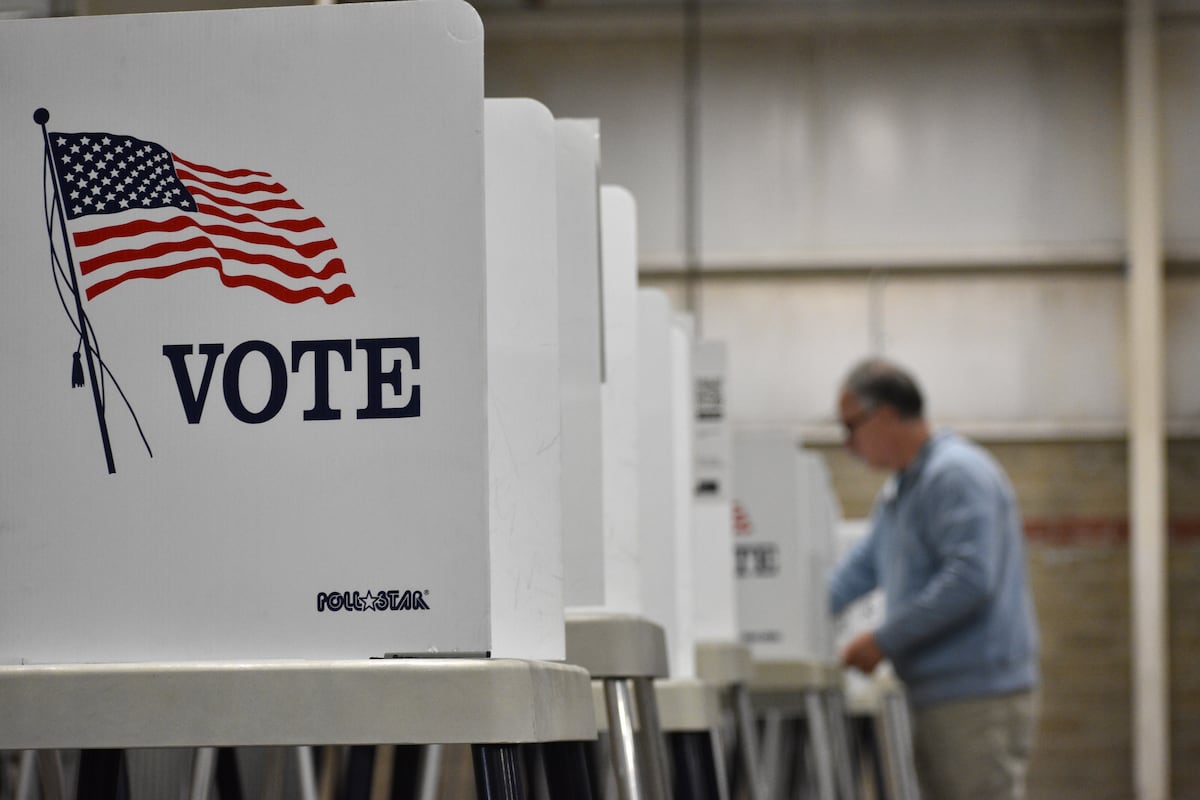
Americans are headed to the polls next Tuesday in thousands of contests to decide whether to re-elect or confirm members of Congress and governors, and also mayors, school board members, and judges. There are also hundreds of referendums on the ballot, although perhaps none of those votes has as much long-term potential to change the rules of U.S. democracy as Initiative 194 (I-194) in Montana.Voters in the western state will find this question on the ballot: “Should corporations and shell entities be prohibited from spending money on political campaigns or contributing to candidates’ campaigns in Montana?” If a majority answers yes, it would change the state’s campaign finance law, and dozens of other states could follow a path first taken this spring by Hawaii. If not, things will remain as they are.In 2010, the Supreme Court issued the Citizens United ruling that, by a 5-4 vote, removed limits on spending by corporations, unions, and other organizations to support candidates, granting those entities the same free-speech rights afforded to citizens under the First Amendment. They channel funds shielded by anonymity through murky entities so it’s impossible to know on whose behalf they are speaking.The decision set a historic precedent and spawned the corrupt cycle known in the United States as “dark money.” It works like this: a corporation or a foreign government that wants to influence politics but prefers not to reveal its intentions donates money to an opaque entity, which uses it to run ads in favor of a candidate who will defend the donor’s interests. When the candidate funded with that dark money wins, they are expected to repay the favor by supporting policies that benefit those who financed their campaign.In the 16 years since the ruling, many groups, politicians, investigative journalists and activists have devoted efforts to trying to end its effects. But Tom Moore, a researcher at the Washington analysis lab Center for American Progress who previously worked at the Federal Election Commission (FEC), came up with his own solution. He set it out in September 2025 in a paper titled The Corporate Power Reset That Makes Citizens’ United’ Irrelevant.It begins: “Ever since the Supreme Court shattered campaign finance law with its decision in Citizens United v. Federal Election Commission in 2010, Americans have been told there are only two ways to stop corporate and ‘dark’ money in politics: Amend the U.S. Constitution or wait for the court to undo what it has done. That is flat wrong.”Amending the Constitution is virtually impossible. And the Supreme Court’s composition, with its conservative supermajority and lifetime appointments for its nine justices, does not augur a quick change of heart. So “to cleanse democracy of that corrosive money,” Moore proposed that states, one by one, take action in two different ways: by calling a referendum or passing a law in the legislature, as Hawaii did with a statute approved in April that will take effect in June 2027. If Montana votes yes, the change would take effect there five months earlier, in January 2027.After publishing it, Moore circulated his paper among friends and election-law experts. “That same night, Jeff called me and said: ‘Tom, let’s do it in Montana,’” Moore recalled last week in an interview with EL PAÍS.Jeff is Jeff Mangan, founder of a group called Initiative for Electoral Transparency and a friend of Moore’s from their FEC days. The day after that phone call, Mangan got to work. He launched “a kind of tour” to gauge support among citizens of a state the size of Germany with a population (1.14 million) similar to that of Cyprus. “We all know each other in Montana,” Mangan warns in a videoconference. “It’s kind of funny.”They needed 31,000 signatures to force a referendum under state law. They collected 50,000 between March and June of this year. And between the two options they had — seeking a constitutional amendment or changing the statutes of the campaign finance law — they chose the latter. They called the effort The Montana Plan.The initiative has backing from representatives of both parties (perhaps because both benefit equally from those opaque funding sources), although the Republican Party has come out against it, arguing that “I-194 would clearly and flagrantly strip Montana small family businesses, organizations, and associations of their constitutional free-speech rights.” Groups such as the Chamber of Commerce, the Montana Mining Association, and other industry groups have also stepped forward to oppose it.Out of controlMangan says opacity in elections has been out of control for years; the Brennan Center estimates $2 billion in dirty money tainted the 2024 presidential campaign. He also notes that both the only poll conducted (which last year found 75% support) and history are on their side: “We were one of the first states to ban corporate spending with the Corrupt Practices Act of 1912, which remained in force until Citizens United,” he recalls.Following the ruling, Montana fought to have that law take precedence over the high court’s decision: they took their case all the way to the Supreme Court, where five justices ruled against them. If Initiative 194 passes next Tuesday, it is very likely that it will end up before the high court once again.Montana was also the subject of PBS’s influential public television documentary Dark Money (2018), which Mangan screens wherever he can to persuade voters. Two years earlier, the publication of the outstanding book Dark Money (Debate), by New Yorker journalist Jane Mayer, had helped open the eyes of many Americans to a practice that, from a European perspective, can only be described as legalized corruption.The influence of money in U.S. politics reached new heights with Elon Musk, the world’s richest person, entering the campaign that returned Donald Trump to the White House, contributing more than $290 million. That operation — against which I-194 can do nothing, because Musk acted openly — has put the shadows of campaign finance at the center of the conversation: some polls indicate corruption has overtaken cost of living as voters’ top concern.That is why Moore believes this is the decisive moment to roll back Citizens United, state by state. He estimates about 30 states will bring initiatives similar to Montana’s and Hawaii’s to their legislatures next year, while Mangan says he’s in contact with activists and politicians across the country to help them advance their plans. From the Capitol in Washington, they have support from representatives such as Democrat Ro Khanna, who recently told this newspaper he will push for major reform in Washington “when there are 25 or 30 states with their own laws.”If that happened, beyond changing the rules of the game in U.S. democracy, it would mark another milestone: not every day does a think tank paper like Moore’s written a couple of years ago have effects beyond Washington’s theoretical policy bubble.Sign up for our weekly newsletter to get more English-language news coverage from EL PAÍS USA Edition
How a referendum in Montana could change the rules of American democracy
Full Article
Original Source
Read the full article at English →KhanList aggregates and links to publicly available news content. We do not host full articles from third-party sources. Always verify important information with original sources.