
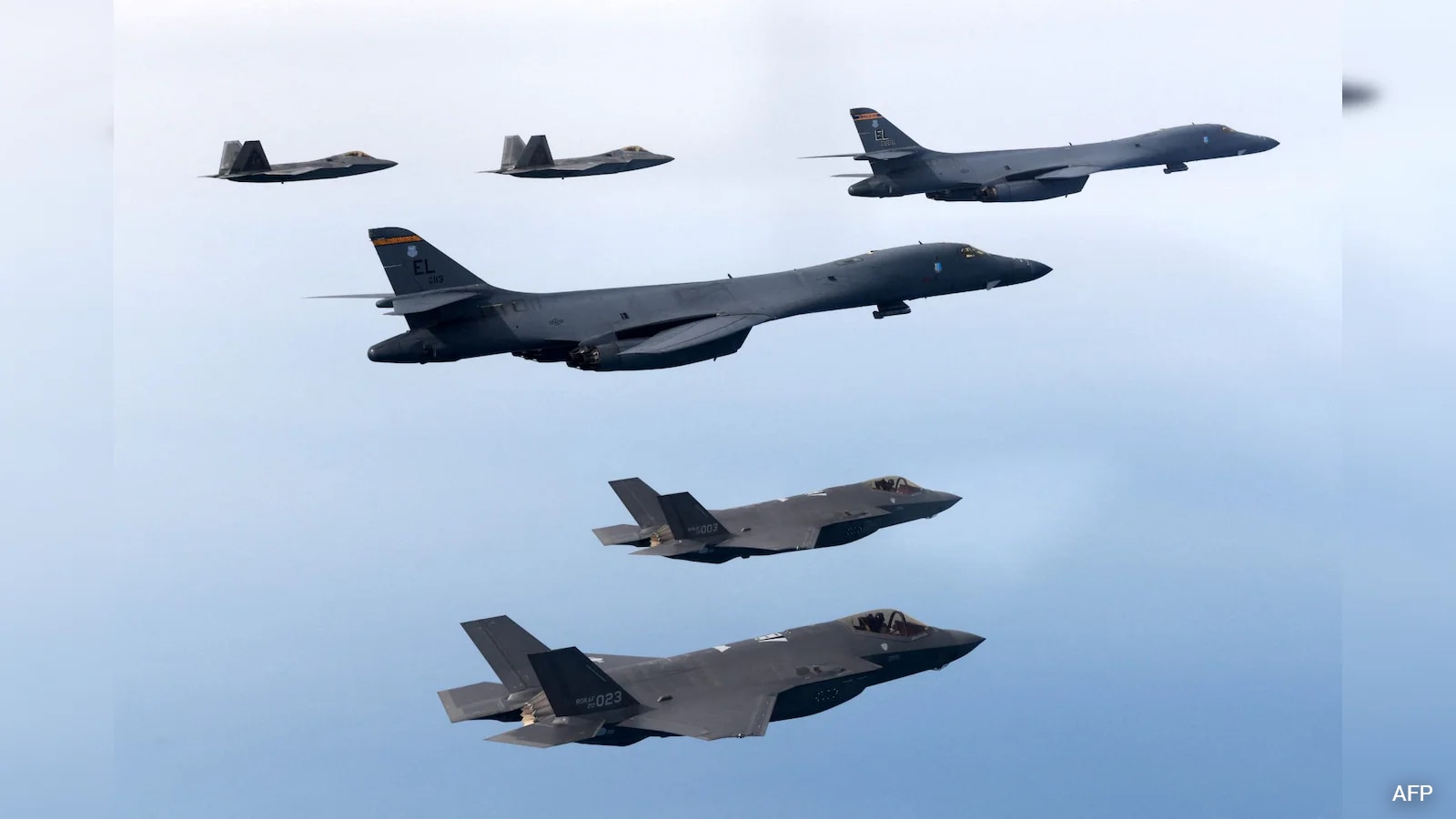
Washington: A single unread email may have set off a national security scare in the United States. It all started when a United Parcel Service (UPS) employee missed a warning to keep the shipment, which contained an F-35 cockpit canopy and weapons-bay door coated in radar-absorbing material, away from Hong Kong.The simple mistake set off a chain of reactions that led to China managing to get hold of some tech of America's most advanced fifth-generation multirole stealth fighter jets, according to a Bloomberg report.The warning email came from freight forwarder firm DSV A/S, which said the parts of the F-35 jet must not transit through certain countries to comply with the US International Traffic in Arms Regulations (ITAR). The rules aim to prevent sensitive US weapons technology from reaching American adversaries.Citing sources, Bloomberg reported that the shipment of warplane parts was originally meant to travel to San Francisco via South Korea and Taiwan -- both US defence partners. However, there was a delay in the shipment leaving Australia, and it was mistakenly routed via Hong Kong in an effort to speed up delivery. DSV, working on behalf of F-35 developer Lockheed Martin Corp, reportedly sent an email to UPS reminding them about the ITAR designation. However, it was missed by the shipping services provider, as the DSV email may have been sent through a different IT system than the one used by the UPS agent, a source said. The new information has shed further light on an incident that has drawn international attention due to the potential for a series of mistakes to have unintentionally granted China access to some of the US's most sensitive military technology. Why Was The Routing Mistake A Security Risk?Lockheed Martin's F-35 Lightning II is among the world's most advanced fighter jets and is part of the most expensive weapons programme in US history, and Beijing has, for years, targeted the aircraft in espionage efforts.The two parts of the plane that reached Hong Kong were reportedly coated with radar-absorbing material that enhances the aircraft's stealth capabilities-- a factor central to its design that allows aircraft to operate while reducing the likelihood of detection by enemy radar systems.The parts were being sent to the US for possible repair or disposal in late May, according to people familiar with the incident."It's not good the Chinese now have" an F-35 canopy, Diana Maurer, who oversees F-35 support reviews at the non-partisan Government Accountability Office, told Bloomberg. She said the mistake was a "big deal.""I'm sure the Chinese celebrated, and then they got busy trying to reverse engineer it and figure out how to counter it with their own technical capabilities. I'm sure that's what they were up to once they got those things," she added.The ProbeThe incident has prompted the Pentagon and the State Department to investigate the lapses and alarmed US lawmakers, who have demanded a review of the global supply chain for US armaments to ensure a similar error doesn't happen again.Lockheed Martin, which manages much of the global spare parts pool that sustains the aircraft's use by the US and 19 other nations, said in a statement last month that "our logistics decisions are not made unilaterally." The company said it selects carriers that best align with government regulations."While we cannot discuss the details of which logistics partner was involved, we are working closely with them to help develop and implement preventive measures to strengthen our collective oversight and prevent recurrence," Lockheed said.Presented with the new details about the diversion, Lockheed said in a statement to Bloomberg that "we have nothing to add or correct regarding the series of events you mentioned."
How A Missed Email By A UPS Worker May Have Landed US' F-35 Jet Tech At China's Door
Full Article
Original Source
Read the full article at Ndtv →KhanList aggregates and links to publicly available news content. We do not host full articles from third-party sources. Always verify important information with original sources.