
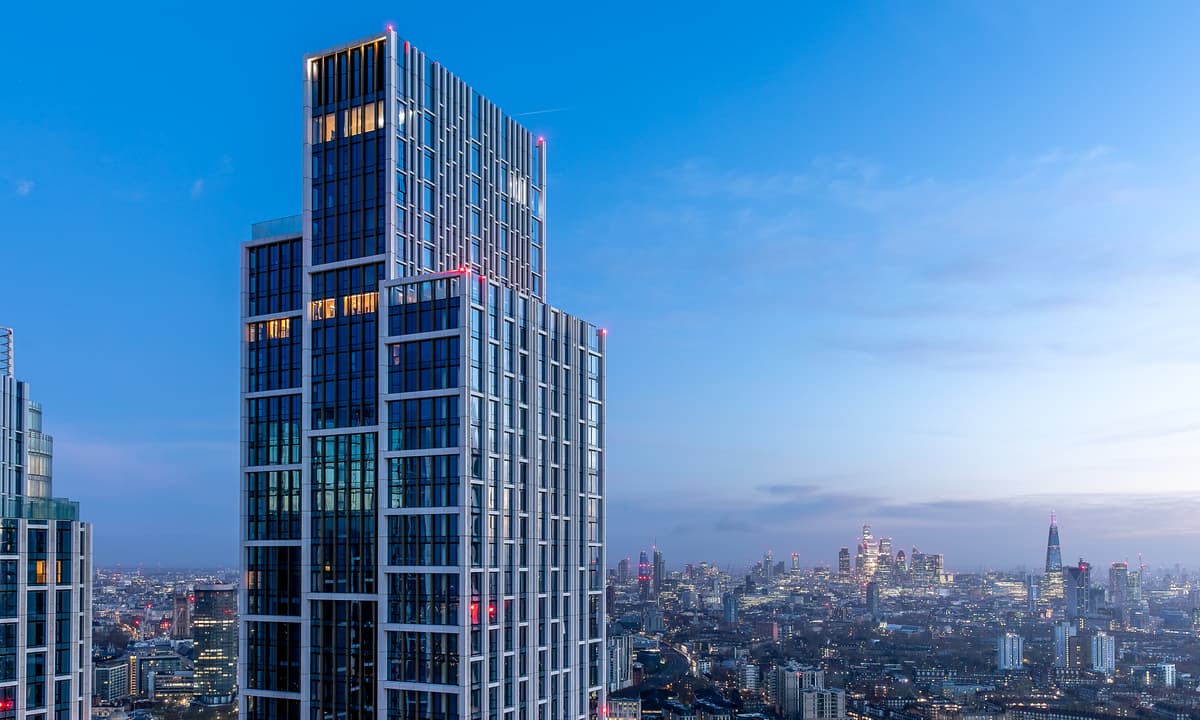
It’s easy to forget how things were. Not so long ago, Vauxhall, Nine Elms, Battersea were nowhere. South of the river, just, close to Chelsea , Westminster and the West End, but lost. Near, yet cut-off. A former mixed-use sprawl of warehouses, wharves and workshops, the area was rundown and belonged to a bygone era, when the Thames was bustling with barges. Road and Tube links were poor. It was a place to pass through, not linger.Now look. Vauxhall has sprouted giant towers, housing thousands of apartments. The once desolate Battersea Power Station is a buzzy retail, dining and drinking destination — soon to gain a slew of new residences.Electric Boulevard is a pedestrianised high street and mixed-use development at Battersea Power Station in LondonCharlie Round-TurnerNot all of it is to everyone’s taste. Those Vauxhall behemoths have attracted controversy for being “dark” buildings, their interiors apparently devoid of occupants. For some, they symbolise much that is wrong about current London, with homes snapped up by mostly overseas buyers buying off plan, sight unseen, wanting them for investment and somewhere to park their cash.It’s somehow apposite that this year’s hot book, London Falling, which covers the capital’s seamy, modern underside, is set bang next to Vauxhall Bridge, albeit on the northern side. That’s the image. The reality, as new research suggests, is different. To mark the 25th anniversary of the area first being earmarked for regeneration, property adviser JLL has been running the figures.Fireworks light up the sky near the Battersea Power Station, one of London’s most revered landmarksPhoto by Justin Tallis / AFP via Getty ImagesIt is also five years since the Northern line extension to Battersea and Nine Elms opened. The residential market there and in Vauxhall has outperformed “prime central” (as they say in real estate-speak) elsewhere in London, according to the JLL analysis. The £1.1 billion, two-mile extension added two stations, at Nine Elms and Battersea Power Station, and cut journey times to the City and West End by 17 minutes, a reduction of almost 50 per cent. Since then, more than 17 million people have used the Nine Elms Underground station, with more than 55 million travelling the route.Average prices in the postcode sectors around the Tube spur rose 37 per cent in the three years after it opened, far ahead of the six per cent growth across the rest of Wandsworth in the same period. New builds have performed strongest, with values rising 87 per cent over the past decade, versus the 10 per cent experienced across prime central London.The JLL findings should also lay to rest the canard that most of the incomers are foreign. They found that in Nine Elms, 42 per cent of residents — much less than half — held non-UK passports.In Battersea, that proportion is 29 per cent. At the beginning, when the skyscrapers started looming on the skyline, undoubtedly many more purchasers hailed from overseas, often buying at developers’ Far East roadshows. Battersea has become one of London’s most desirable places to liveBut, says Marcus Dixon, head of UK residential research at JLL: “Last year, 61 per cent of those in Nine Elms who bought through us were British.” The next highest category was of Hong Kong-Chinese origin. They accounted for 20 per cent. Then came buyers from Malaysia and Turkey — echoing patterns noted in other areas of London.River Park Tower at Nine Elms.The more recent purchasers are not choosing from plans and artists’ impressions. They want to tour the apartment, turn on the taps, open the cupboards, see the view and wander round the block. Crucially, says Dixon, “they are buying for their own use”.Read MoreYes, but in Vauxhall and Nine Elms, there is still a sense of the lights being off. Without actually going round and knocking on doors it is a hard one to assess. But, Dixon says: “We do think they are more occupied than is widely supposed.”Certainly, when they ask purchasers why they are choosing there in particular, the overwhelming response is that they want the connectivity. Dixon says: “This suggests they are buying not because they wish to stay in but because they’re going out — to work in the centre, to go to bars, restaurants and on nights out. They are doing something more exciting that sitting at home with the lights on.”The US Embassy moved to Nine Elms in 2018 AFP/GettyJLL found that 94 per cent of buyers consider living close to public transport important or very important when choosing their next home. It was the highest-rated location factor tested, ahead of access to green space at 91 per cent and proximity to shops and leisure facilities at 82 per cent. Among tenants, 88 per cent said they would be prepared to pay more to live close to public transport, ahead of private outside space and on-site leisure facilities. The district’s transport investment has been accompanied by heavy spending on retail and leisure facilities and community spaces. Nick Dent, London Underground’s director of customer operations, said: “The extension of the Northern line to Battersea Power Station has been a huge success, reducing journey times, increasing connectivity and supporting the ongoing delivery of thousands of new jobs and homes in the area. This is a tremendous example of how the public and private sector can work together to unlock the significant economic and housing benefits that major transport projects can deliver.”River Park Tower at One Nine Elms.Of the new residents, 72 per cent are aged under 45, compared with 64 per cent across Greater London. Almost half in Vauxhall, Nine Elms and Battersea are in managerial or professional occupations. More than a quarter of renters in the neighbourhood earn over £100,000 a year, against 15 per cent across London. The average renter is 27.Average rents in the area rose 8.3 per cent over the past year, ahead of both prime central London and Greater London, at 4.9 per cent and 5.5 per cent respectively. Rents in the Vauxhall to Battersea zone are now more than 55 per cent higher than five years ago. Battersea Power Station is gearing up for its second phase of redevelopment, focusing on apartments. Matthew Sansom, head of residential at Battersea Power Station Development Company, said: “Battersea has become one of London’s most desirable places to live, with the Northern Line extension bringing the West End and the City within easy reach.“While the wider London residential market has been relatively quiet, from a sales perspective, Battersea Power Station continues to perform extremely well with UK and international audiences. “What sets Battersea Power Station apart is that they can see exactly what they’re buying into — over 170 shops, restaurants and leisure venues on their doorstep, riverside living, extensive public realm including the six-acre Power Station Park and the 200-acre Battersea Park just a short walk away, as well as a well-established community.”The JLL research highlights the benefit of public-private investment, based around vastly better transport links. Imagine, what could be achieved elsewhere by similarly boosting infrastructure. Lord Khan, Andy Burnham, John Healey, are you listening?
How a London backwater became one of the capital’s hottest places to live
Full Article
Original Source
Read the full article at Standard →KhanList aggregates and links to publicly available news content. We do not host full articles from third-party sources. Always verify important information with original sources.