
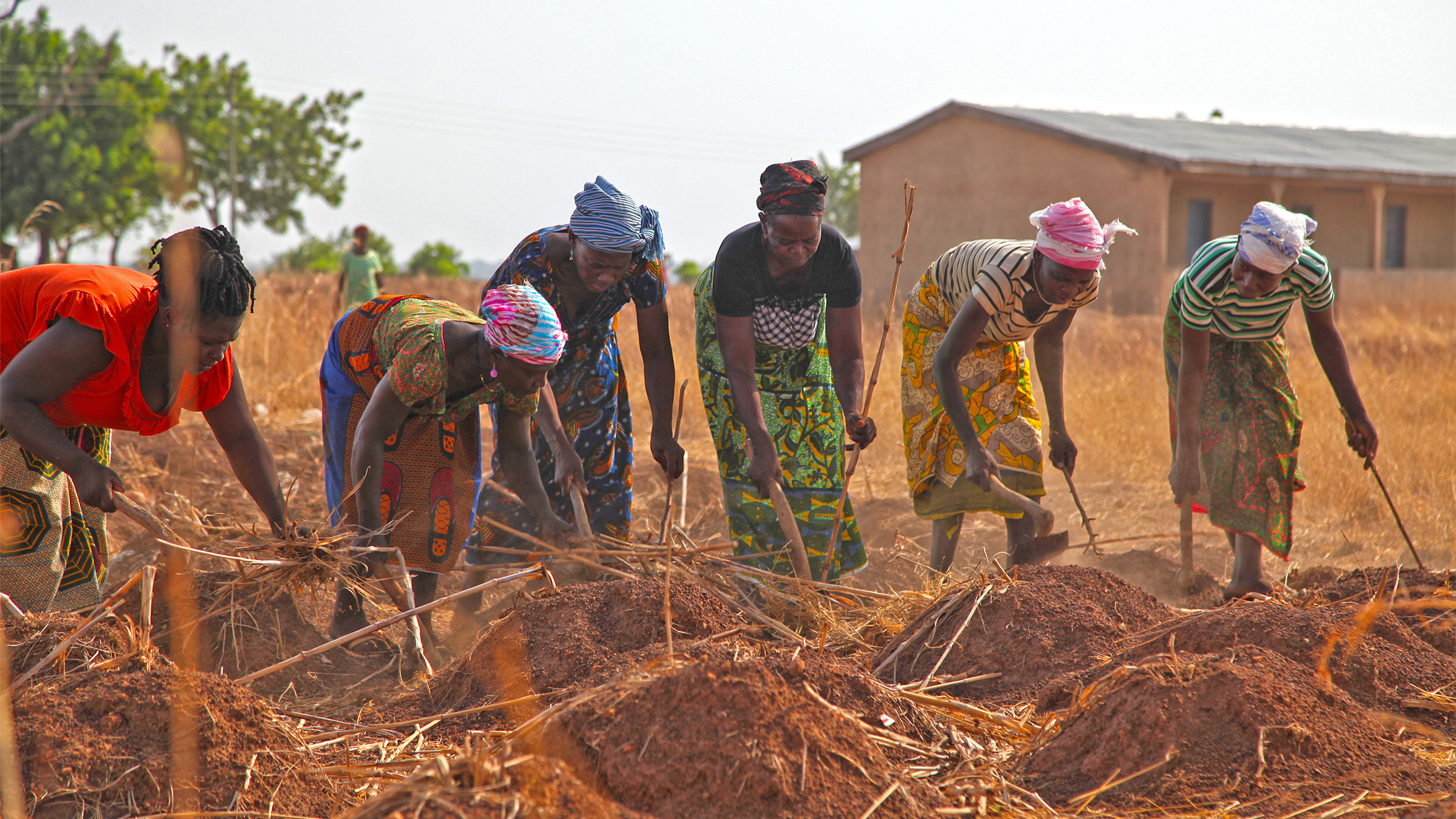
A feminist lens is changing how Mongabay Y. Eva Tan Fellow Ouma Elvine Tina reports on the environment and whose knowledge she looks for.From women’s experiences of floods and extreme heat in Kibera, in Nairobi, to the story of Nubian environmental organizer Malasen Hamida, she writes about learning that environmental journalism is also about power, safety, livelihoods and belonging.Women are not only experiencing environmental change. They are documenting it, challenging it and shaping what comes next.This article is a commentary. The views expressed are those of the author, not necessarily of Mongabay. In university, I took a unit called Environmental Journalism, taught by one of my favorite lecturers. I paid enough attention to pass, but certainly not enough to imagine it becoming a beat I would want to report on. I could not picture myself willingly sifting through scientific research papers, trying to understand ribosomes or learning about yet another strange species discovered somewhere in the sea. So, when I passed the unit, I thought that was it. Science be damned. I went on to pursue what I was passionate about: women. Their health, economies, livelihoods, rights and the ways power shaped their lives. In June 2024, after torrential floods had damaged parts of Nairobi, I attended a focus group discussion in Kibera as part of conversations about women’s experiences of climate change. The women spoke about the floods, but they also described the extreme heat they endured in iron-sheet homes where temperatures could become unbearable. Some talked about the strain of heat, long hours of manual labor and the frustrations that followed, and how these pressures affected their moods and relationships. Women with disabilities described heightened risks of sexual violence during floods, including instances in which violence was disguised as “help” while crossing pools of water or accessing transport in flooded areas. Those accounts stayed with me because women described how environmental conditions entered the most intimate parts of their lives: their homes, bodies, relationships, safety and ability to earn a living. Their accounts were not evidence that heat causes violence, but they raised questions that I had not previously thought to ask as a journalist. Research is beginning to examine some of these connections. A study by Martin Habets, a researcher at the European University Institute, used temperature and domestic violence data from Mexico City and found that reports of domestic violence increased on warmer days, with stronger effects in poorer neighborhoods. The findings do not establish the same relationship in Kibera or Kenya. They do, however, underline why the links between heat, housing, inequality and safety deserve closer investigation. The conversation with the women in Kibera changed something for me. I began to understand that the environment was not some distant scientific subject. It was deeply connected to the issues I had already spent years reporting on: women’s health, violence, poverty, livelihoods, disability, labor and inequality. I still do not particularly like science, but I am a curious person. I found myself reading research on a just climate transition for women and children in Kenya as part of my third fellowship assignment. Malkia John, executive director of Sauti Salama, speaking on climate change, gender-based violence and community protection during a panel held alongside COP30 in Belém, Brazil, November 2025. Image courtesy of Malkia John. It was also at that focus group discussion that I met Malasen Hamida, whom I later interviewed for my first Mongabay assignment. Through her work with the Mazingira Women Initiative, I saw another dimension of the relationship between women and the environment. For Malasen, environmental work was not only about protecting nature. It was also connected to the history of her people, the Nubian community, and questions of citizenship, freedom and belonging. Her story reminded me that women can be powerful ecological libraries, holding knowledge about land, communities, histories and the changes happening around them. During my fellowship interview, associate fellowship editor Calvin Rock asked me how identifying as a feminist journalist was relevant to environmental reporting. I said that I bring a feminist lens to my work. Over the past six months, Calvin and fellowship editor Karen Coates have helped me understand what that can look like in practice: how to cover my constituency, women, deeply, intuitively and, most importantly, responsibly. They have challenged my thinking, asked me to interrogate the angles I arrive with and helped me develop stronger stories rather than simply confirming my first instincts. I have learned that a feminist approach is not just about deciding to include women in a story. It is also about asking who has been left out, whose expertise is recognized, who holds power and who benefits from the decisions being made. Mazingira Women Initiative’s members are debriefing after a cleanup drive with young men in the Kibera community. Image courtesy of Malasem Hamida. I am beginning to realize that environmental journalism is a beat I can make my own. Honestly, it already is, because I am even considering willingly sifting through more scientific research papers, provided there are stories about women somewhere in there. Just as I did with my fourth fellowship assignment, you should read it, too, because it centers on a question whose answers I’m still searching for. But there is a bigger problem than whether journalists remember to include women. Women remain underrepresented in the research, data and institutions that shape how environmental issues are understood and addressed. Global Health 50/50’s 2026 report, “Counted Out,” examined four major global climate-health monitoring frameworks. It found that none of the 45 indicators measuring health impacts reported results by sex or gender. When data do not show who is affected, it becomes harder to identify unequal impacts, direct resources appropriately, or hold institutions accountable. UN Women’s 2026 fact sheet, Gender Equality in the Age of Climate Crisis, makes a related point: Climate change is intensifying existing inequalities, while women and girls in climate hotspots face overlapping risks linked to precarious livelihoods and unequal access to resources. The fact sheet also highlights the importance of gender-responsive climate finance, social protection, care infrastructure and women’s participation in decisions. These are not peripheral concerns. They shape who can prepare for environmental shocks, recover from them and influence what happens next. It is easy to report women only as victims of climate change, environmental degradation or extractive industries because, often, the harm is real. But I also want to tell stories about women as knowledge holders, organizers, researchers, advocates, workers and decision-makers. I want to report on the women documenting changes in their environments, defending land and livelihoods, developing solutions, shaping policy and asking difficult questions of the institutions that affect their communities. The donkeys take turns drinking while carrying water home, in Kitui county. In Kitui, women walk long distances to collect water and firewood, sometimes in extreme heat, sometimes before dawn or after dark. Image by Rob Hope/REACH via Flickr (CC BY 2.0). Our fellowship cohort meets regularly on Zoom. During one of our Tuesday sessions on biodiversity reporting, I learned that Taylor Swift receives roughly twice as much media coverage as biodiversity. It made me wonder: What would happen if even a fraction of that attention were directed toward the women whose lives, labor and knowledge are bound up with the environment? That is the challenge I am taking away from this fellowship: to use my voice and my work to bring greater attention to the gendered impacts of climate change, until even the Swifties are paying attention. I want my stories to draw people into environmental conversations and keep them there, not only by exposing the problems we face, but by making visible the women already responding to them. I want to ask harder questions about whose knowledge is valued, whose safety is protected and whose priorities inform environmental decisions. Ultimately, I hope that attention can translate into action: stronger journalism, better-funded responses, more accountable policies and a deeper recognition of the women who care for, study, defend and shape the environments we all depend on. Banner image: Members of the Rural Women’s Farmers Association of Ghana (RUWFAG) preparing a field for sowing near Lawra, Ghana, 2013. Image by Global Justice Now via Flickr (CC BY 2.0). Citation: Habets, M. (2025). Temperature variations and domestic violence. doi:10.2139/ssrn.5598432 Credits Topics
How a feminist lens is shaping my climate reporting (commentary)
Full Article
Original Source
Read the full article at News →KhanList aggregates and links to publicly available news content. We do not host full articles from third-party sources. Always verify important information with original sources.