
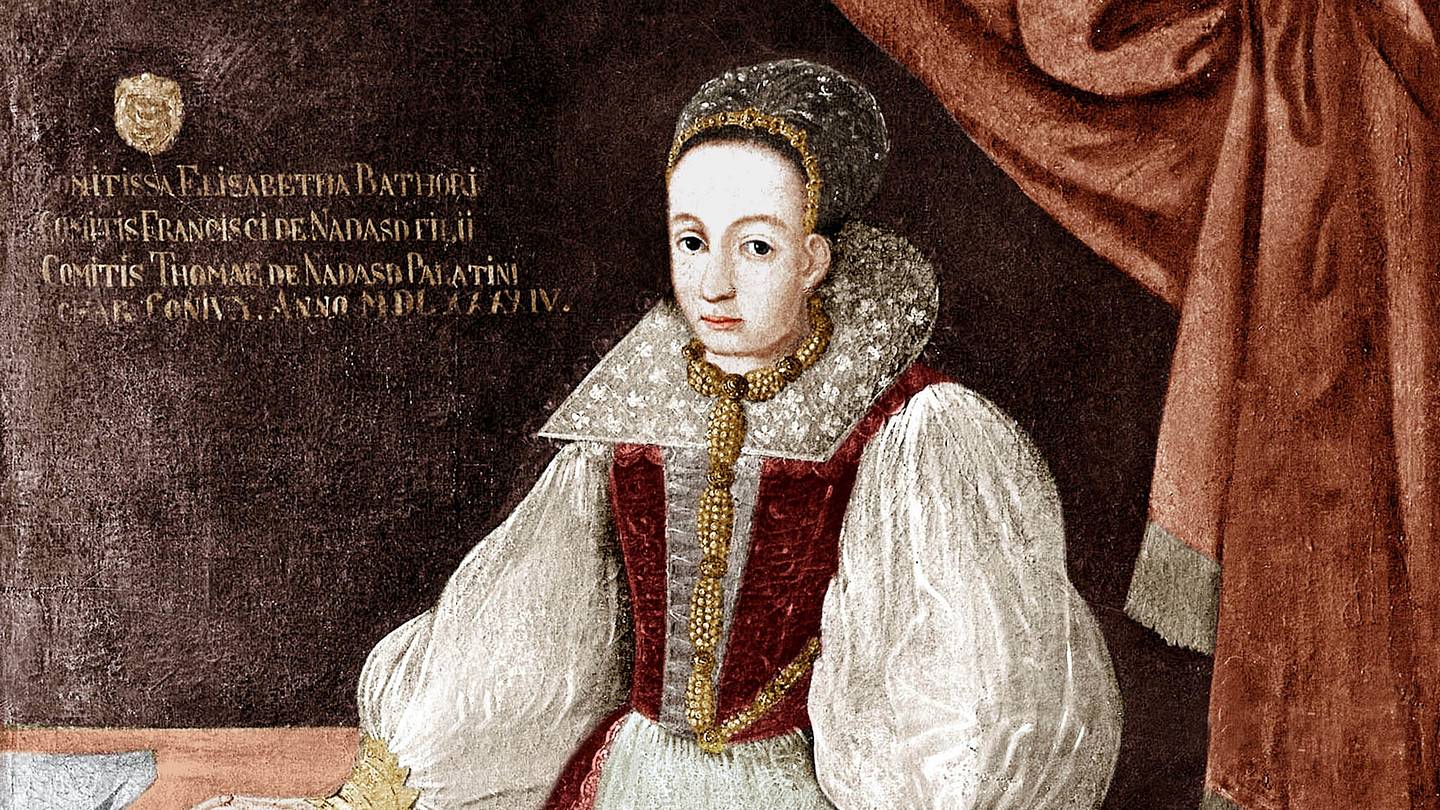
Báthori Erzsébet, known in English as Elizabeth Báthory, was a Hungarian noblewoman who became notorious after being accused of murdering up to 650 women and girls in the late 16th and early 17th centuries. She was imprisoned for the crimes during the last few years of her life. The murders led to her being described as the most prolific female serial killer of all time. For centuries she was known as a monster, and the dark legend has even become the basis of a number of films. However, in more recent years, some historians have argued that the stories may not be true. They believe Báthory may have been framed as a part of a power struggle in her country. Here is a look at how she became known as the “Blood Countess.” The Life and Death of Elizabeth BáthoryPortrait Of Countess Elizabeth Báthory (1560-1614) | Heritage Images/GettyImagesBáthory was born to a wealthy family in the Kingdom of Hungary in 1560 and married very young to a count named Ferenc Nádasdy. After the wedding, he gifted her Čachtice Castle, located in the area of the country which now forms part of present-day Slovakia; a famous painting of her can be found in the castle today. As the wife of a count, she therefore became known as a countess. Báthory eventually moved to Čachtice and held social gatherings known as gynaeceums there, where young women were brought to stay at the castle and were taught literacy skills and social etiquette. After her husband’s death, she took charge of his estates and maintained her status as a wealthy and powerful woman.However, in the early 17th century, reports began to circulate that many of the women going to visit Báthory were not returning to their families, and rumors began to grow that some of them had been murdered. In 1610, an official investigation was launched, during which a number of witnesses claimed that they knew Báthory had personally tortured and killed women and girls at the castle. It was also alleged she had bathed in their blood, one of the factors which led to her being known as the “Blood Countess.” In 1611, three of her servants were tried for their alleged involvement in the crimes, and were convicted and executed. Báthory herself was not put on trial but was instead effectively imprisoned, confined to her private rooms in the castle, where she would die in 1614 while under a form of what has been compared to house arrest.Changing BeliefsCrime scene | D-Keine/GettyImagesThis account of Báthory’s life and her alleged involvement in the crimes has been challenged by more recent scholarship. Some historians have argued that Báthory may have been framed by others who wanted to seize her lands and wealth, as well as by others who felt threatened by the idea of a woman holding power.And while there have been rumors of coffins being removed from the premises, author and professor Annouchka Bayley has noted that, despite claims of hundreds of deaths, only one body was actually found at the castle and grounds during the investigation—without a clear cause of death. It has also been noted that many of those interviewed in the investigation had never visited the castle or witnessed the alleged events. Whatever the truth, what can be said with certainty is that, more than 400 years after her death, Báthory continues to be a source of controversy and debate, and will likely remain so long into the future.
How 16th-Century Noblewoman Elizabeth Báthory Became Known as the ‘Blood Countess’
Full Article
Original Source
Read the full article at Mentalfloss →KhanList aggregates and links to publicly available news content. We do not host full articles from third-party sources. Always verify important information with original sources.