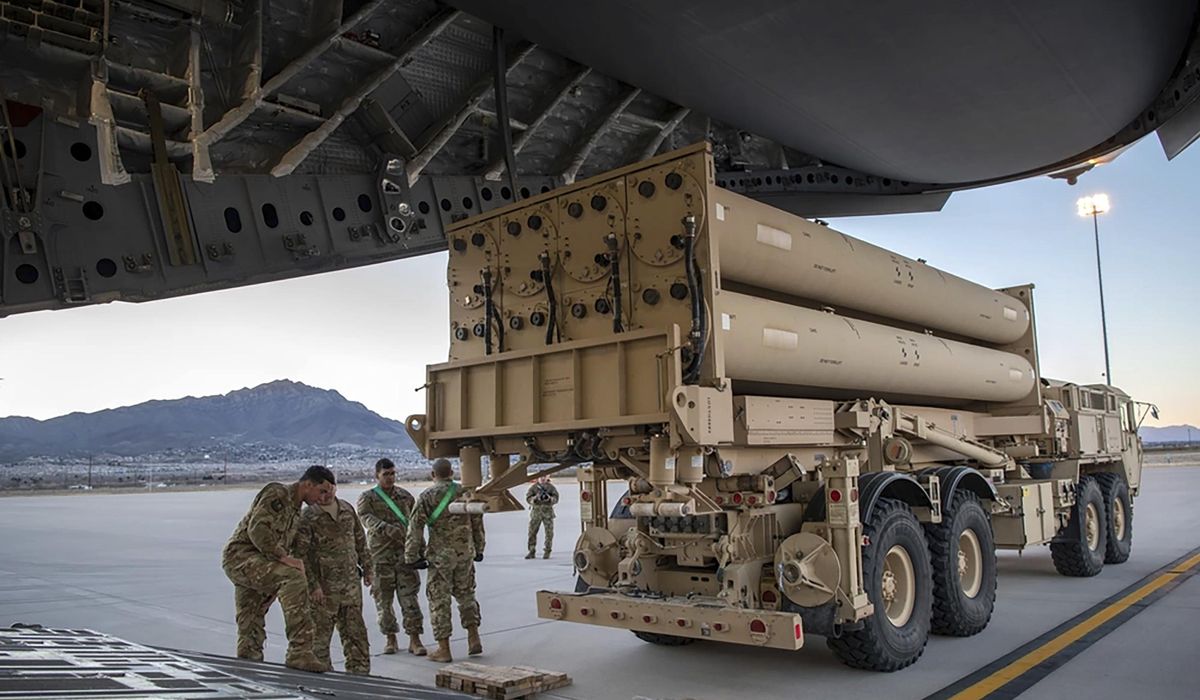
Amid reports that the U.S. military is running out of missiles and anti-missile interceptors from the conflict with Iran, House defense legislators want the Pentagon to produce regular reports to Congress on the impact of weapons shortages needed to deter China. A section added to the pending fiscal 2027 defense policy bill calls for the Pentagon to report on the effects of “unplanned global taskings” on the operations, deterrence and force readiness in the military’s Pacific theater. The quarterly reports “would provide the sense of Congress that deterring China and maintaining a favorable balance of military power in the Indo-Pacific region is a strategic priority of the United States,” a House report on the $1.1 trillion authorization bill states. The provision calls on the director of the Joint Staff to include in the reports the impact of contingency deployments and diverted assets on operations. Defense Secretary Pete Hegseth speaks at the United States Army War College in Carlisle, Pa., during the Pennsylvania Defense and Innovation Summit, Wednesday, July 15, 2026. (AP Photo/Matt Rourke) ** FILE ** Defense Secretary Pete Hegseth speaks at … more > The section notes that the Trump administration national security strategy makes deterring China and keeping a favorable military balance in the Indo-Pacific a strategy priority. The reports are to be sent to the defense committees of Congress every three months and must describe specific effects on current and planned operations, exercises and training and an assessment of how the Pacific Command will maintain required deterrence levels. Also included will be an assessment of capability gaps or increased risks and the impact on munitions inventories, shortfalls and projected resupply timelines for the command from conflicts elsewhere. Congress also wants to know what steps the Pacific Command plans to take to mitigate weapons and other military shortfalls from regional conflicts. President Trump reportedly is holding off on stepping up military strikes on Iran amid concerns the escalation will lead to dangerous shortfalls in anti-missile interceptors. During the Iran war, more than 1,200 Patriot interceptors, costing more than $4 million each, were fired, The New York Times reported. A new report on the Project on Government Oversight states that as a result of large-scale missile firings against Iran, “the U.S. has created a multiyear ’window of vulnerability’ in the Western Pacific that will persist until munitions inventories are restored.” The report examined the use of both offensive and defensive missiles, including Tomahawk cruise missiles, Joint Direct Attack Munitions, Hellfire missiles, Patriot and THAAD missile interceptors and Navy SM-3 and SM-6 missiles.
House seeks report on Pentagon arms shortages
Full Article
Original Source
Read the full article at Washingtontimes →KhanList aggregates and links to publicly available news content. We do not host full articles from third-party sources. Always verify important information with original sources.