
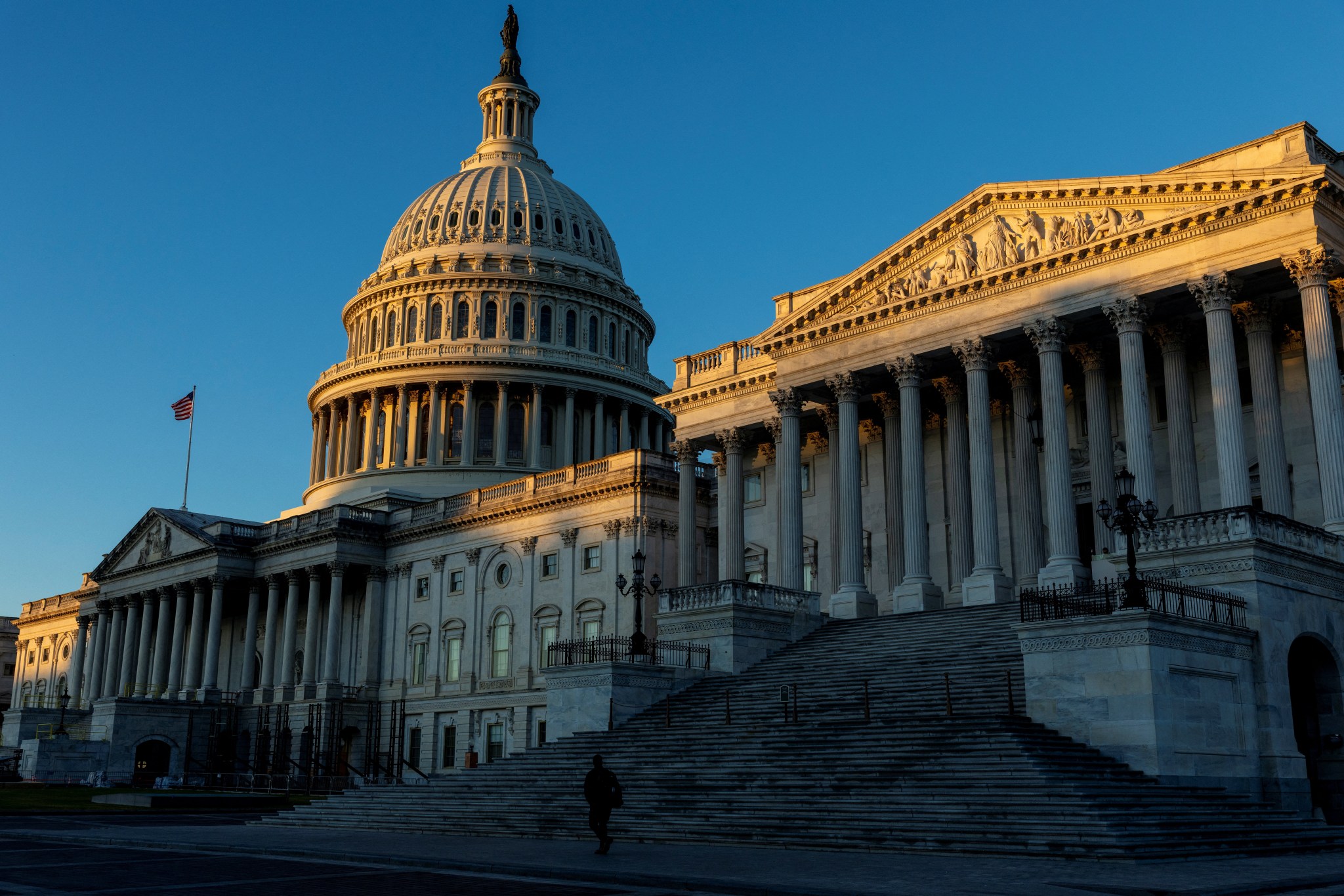
The House passed a major veterans benefits package on Wednesday, advancing new support for surviving spouses and caregivers, as well as expanded compensation for some disabled retirees, while — controversially — tying the legislation’s financing to changes to future benefits. The Take Care of America’s Veterans Act passed by voice vote on Veterans Day without a recorded tally of how individual lawmakers voted. The package includes more than 60 provisions, but its most contentious measure would change how the Department of Veterans Affairs rates sleep apnea and tinnitus, potentially reducing future disability compensation for some veterans. The funding approach has divided veterans organizations that support many of the bill’s benefit expansions but disagree over whether veterans’ future benefits should help pay for them. A disputed House vote The legislation passed under contentious circumstances, with House Veterans’ Affairs Committee Ranking Member Mark Takano, D-Calif., and other Democratic leaders away from the floor reviewing proposed changes to separate veterans legislation, a Democratic leadership aide told Military Times. Earlier Wednesday, Takano went to the House Rules Committee in an attempt to force consideration of a competing bill, the Major Richard Star Act. Military Times spoke with several Congressional staff members who said Takano and other Democratic leaders left the floor at Republican leadership’s request to review proposed changes that would allow the House to take a single vote on the Star Act the following day. While the Democrats were off the floor, Speaker Pro Tem Addison McDowell, R-N.C., called for a voice vote on the Take Care of America’s Veterans Act. The yeses prevailed, and McDowell declared the bill passed, according to the House Clerk. Majority Leader Steve Scalise, R-La., told The Associated Press that the bill passed because no member called for a recorded vote and said Democrats could have voiced objections on the floor. Takano disputed that account, telling the AP, “The intention was to sneak this through.” He described the result as a hollow victory and argued the legislation would go nowhere in the Senate. Veterans of Foreign Wars criticized the procedure as “cowardly.” VFW National Commander-in-Chief Cory Geisler said lawmakers should have allowed members’ positions to be recorded. “It is an insult to America’s veterans that Congress would advance legislation threatening their earned benefits on Veterans Day, the very day our nation is supposed to honor their service and sacrifice,” Geisler said in a statement. “And if congressional leaders believed this proposal was worthy of passage, they should have had the courage to let every member’s position be recorded for the country to see,” he added. “Playing political games with veterans’ benefits while avoiding public accountability is cowardly and dishonorable.” What veterans and families could gain Take Care of America’s Veterans Act includes the Love Lives On Act, which would allow certain surviving spouses to retain Dependency and Indemnity Compensation, or DIC, and Survivor Benefit Plan payments after remarriage. Under current law, remarriage before age 55 generally ends eligibility for those benefits. Samantha Pappas was 33 and had three children younger than 6 when her husband, Army Master Sgt. Stephen Pappas, died from injuries sustained in Afghanistan. She later became engaged but chose not to remarry because doing so would jeopardize survivor benefits that help support her children. “Being asked to wait 20 more years to remarry feels so insane to me,” she said. Marines place flowers on gravesites of fallen service members during a Memorial Day ceremony at Hampton National Cemetery in Virginia on May 28, 2018. (Airman 1st Class Monica Roybal/Air Force) For caregivers, the bill would extend CHAMPVA medical coverage for up to 180 days after qualifying participants leave VA’s Program of Comprehensive Assistance for Family Caregivers. It would also provide employment assistance during program participation and for 180 days afterward, including up to $1,000 in lifetime reimbursement for qualifying certification or relicensure fees. The package also includes the Sharri Briley and Eric Edmundson Veterans Benefits Expansion Act of 2026, which would provide an additional $833.33 per month to veterans eligible for the aid-and-attendance allowance under specified special monthly compensation provisions. Other provisions would expand education opportunities; increase housing assistance for some veterans in apprenticeship and on-the-job training programs; protect students whose education is interrupted by military orders; and address suicide prevention and VA mental healthcare. Benefit changes drive opposition Section 108 of the bill would establish new VA disability-rating criteria for sleep apnea and tinnitus. Under the proposed schedule, asymptomatic sleep apnea would receive a 0% rating, whether or not the veteran is receiving treatment. A 10% rating would apply when treatment provides incomplete relief. A 50% rating would be available only when treatment is ineffective or a qualifying medical condition prevents its use, provided there is no end-organ damage. A 100% rating would require end-organ damage. The bill would eliminate separate compensable ratings for tinnitus, or ringing in the ears, while retaining a 10% rating in a specified circumstance involving service-connected hearing loss. Meanwhile, Section 104 increases the cost for some VA-backed home loans. The fee for interest rate reduction refinance loans, or IRRRL would rise from 0.5% to 1.42%, which, for example, would add $3,680 to the fee on a $400,000 refinance. The fee for loan assumptions would also increase from 0.5% to 1%. How the bill is paid for Supporters say projected savings from the disability-rating changes and revised VA home loan fees would help finance the bill’s expanded benefits. The American Legion and the Tragedy Assistance Program for Survivors were among 23 organizations that signed a June 29 letter urging Congress to advance the legislative package while acknowledging concerns about offsets from future disability compensation. The organizations said they would prefer the benefits without those offsets but supported moving the package forward while pressing for protections and alternatives. Disabled American Veterans called for Section 108 to be removed. The VFW has opposed the bill as drafted, citing the rating changes, fee increases and other reductions, while supporting many of its benefit expansions. Iraq and Afghanistan Veterans of America also opposed the package. CEO Kyleanne Hunter said Congress should not establish a precedent for reducing earned disability compensation to finance other programs. “Today it’s tinnitus and sleep apnea. Tomorrow it could be PTSD, migraines, toxic exposure conditions, or any other disability that becomes a tempting budget target,” Hunter said.
House passes sweeping veterans benefits bill with polarizing tactic
Full Article
Original Source
Read the full article at Militarytimes →KhanList aggregates and links to publicly available news content. We do not host full articles from third-party sources. Always verify important information with original sources.