
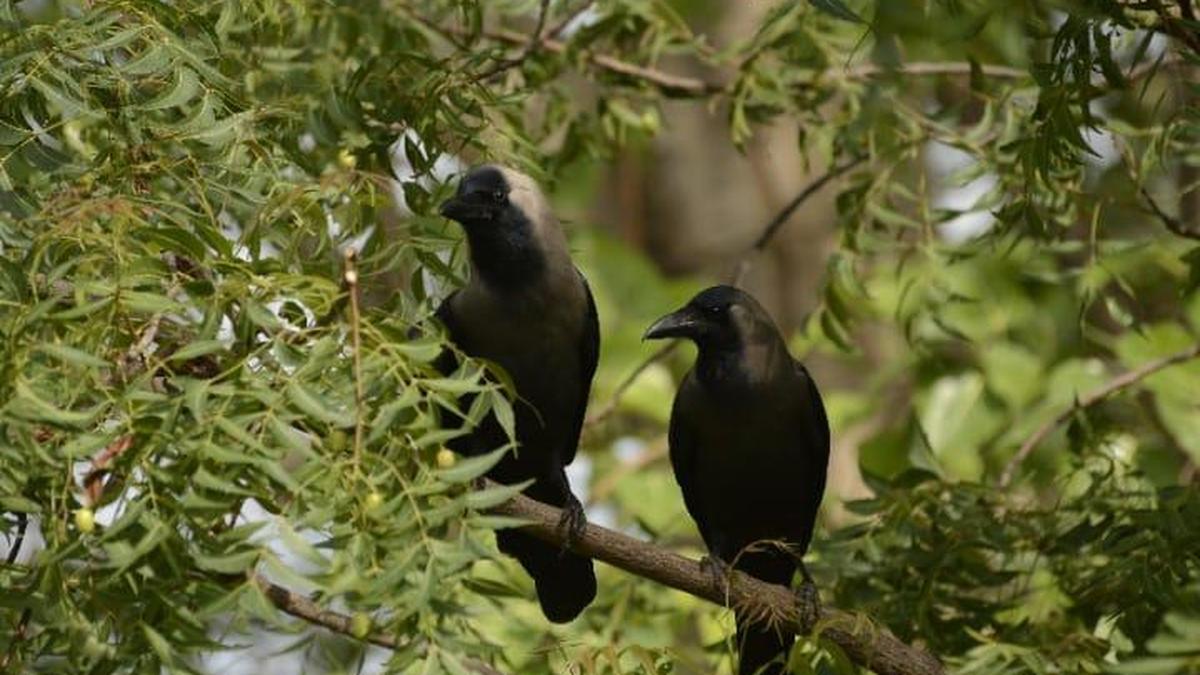
At 6 a.m., along the dusty railway station road in Vasudevapuram locality of Penukonda town in Sri Sathya Sai district, 72-year-old Papamma sweeps her courtyard and scatters leftover rice. In no time, a flock of crows descends. For Papamma, it is a daily ritual. For ecologists, however, it is the start of a quiet greening process in Rayalaseema, one of Andhra Pradesh’s driest zones.Rayalaseema, with 500-600 mm of rainfall, unforgiving summers, and recurring droughts in Anantapur, Sri Sathya Sai, Kadapa, Kurnool, Annamayya and Chittoor districts, continues its struggle to retain green cover. Afforestation drives in the region have a survival rate of less than 40% due to water stress, grazing and summer fires.However, researchers claim that an unlikely ally — the house crow (Corvus splendens) — is significantly helping to reclaim the green cover across the dry landscape.A study by V.V. Bala Subramanyam, an associate professor in the Department of Zoology at Sri Krishnadevaraya University (SKU) in Anantapur, has documented how crows feed on ripe neem fruits from March to June. The study claims that they eat 30 to 40 fruits in one sitting and disperse the seeds through their droppings across villages, fields, tank bunds and semi-urban roads a kilometre or two away from the parent tree.“This process, called endozoochory, is silently contributing to natural regeneration. Our team marked droppings around the Penakacherla dam foreshore and the SK University campus in Anantapur, forest fringes in Annamayya district, the Idupulapaya road in Kadapa, Kallur tank bund and Nandikotkur road in Kurnool, Tiruchanur Avenue and Chandragiri roadside in Tirupati. The data shows about a 2% increase in urban greenery in parts of Rayalaseema, not just from plantations but from birds,” he said.Meanwhile, Ramakrishna (72), a retired railway employee from Dharmavaram town, informed the research team that earlier, only jilledu and thorny shrubs were found on the local tank bund. “But now, neem saplings have started to appear without being planted, thanks to the crows,” he said.Similar reports have come from Vempalli near Kadapa, Kasapuram and Kadiri temple lands, Penukonda and Gooty Fort hillocks, and the Tadipatri Penna bund. Villagers on the outskirts of Rayadurg said that close to a dozen neem saplings had appeared on a rocky patch, with crows raising their young and roosting there.Birdwatchers from Kadapa, Pulivendula, Jammalamadugu, Rajampeta and Guntakal observed that not only crows but also bulbuls, mynas, babblers and barbets disperse peepal and banyan seeds. In Dharmavaram, Puttaparthi, Hindupur, Adoni, Nandyal, Proddatur, Atmakur, Allagadda, Madanapalle and Horsley Hills, the same multi-species network has been at work.However, the population of house crows has reportedly dropped year after year. Shopkeepers on the busy Kapila Theertha road in Tirupati, the Old Bus Stand in Anantapur, B-Camp in Kurnool, Church Street in Chittoor and the Market Yard in Hindupur report flock sizes nearly 50% lower than in 2015. The cutting of age-old trees for road widening, garbage burning and covered garbage bins introduced under cleanliness drives are believed to be among the reasons for their decline.“Afforestation initiatives in the Nallamala stretches of Nandyal and the Lankamala Wildlife Sanctuary in Kadapa require water, labour, and fencing, but bird-assisted regeneration needs only protection. The selection of spots for this natural way of planting by crows or any other bird species is incredible and foolproof. Individuals and public groups only have to protect old, fruit-bearing native trees on various temple premises and forest ghat roads. These are mother trees, while birds carry the seeds for dispersal,” a forest official in Rajampeta said.
House crows aid efforts to enhance green cover across arid Rayalaseema, finds study
Full Article
Original Source
Read the full article at Thehindu →KhanList aggregates and links to publicly available news content. We do not host full articles from third-party sources. Always verify important information with original sources.