
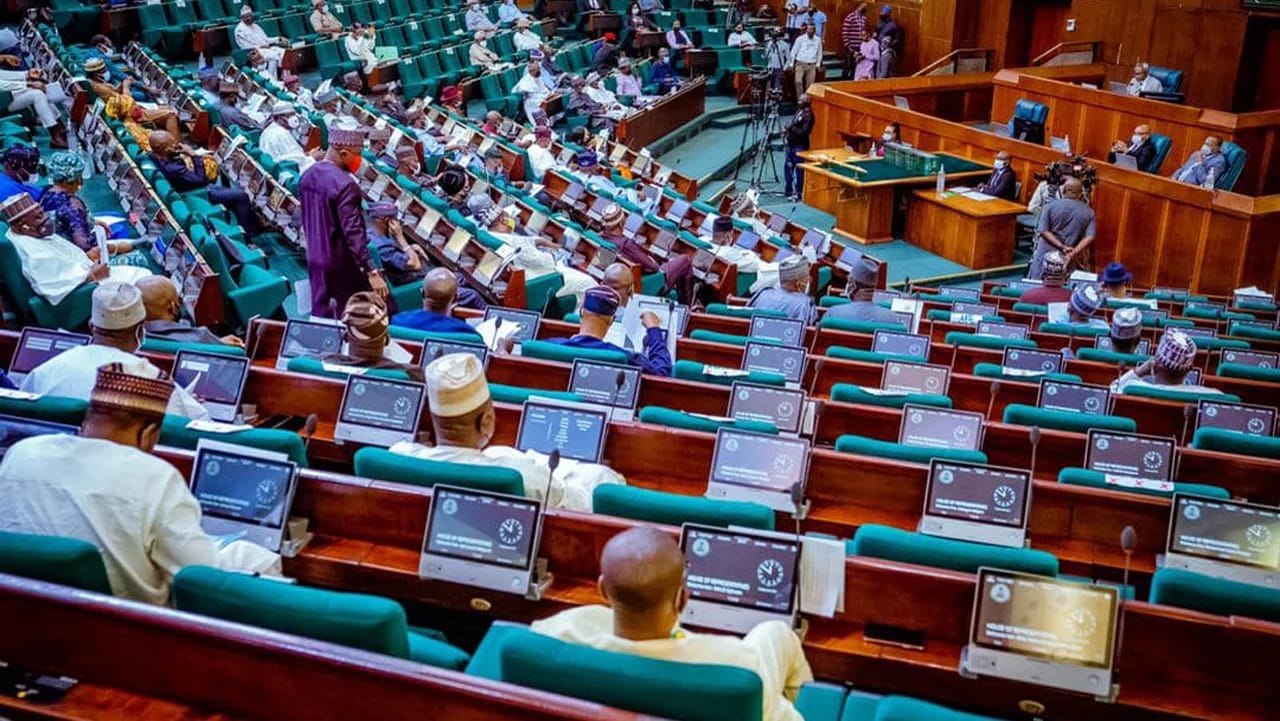
Follow THISDAYLIVE on GoogleAdd us as a preferred source to see more of our stories in Google Follow us on Google Adedayo Akinwale in Abuja The House of Representatives has approved external borrowing totalling $28,225,160,783.49 and €1,045,083,643 to finance critical infrastructure and other development projects across the country earlier requested by President Bola Tinubu. The first request was the 2026–2027 Supplementary External Borrowing (Rolling) Plan, comprising total facility of $20,517,755,901 and €1,045,083,643. The second request was for a resolution of the National Assembly authorising the implementation of new external borrowing provided for in the 2026 Appropriation Act, amounting to N10,790,366,835,481, equivalent to $7,707,404,882.49, at the approved budget exchange rate of $1 to N1,400. The approvals cover two separate borrowing proposals transmitted to the National Assembly by the President. Both requests scaled through second reading at the plenary on Tuesday and were subsequently referred to the House Committee on Aids, Loans and Debt Management for further legislative consideration. Following the presentation of the committee’s reports at Tuesday’s plenary, the House resolved to consider the two requests at the Committee of Supply, presided over by the Deputy Speaker, Hon. Benjamin Kalu. The Chairman of the House Committee on Aids, Loans and Debt Management, Hon. Abubakar Nalaraba, while presenting the reports, solicited the support of lawmakers for the approval of the 2026–2027 Supplementary External Borrowing (Rolling) Plan and the resolution authorising the implementation of the new external borrowing contained in the 2026 Appropriation Act. The lawmakers approved the two requests, giving the federal government the legislative backing to proceed with the proposed external financing arrangements. The President explained that the administration’s reform agenda and the need to accelerate national economic growth had made the additional external financing was the reason behind the supplementary borrowing plan in his letter to the Green Chamber. He emphasised that the projects and programmes were selected after technical and economic evaluations, with particular consideration given to their expected contributions to Nigeria’s socio-economic development. “The proposed interventions are designed to generate employment, promote skills acquisition, encourage entrepreneurship, reduce poverty and strengthen food security, with the ultimate objective of improving the living conditions of Nigerians,” the president said Tinubu further disclosed that most of the projects and programmes would be implemented across the 36 states of the federation and the Federal Capital Territory, underscoring the nationwide scope of the proposed interventions. Addressing the country’s infrastructure financing deficit, President Tinubu argued that the enormous financial resources required to tackle Nigeria’s developmental challenges had made additional external financing necessary. “In light of the need for significant infrastructure investment in the country and the vast financial resources needed to address this gap, it has become essential to pursue prudent external borrowing to close the financial shortfall,” he said. The president added that the proposed funds would primarily support critical infrastructure projects in power, transportation, healthcare and other strategic sectors, stressing the importance of timely disbursement and effective implementation. On the second borrowing request, the President explained that the N10.79 trillion, equivalent to $7.707 billion, would be mobilised through various financing channels, including Eurobond issuance, concessional and commercial loans from multilateral and bilateral institutions, International Monetary Fund facilities, bridge financing, loan syndications and direct borrowing from international financial institutions. The president pointed out that particular emphasis would be placed on Eurobond issuance because of its relatively shorter completion period. He said the different financing options would be pursued simultaneously, taking into consideration their costs, comparative benefits and the time required to access the funds. President Tinubu noted that the proceeds would be deployed to critical capital projects across key sectors, including infrastructure, defence and security, agriculture, healthcare, power, transportation and education. The lawmakers, however, authorised federal government to raise the approved new external borrowing through one or a combination of the financing sources outlined in the President’s letter, including concessional and commercial windows of multilateral and bilateral institutions, International Monetary Fund facilities, bridge financing, loan syndications and Eurobond issuance. The approval also emphasised the need for the federal government to secure the most favourable financing terms and conditions. As part of the conditions, the House directed the Federal Government, through the Debt Management Office (DMO), to submit periodic reports to the National Assembly on concluded financing arrangements. The reports are expected to contain details of amounts raised, sources of financing, interest rates, repayment periods, associated fees and other relevant terms and conditions. The House mandated its Committee on Local and Foreign Debts to exercise continuous oversight of the implementation of the approved borrowing programme.
House Approves Tinubu’s $28.2bn, €1.04bn External Borrowing Requests
Full Article
Original Source
Read the full article at Thisdaylive →KhanList aggregates and links to publicly available news content. We do not host full articles from third-party sources. Always verify important information with original sources.