
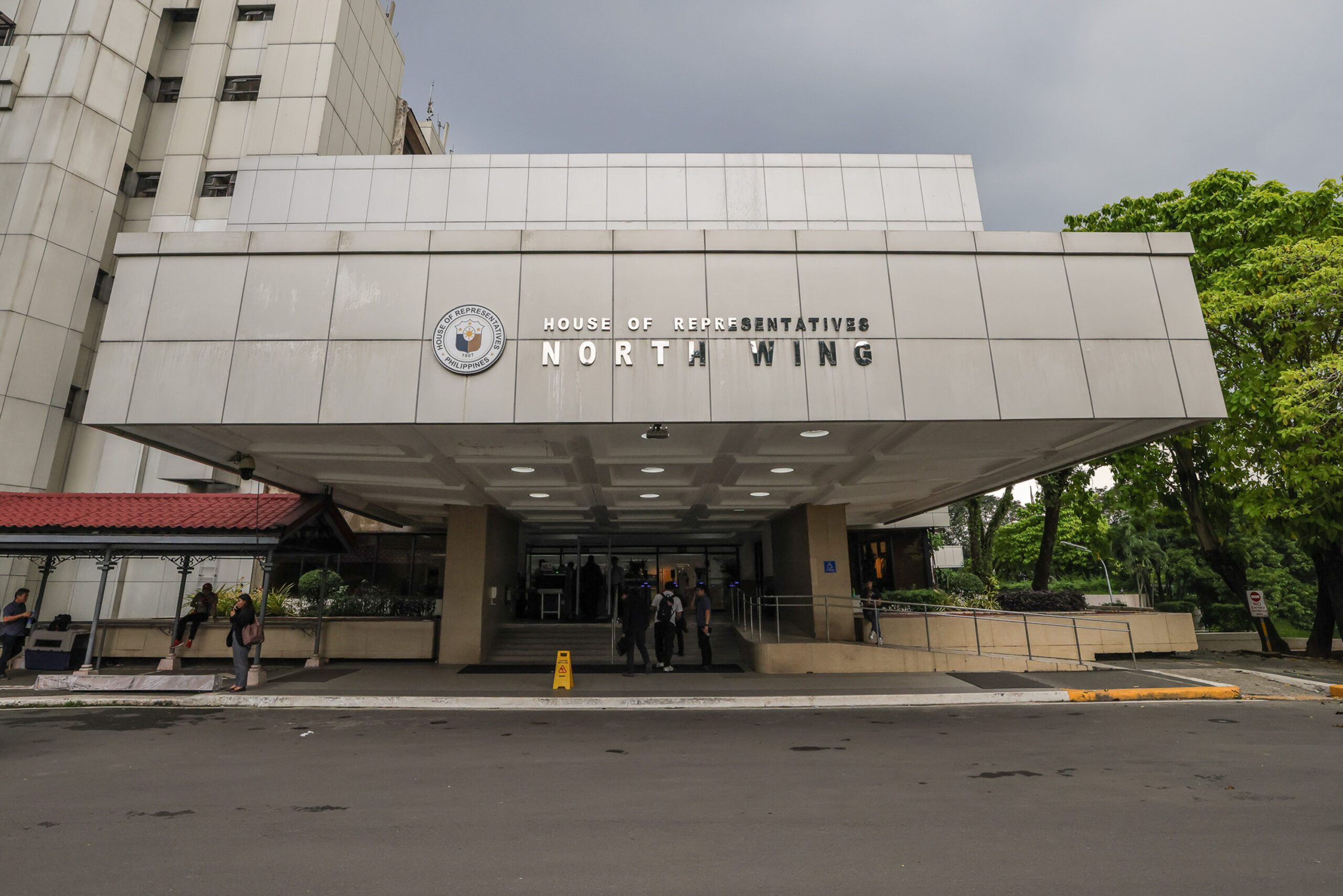
CONGRESS. The House of Representatives Building at the Batasang Pambansa Complex in Quezon City on Seoptember 17, 2025. Jire Carreon/Rappler The increase comes after the lower chamber revised the President's proposal contained in the 2027 National Expenditure Program The House of Representatives increased its proposed budget for 2027 from P17.6 billion to P22.6 billion, adding P5 billion to the original proposal. The budget adjustments have faced criticism for lack of transparency and accountability, as the House's budget traditionally does not undergo the same scrutiny as other government agencies. This is AI-generated. Read the article for full context. Report any errors. The House of Representatives’ own budget for 2027 got a hefty increase after the chamber amended the executive department’s original proposal. From P17.6 billion in what is often called the President’s budget or the 2027 National Expenditure Program (NEP), the House added another P5 billion to its proposed funding for the upcoming year, bringing the total to P22.6 billion. Where did the increases go? Maintenance and other operating expenses The P17.6-billion figure in the NEP was exactly the proposal submitted by the House to the executive. The Department of Budget and Management, tasked with drafting the NEP, retained the House’s request in full. Included in the P17.6 billion was P10.9 billion for maintenance and other operating expenses (MOOE). The lower chamber, when it wrote the House General Appropriations Bill (HGAB), later increased the allocation by P1.95 billion, raising the new total to P12.89 billion. The House added P658 million for a catch-all category called “other maintenance and operating expenses,” as well as an extra P457.23 million for traveling expenses. More or less a quarter billion pesos was also infused into each of the line items for representation expenses, communication expenses, and professional services. See the breakdown below. Capital outlays The House also added another P1.6 billion for capital outlays, which refers to the government’s investment in long-lived assets. This could be for construction of new structures or acquisition of real property, among other things. While it is unclear what exactly the capital outlays are for, the House has been constructing a new secretariat office with a price tag of more than P2.4 billion. Personnel services The House’s budget for personnel services also increased by P1.45 billion. While this includes P237 million for the salary of permanent employees of the House, the biggest adjustment came from terminal leave benefits — from zero in the NEP to P1.15 billion in the HGAB. The reasoning for the adjustment is not immediately clear. Criticisms The proposed 2027 budget of the House, now pegged at P22.6 billion, is still considerably lower than the P27.7 billion it received for 2026. The lower chamber is no longer padding its allocations for supplies and utilities to P1 billion each, as it did in previous years, only to leave much of the funds unused. The resulting savings also raise questions about how the unused funds were eventually spent. But the House’s decision to adjust its own budget by P5 billion for the upcoming fiscal year has attracted scrutiny. The absence of an explanation was among the reasons why some lawmakers voted against the spending bill. “If we demand transparency and accountability from other government agencies, we should also be willing to hold ourselves to the same standards,” Navotas Representative Toby Tiangco said. The House’s own funds — by tradition — do not undergo committee-level scrutiny, unlike most other government agencies. During plenary deliberations, lawmakers usually don’t hurl questions at the House-assigned sponsor of its own budget. Adding P5 billion to the internal budget of the House means the same funds were realigned from other government agencies. Watchdogs have already flagged the P190 billion in alleged public works budget insertions despite the absence of published project attachments. The biggest beneficiary of the adjustments is no less than the engineering office in the Ilocos Norte district represented by the President’s son, Majority Leader Sandro Marcos. – Rappler.com How does this make you feel? Loading
House adds P5B to its own budget. What got bigger?
Full Article
Original Source
Read the full article at Rappler →KhanList aggregates and links to publicly available news content. We do not host full articles from third-party sources. Always verify important information with original sources.