
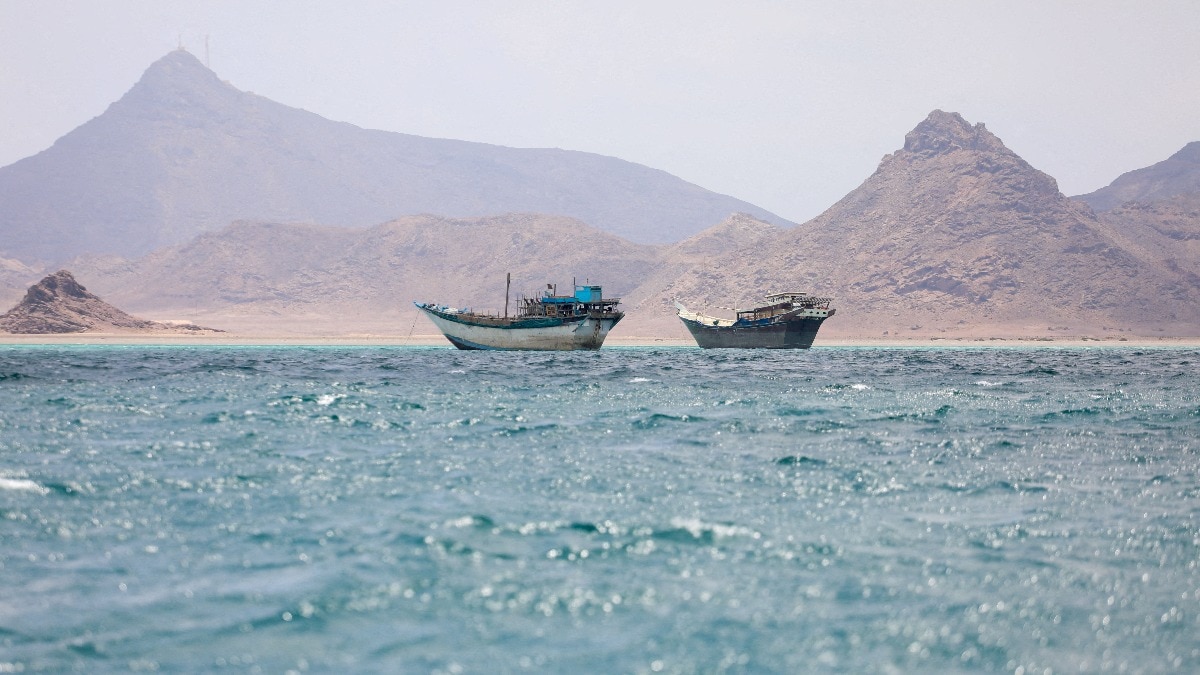
Iran is shaping the battlefield for a possible third round of conflict with the US.Boats float near the coast of Bab el-Mandeb, Yemen. (File photo: Reuters)Like whirling dervishes, patterns of conflict are once again building up around the Arabian Peninsula. A ceasefire which halted the two-month Iran-US war on April 8, now exists only in name. The region is poised on the precipice of what analysts believe is a possible third and far more intense round of conflict.At the Strait of Hormuz, a US-Iran tit-for-tat battle continues. The US has been escorting oil tankers through the Straits while imposing an economic blockade on Tehran.The US military destroyed five oil tankers in the Gulf of Oman in response to which the IRGC launched attacks at US warships and ballistic missile barrages at the Muwaffaq Salti air base in Jordan, used by the US military.The most extraordinary development has been Iran-aligned Houthis capturing all of Yemen’s sea coast. This puts them in a commanding position to blockade the Strait. When the Houthis struck at Western shipping using drones and missiles since the October 7, 2023 Israel-Hamas conflict, they were doing so from their mountain redoubts. By capturing the coast, the port city of Mokha and islands like Mayun and Perim, the Houthis can now directly target shipping in the 26-km wide strait.Oman postponed a crucial September 14 meeting between Gulf Cooperation Council (GCC) countries and Iran set to begin in Salalah stating ‘more time was needed to create conditions for constructive dialogue’. Any flare-up in conflict has ominous consequences for world energy supplies. The Peninsula, roughly the size of India, and accounting for 20 per cent of the global energy supplies. Giant oil tankers load up and ship out nearly all of this oil and gas past three chokepoints—the Strait of Hormuz, the Bab el Mandeb and the Suez Canal.Oil prices hit a record high on September 14, jumping to 108 dollars a barrel, a 54 per cent increase from February 28 when the conflict began. For India, every 1 dollar increase in oil prices means a foreign exchange outgo of around two billion dollars or roughly Rs 19,000 crore.Saudi Arabia is one of India’s largest oil suppliers, accounting for nearly 8 per cent of New Delhi’s oil. Most of this oil is shipped through the port of Yanbu on the Red Sea. These oil exports are now imperilled by the Houthis who have strangled Saudi Arabia’s Red Sea oil infrastructure.On September 11, Saudi Arabia shut down its 1,201-km long East-West oil pipeline, built to bypass the Hormuz Strait. The pipeline was struck by drones launched from Iraq, ostensibly by Iran-backed militias. Saudi Arabia's crude supply fell 2.3 million barrels per day (bpd) on the month to 6 million bpd in August, the lowest level in more than three decades.Iran’s current expansion of the conflict amounts to what militaries say is ‘shaping the battlefield’—placing your assets in an advantageous position. On September 2, Mohsen Rezai, Iran’s Secretary of the National Security Council, warned of a ‘new Iranian strategy’ across the battlefield, diplomacy and countering the economic siege ‘will shatter your foundations’.The new strategy appears to be directly aimed at impacting President Trump’s chances in the November 3 US mid-term elections which will decide how much agency the US President has in his remaining two years in office.The activation of the Houthis to capture the peninsula’s southern chokepoint was a surprise. Particularly since March this year, the Houthis went missing in action. They appeared to stay out of the conflict even as their main sponsor, Iran was hit by intense Israeli-US aerial strikes.Their swift advances six months later could be what militaries call ‘application of reserves’, withholding a portion of your forces to be inserted at a time and place of the commander’s choosing.The Houthis rolled out Saudi-backed Yemeni government forces capturing an area nearly twice the size of Goa and thousands of soldiers and equipment. But Saudi Arabia’s strategic partner, the United States turned down Saudi crown prince Mohammad bin Salman’s requests for intervention.“The Houthis called us and said they don’t want to fight with us,” Trump said on September 12. Pakistan and Turkiye, two signatories to the August 17 Makkah Defence Agreement, shied away from sending forces to aid the Saudis.The spike in violence is linked to a dip in Trump’s approval ratings— only 32 per cent of respondents felt Trump approved of his job performance.Asked on September 12 when the Iran war would end, President Trump seems to think the Iran war will end ‘right after the mid-terms’. “They (Iran) are trying to hold out as long as they can to complicate the election,” Trump told reporters in Dublin. “But I think people are wise to it.”- EndsPublished By: Koustav DasPublished On: Sep 14, 2026 13:54 IST
Hormuz, Bab el-Mandeb, Suez: The war for the chokepoints that move the world's oil
Full Article
Original Source
Read the full article at Indiatoday →KhanList aggregates and links to publicly available news content. We do not host full articles from third-party sources. Always verify important information with original sources.