
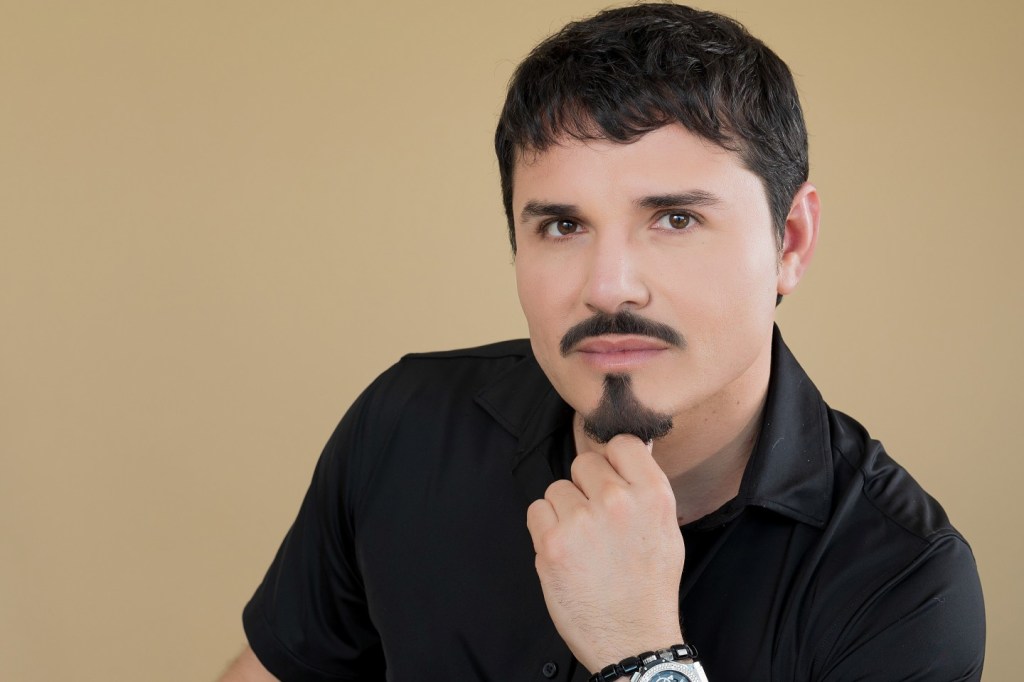
Trending on Billboard Nearly 20 years ago, Horacio Palencia reached the top of Billboard‘s Regional Mexican Airplay chart as a songwriter for the first time. Today, the acclaimed Mexican musician has amassed 45 No. 1s on that chart, the most recent being “Pa’ Él” by Los Ángeles Azules and Tini, which topped the ranking dated Nov. 14. Explore See latest videos, charts and news Palencia’s charts journey began on June 16, 2007, with “De Ti Exclusivo” by La Arrolladora Banda El Limón de René Camacho, which marked the beginning of a golden era for the Sinaloan band and gave a significant boost to the regional Mexican genre. Palencia went on to pen hits for La Arrolladora and other groups, including Banda El Recodo de Cruz Lizárraga (“Me Gusta Todo de Ti”), Banda MS (“Hermosa Experiencia,” “No Me Pidas Perdón”), La Adictiva (“Nada Iguales,” “El Amor de Mi Vida”) and others. At 44, Palencia — born in El Rosario, a small town near Mazatlán, Sinaloa — boasts one of the most significant repertoires in the regional Mexican genre, with accolades including six Latin Grammy nominations, multiple BMI Latin Awards for songwriter of the year, the 2024 BMI Presidential Award and numerous Billboard Latin Music Awards. “I like making music that transcends, that lasts for many years and that people continue to sing for generations,” he tells Billboard Español from his studio in Mazatlán, which opened its doors on Nov. 16 — the same day his name was added to the Walk of Stars in the Mexican city. Palencia’s career has evolved alongside the music industry over two decades. With more than 3,000 songs written, the singer-songwriter’s work has also been performed by major artists such as Christian Nodal, Grupo Firme, Calibre 50, Fuerza Regida and, more recently, Ricardo Montaner. (The latter reached the top of Regional Mexican Airplay for the first time in September with “Para Que Seas Feliz,” co-written by Palencia). About those experiences and others to come, he talks to Billboard. Did you ever think your songs would change the direction of a music genre? There’s always the hope of doing great things. Since the beginning of my career, I’ve aimed to create songs that endure over time, and fortunately, that’s been the case. I’m from the old school of regional Mexican music, the traditional style, and for me, it’s a blessing to have been part of the boom of banda music from Sinaloa when albums started selling millions of copies. You’ve reached No. 1 on the Regional Mexican Airplay chart 45 times with your songs. Was this your expectation as a songwriter? When I started, I dreamed of being on a Billboard chart. I was always a big fan of checking what was happening with songs. So, when I made it onto the charts for the first time, it was a dream come true. Reaching No. 1 was a very significant and exciting moment for me. Of the songs that have reached No. 1, do you have a favorite? Rather than favorites, I would say some are very significant. Among them are “De Ti Exclusivo,” recorded by La Arrolladora Banda El Limón; “No Me Pidas Perdón,” performed by Banda MS; “A Través del Vaso,” which catapulted Grupo Arranke — from which Carín León emerged — and later became a hit for Banda Los Sebastianes. And I’d also include “Ya Supérame,” sung by Grupo Firme and Lenin Ramírez, which marked a moment of transition into the modern era of regional Mexican music. How do you view traditional music compared to new trends? The old-school music is divided from the modern. I don’t understand why new artists claim they’re not part of the regional Mexican genre; charchetas and tololoche have always been instruments of the genre. I feel like they’re minimizing it. There are new singers who bring their own style, but it’s still regional Mexican music. Artists from the corridos tumbados movement say they’re fans of Banda El Recodo, Ariel Camacho, Valentín Elizalde, so it’s inconsistent for them to claim they’re something else. You can’t disconnect from your roots. In recent years, you’ve given young songwriters the opportunity to collaborate with you. How has that experience been for you? We’re at a point where we need to support new talent and learn from them — it’s a win-win. I’m all for exchanging ideas if it helps us evolve, without losing the essence and style of our songs. For a long time, you wrote songs solo. Are you okay with sharing royalties with other songwriters? Nowadays, it’s very difficult for a solo songwriter to remain relevant. These days, singers or producers ask for co-writing credits. There are things about it I don’t like; I’m from the old school where songwriters wrote alone and earned alone. I didn’t like co-writing, but now, if you don’t share your talent, you won’t get anywhere. In recent years, we’ve seen that some songs have too many writers. What do you think about this? Definitely, and some things aren’t right. But there are two options: either you fight the industry, or you adapt to the new ways. I think a middle ground needs to be found. As a songwriter with my career, I also set limits because abuse can’t be allowed. You were a pioneer in defending the rights of regional Mexican songwriters. That’s right. I fought for my colleagues’ rights. For example, on video channels, they didn’t list the songwriter’s name. I worked to change that, although there’s still much to achieve for the rights of our community. Are you currently working on songs for any specific artists? Yes, on two very important and very different projects: the new album by Xavi, who I think is very talented — in fact, we just released a single called “Nadie Te Extraña,” which premiered at the Billboard Latin Music Awards. I’m also producing an album for Alejandra Guzmán, another challenge in my career because it’s a pop-rock record.
Horacio Palencia Celebrates Historic Billboard Chart Achievements: ‘I Like Making Music That Transcends’
Full Article
Original Source
Read the full article at Billboard →KhanList aggregates and links to publicly available news content. We do not host full articles from third-party sources. Always verify important information with original sources.