
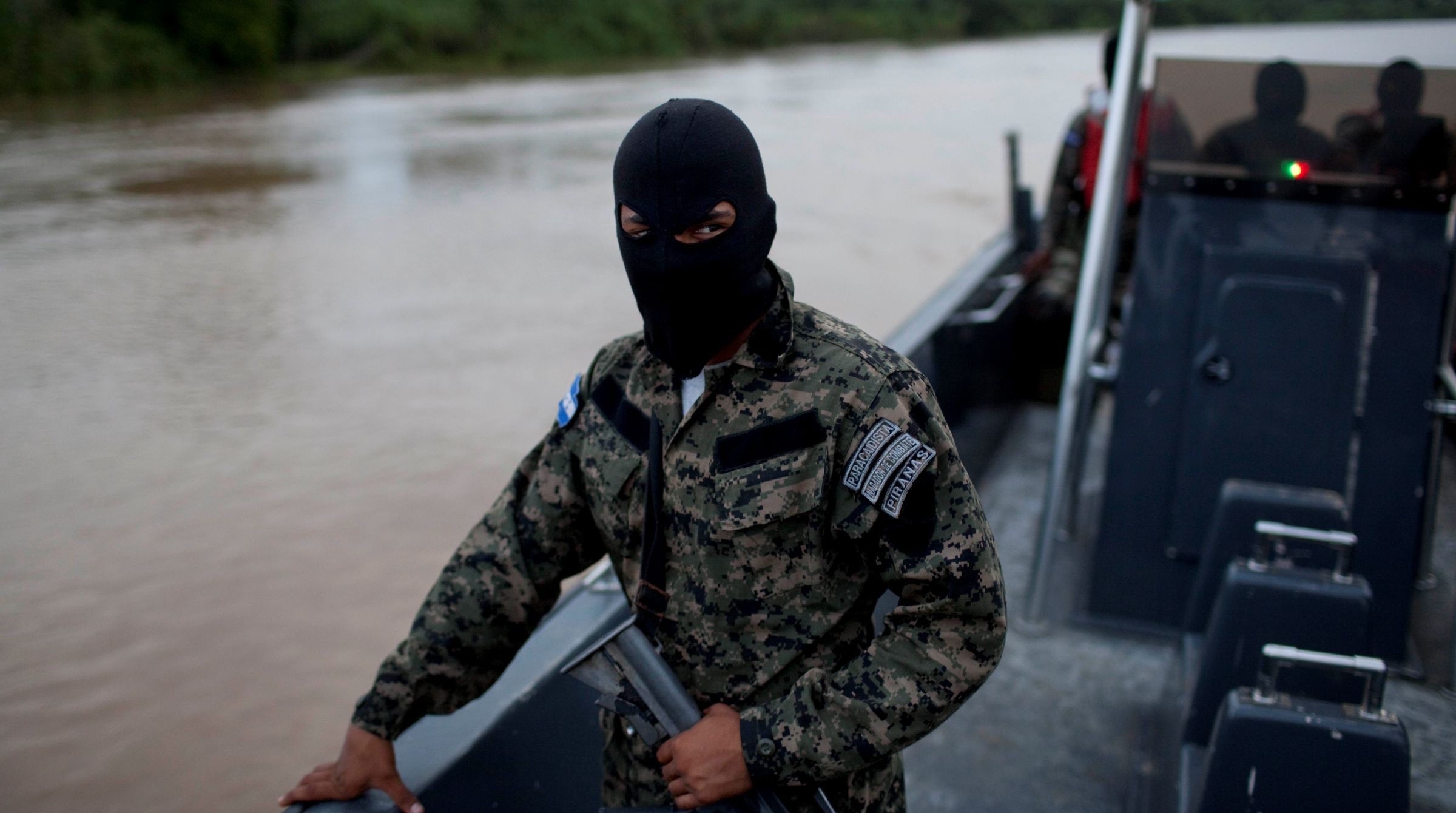
Deforestation, organized crime and the expansion of cattle ranching have led the government in Honduras to announce an “environmental emergency” in the Río Plátano Biosphere Reserve, the largest protected area in the country. The 36-month emergency, issued as a presidential decree on Nov. 10, will devote 1.5 billion Honduran lempiras (more than $55 million) over the next three years to halt “environmental deterioration,” according to an official statement. “The initiative represents a commitment by the government to move from addressing threats to sustained intervention, with defined resources and institutional responsibilities,” presidential legal advisor Roberto Zacapa said in the statement. The more than 832,000-hectare (2 million-acre) reserve stretches across the departments of Gracias a Dios, Colón and Olancho, and includes numerous Indigenous Miskito, Pech and Garífuna communities. In 1982, a section of it was designated as a UNESCO World Heritage Site. The reserve’s remote location along the Nicaraguan border has made it vulnerable to deforestation, drug trafficking, cattle ranching, gold mining, wildlife trafficking, roadbuilding and other illegal activities. At least 6,691 hectares (16,533 acres) of forest were cut down between 2023 and 2025, according to the Forest Conservation Institute (ICF), the agency managing the country’s forests. Since 2011, the reserve has been on UNESCO’s List of World Heritage in Danger, a list of sites facing serious threats to their environmental or cultural heritage. “It’s like the wild west, where there’s no law and people come in and do whatever they want, and the rights of Indigenous communities are violated,” Wildlife Conservation Society (WCS) Honduras program director, Edgard Herrera Scott, told Mongabay. WCS attended preliminary meetings about the emergency. It wasn’t shown the final version. A copy of the decree hasn’t been made public, but the funding will likely be spent on increasing law enforcement presence in the core zone of the reserve, Herrera said. That could include new patrol posts. The Secretariat of Natural Resources and Environment, the Secretariat of National Defense and the ICF will work together on the effort, according to the statement. “[The institutions] will coordinate resources and capabilities to protect the forests, biodiversity and ecosystems of the reserve,” the statement noted. This isn’t the first time that the country has used a state of emergency to combat environmental crimes. In 2024, the National Defense and Security Council declared an emergency for all the forests in Honduras. The move was part of a zero-deforestation resolution that added funding for conservation and laid out measures to increase state presence in protected areas. However, some environmental groups have criticized the 2024 initiative, saying the plan hasn’t been completely carried out and deforestation continues to threaten protected areas like the Río Plátano Biosphere Reserve. Herrera said he hopes the recent funding will lead to substantive change. “We have to turn what’s on paper into action,” he said. “That much is certain.” Banner image: Honduran Navy officers patrol in Patuca river, near Ahuas, a remote community in La Mosquitia region, Honduras. Image by Rodrigo Abd via Associated Press. Credits Topics
Honduras declares ‘environmental emergency’ in Río Plátano Biosphere Reserve
Full Article
Original Source
Read the full article at News →KhanList aggregates and links to publicly available news content. We do not host full articles from third-party sources. Always verify important information with original sources.