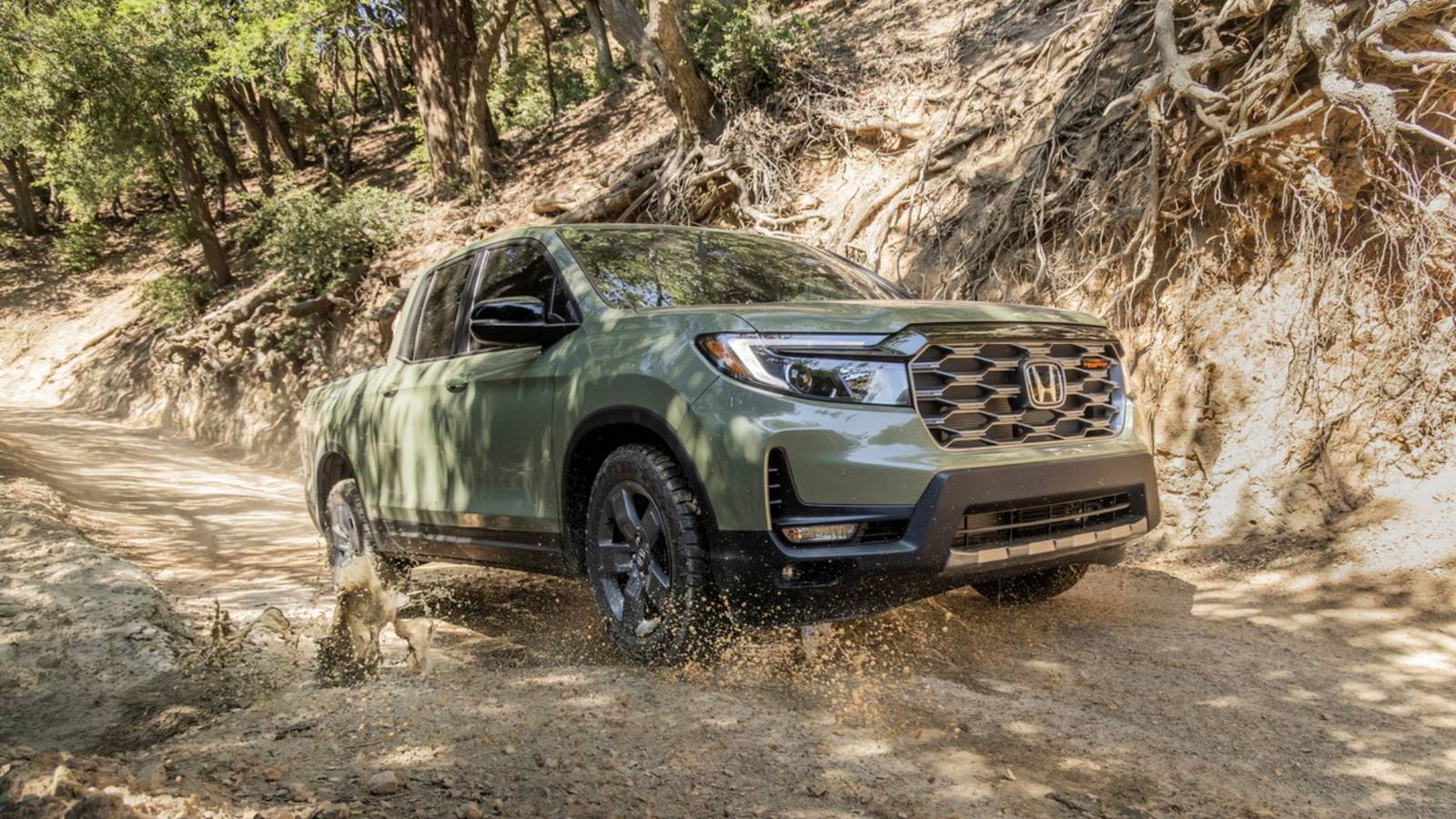
Published Jul 24, 2026, 12:45 PM EDT Based in the Motor City, Carl Anthony is the Automotive Lead at How-to-Geek and the host of AutoVision News Radio, a podcast that focuses on future vehicle technology, including next-generation ADAS innovations, electrification, and software-defined cars. A broadcaster by nature, he has appeared on popular podcasts and radio shows, including Wrench Nation, Cars Yeah, The Car Doctor, and Digital PR Explained. Carl’s frequent appearances on MotorMouth Radio (WHPC 90.3 FM) over the last decade have made him a trusted resource for car enthusiasts, while his hosting of the AutoSens Insights series continues to spotlight the latest automotive technologies. Prior roles include serving as a new vehicle launch and dealer trainer for Ford, Honda, Mercedes-Benz, and Volvo. Carl was a senior product specialist on Chevy's National Truck Team, an experiential marketing program that travels the United States, and a respected member of the FCA (now Stellantis) national auto show team, where he served as the resident expert for consumers on the Dodge Charger and Challenger. Before the automotive industry, Carl was a disc jockey, producer, and programmer at several popular Midwest radio stations, including KIWR, KEZO, KJAN, and KELO-FM. He is a graduate of Iowa Western Community College in Council Bluffs, where he dual-majored in the Electronic Media studies program, earning an Associate of Applied Sciences degree in both radio and television broadcasting. Honda built the Ridgeline to compete in the same segment as the Toyota Tacoma and Chevrolet Colorado, but with a different approach. When the truck launched for the 2006 model year, Honda skipped the body-on-frame design that defined the segment and used a unibody platform shared with the Pilot instead. The automaker’s goal when the Ridgeline launched was to target owners who already had a pickup sitting next to their current Honda in the garage. Why can’t that truck also be a Honda? And so, the company bet that ride quality and cargo hacks like the in-bed trunk would matter more to that buyer than raw towing numbers. Honda’s idea, while strong in theory, never found enough buyers. The Ridgeline’s unconventional styling and spec sheet, when compared to traditional pickups, might have been to blame. Production stopped after the 2014 model year as Honda omitted the Ridgeline from its lineup in 2015 and 2016, bringing back a redesigned version for 2017. While the 2017 model retained its unibody platform (albeit updated for the redesign), the exterior and interior styling underwent an overhaul, which gave the Ridgeline a more truck-like appearance. Now, a decade later, the Ridgeline is heading into a second pause for perhaps similar reasons. Honda recently confirmed the development of a third-generation Ridgeline, but the current model must step aside first. Base Trim Engine 3.5L V6 ICE Base Trim Transmission 9-speed automatic Base Trim Drivetrain All-Wheel Drive The second disappearing act New powertrain could be in the works Honda's announcement said that production of the Ridgeline will cease later this year, though the automaker hasn't given an exact date. The new truck is set to arrive within two years, with design work happening at Honda's Southern California studio and engineering handled at its Auto Development Center in Ohio. The next-generation Ridgeline will still come from Honda’s Alabama Auto Plant, the same factory that builds the Passport, Pilot, and Odyssey. “The next Ridgeline, which will continue to be built by our associates in Alabama, will advance this legacy while gaining even more rugged design and capabilities,” said Lance Woelfer, vice president of auto sales at American Honda. Dealers shouldn't run out of Ridgelines the day production stops. Honda still has 2026 models to sell through, the same way leftover 2014 trucks kept moving through dealer lots during the first hiatus. Honda's release doesn't explain why the change to a new generation needs this pause at all. According to a report from Automotive News, the holdup comes down to the engine. The Ridgeline uses an older single-overhead-cam V6, while the Passport and Pilot have already moved to a newer dual-overhead-cam version of the same engine family. Fitting the newer engine into the Ridgeline is expected to take about 18 months, driven perhaps by fuel economy commitments Honda signed with California that run through the 2026 model year. In the meantime, Honda released the "teaser" image below, which provides an idea of what the third-generation Ridgeline will look like, or at least its silhouette anyway. What the "more rugged design" might mean Building on what Honda already offers Credit: Honda A more rugged design, as Woelfer indicated, could address a problem that once hindered Ridgeline sales. Honda's market research found that the unconventional styling kept buyers away from the first-generation Ridgeline, something the 2017 redesign (and the 2021 model-year refresh) tried to address with their respective styling updates. If more rugged styling and capability is the goal, Honda has a few key ways to deliver on that for this third generation. Honda hasn't said whether the unibody platform itself changes for generation three, but any styling and equipment updates could just as easily land alongside a platform and chassis update. Honda already offers two distinct styling directions within the current-generation Ridgeline. The TrailSport adds all-terrain tires, skid plates, and an off-road-tuned suspension for a tougher look, while the Black Edition leans into comfort and appearance with details like red ambient lighting and ventilated seats. Every 2026 Ridgeline shares the same V6, nine-speed automatic, 5,000-lbs. max tow rating, and all-wheel drive system. With the third-generation Ridgeline, perhaps more of the rugged TrailSport styling cues find their way onto other trim levels, including the entry-level models. With a new TrailSport Ridgeline specifically, Honda could integrate things like its Trail Experience app, which displays driver-centric data points from the vehicle on the interior touchscreen while off-roading. Meanwhile, a Black Edition option could still exist for buyers who want the comfort upgrades and midnight-inspired styling without the trail-focused hardware. If the market were there and it were possible from an engineering and design aspect, Honda could even make a more luxurious version of the Ridgeline, something with higher-end leather and carbon fiber trim. While Honda did not say anything in its official press release, it’s possible the new Ridgeline will have a hybrid powertrain to better compete with the likes of the Chevrolet Colorado, Ford Ranger, Nissan Frontier, and Toyota Tacoma. Doing so would most likely increase the Ridgeline’s power output and towing capacity, two things many truck buyers prioritize, whether they actaully need that capability day-to-day or not. 2026 Ridgeline models still on sale for now Honda will continue to sell down current 2026 inventory while the Alabama plant preps for the new generation of the Ridgeline. The 2026 model starts at $42,290 for the Sport trim and tops out at $49,390 for the Black Edition Two-Tone. Both figures include the $1,495 destination charge. Every Ridgeline trim has a three-year/36,000-mile bumper-to-bumper warranty, a five-year/60,000-mile powertrain warranty, and five years of corrosion protection with unlimited mileage.
Honda's Ridgeline is vanishing again—and this time it might not come back the same
Full Article
Original Source
Read the full article at Howtogeek →KhanList aggregates and links to publicly available news content. We do not host full articles from third-party sources. Always verify important information with original sources.