
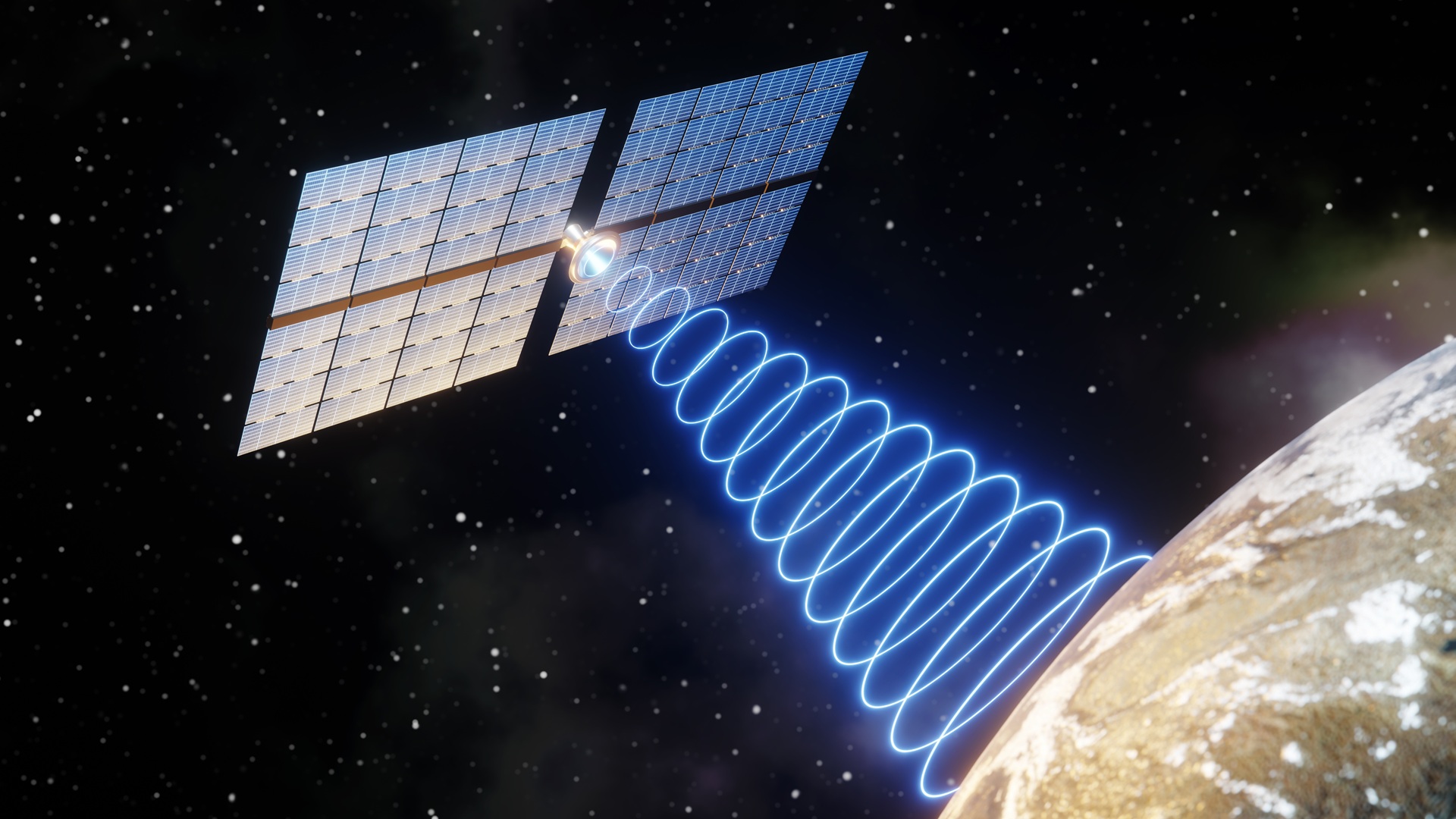
A solar power startup has received backing from US authorities to design, build, and test a homing beacon that will enable its space-based solar energy system accurately beam power from orbit to receiving solar arrays on Earth. Overview Energy secured the contract through the Operational Energy Capability Improvement Fund (OECIF). The company announced the project on Wednesday, September 30. The technology will allow the firm’s satellites to identify and authenticate receiver sites on the ground. Once a site is confirmed, the satellites could lock onto it and precisely beam energy from orbit to Earth. That said, satellites in geosynchronous orbit could receive sunlight around the clock. The proposed satellites would collect sunlight in space and convert the captured energy into near-infrared light. The safe, invisible beam would then be directed toward existing and future utility-scale solar facilities on Earth. A precise target The homing beacon, a small device that cam be hidden aboard a starship, would provide the most significant connection between Overview’s satellites and their intended destinations on Earth. It would be installed at each solar receiver site. An orbiting satellite could afterward use its signal to locate the site and establish a precise lock before transmitting energy. According to the company, the system will require an active and authenticated beacon before energy transmission can begin. This will help prevent attempts to spoof or hijack the signal. “The connection between space and the ground is the most critical element of space solar energy, especially for warfighters who depend on power at precise locations,” Darko Filipi, Overview Energy co-CEO, said. Under the Operational Energy Capability Improvement Fund (OECIF) program, the company will work directly with military staff at operational sites. It aims to visit bases during the early design process to gather requirements before returning with beacon hardware for field testing and feedback. The military could use the technology in places where reliable power is difficult to provide. Remote or contested bases often rely on fuel convoys. Space-based solar power could offer an alternative source of electricity without the need for regular fuel deliveries. The system could furthermore redirect power between continents as demand changes. First demo planned for 2028 If development goes as planned, the beacon will be integrated into the firm’s first satellite for a space solar energy demo in 2028. The tech would then serve as the baseline ground hardware for the company’s planned geosynchronous Earth orbit (GEO) satellite constellation, whose deployment is scheduled to begin in 2030. OECIF’s Combat Power Portfolio Lead, Christopher DePuma, pointed out that the beacon will ensure precise and secure power delivery from orbit to all verified destinations. “The award advanced key technology to bring resilient energy safely to the warfighter,” DePuma said. The technology has already undergone an earlier test, with power beamed from a moving airborne platform. The experiment validated the tracking and pointing systems designed for use in orbit. “Having proven the core technology during airborne demonstrations, this award allows us to build operational hardware shaped directly by end-user input,” Filipi concluded in a press release. Get the latest in engineering, tech, space & science - delivered daily to your inbox.Based in Skopje, North Macedonia. Her work has appeared in Daily Mail, Mirror, Daily Star, Yahoo, NationalWorld, Newsweek, Press Gazette and others. She covers stories on batteries, wind energy, sustainable shipping and new discoveries. When she's not chasing the next big science story, she's traveling, exploring new cultures, or enjoying good food with even better wine.
Homing beacon gets US support to direct solar power beams from orbit to Earth
Full Article
Original Source
Read the full article at Interestingengineering →KhanList aggregates and links to publicly available news content. We do not host full articles from third-party sources. Always verify important information with original sources.