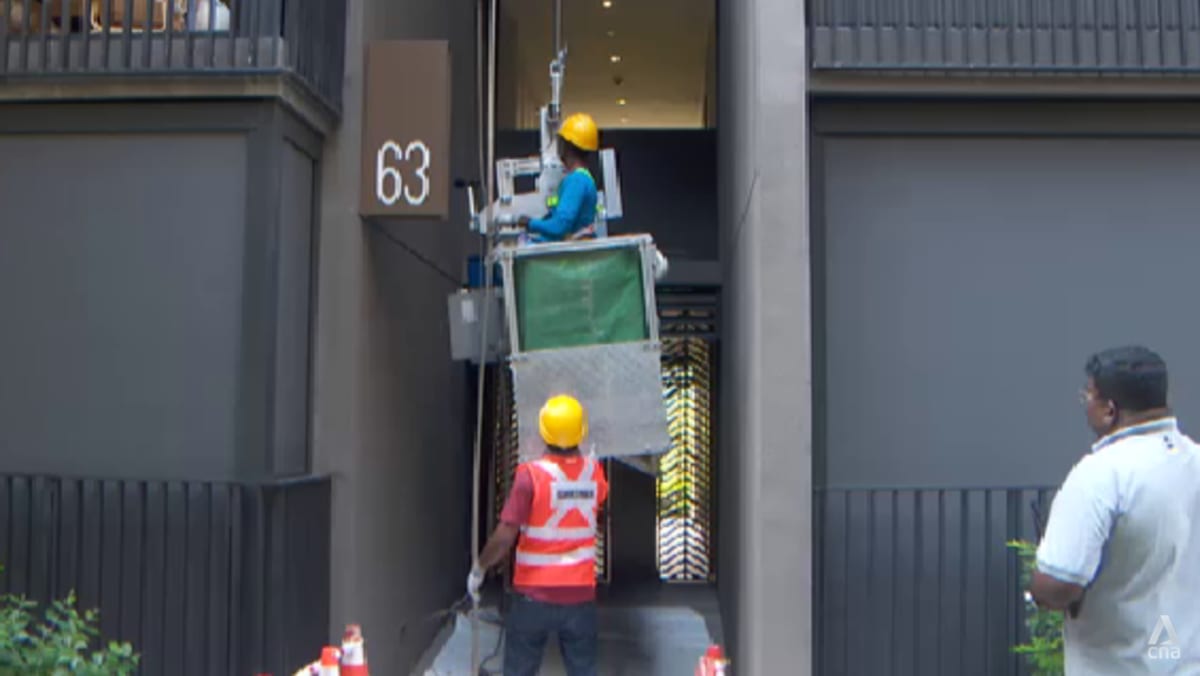
Singapore Developments such as Copen Grand and Shaw Tower show how relatively small design choices can reduce maintenance costs over a building's lifetime, a study by the Building and Construction Authority has found. Copen Grand in Tengah was designed with 1.2m-wide access space to allow maintenance workers to reach the facade using a gondola system. New: You can now listen to articles. This audio is generated by an AI tool. 23 Jul 2026 04:20PM SINGAPORE: At the newly completed Copen Grand condominium in Tengah, gondolas can access the facades of all residential blocks, eliminating the need for scaffolding whenever the building's exterior needs to be cleaned or repainted.Other design features, such as counters in common washrooms that reduce water spillage, also cut the time needed for cleaning.They added just 0.2 per cent to the development's construction cost, but can save up to S$110,000 (US$85,000) a year in maintenance expenses, according to a Building and Construction Authority (BCA) study.By making routine maintenance tasks quicker and safer, the features reduce the estate’s long-term upkeep costs, with the savings potentially helping to lower residents' monthly maintenance fees. A raised counter ledge in a common washroom at Copen Grand helps keep water off the floor during use. EARLY PLANNING REQUIREDThe condominium's architect said such features have to be incorporated from the outset."We have to put these measures in the planning stages because it's very difficult to implement when the project is completed,” Mr Markus Cheng, senior associate partner at ADDP Architects, told CNA.At Copen Grand, for example, the building was designed with 1.2m-wide access space so maintenance workers can reach the facade and operate the gondola system.Mr Cheng said providing such access can be challenging in land-scarce Singapore, making it difficult to incorporate after construction.He added that architects also have to balance maintainability with design aspirations.Some ceilings at Copen Grand were capped at 3m so air-conditioning, electrical and other building services could be accessed without the need for extensive scaffolding. SAVINGS EXTEND TO COMMERCIAL BUILDINGSThe same approach is also being applied to commercial developments.One example is the redeveloped Shaw Tower at Beach Road, where features to make the building easier to maintain were incorporated into the design.An integrated track allows a single crane to clean or replace external glass panels, while permanent access systems such as cat ladders allow cooling towers to be serviced without erecting temporary scaffolding.Mr Darren Burrows, senior associate director for building services at engineering consultancy Beca – which worked on the project's building services and sustainability design – said such features are especially important because many building systems require regular servicing throughout their lifespan."There's lots of moving parts and maintenance activities that we need to carry out, whether it's weekly, monthly or annually,” he said."The components can be either small but in tight spaces, or they can be large components that we need to consider how we can remove them from a building both safely and effectively, and in a cost-effective manner." A cat ladder at Shaw Tower. PUTTING A PRICE ON MAINTAINABILITYBCA’s study, conducted with Surbana Jurong, examined four local developments – three commercial buildings and one residential project – to quantify the costs and long-term benefits of incorporating maintainability features during the design stage.It found that most measures had a payback period of less than six years in the commercial projects and less than five years in the condominium, while reducing maintenance manpower requirements.For the commercial developments studied, the measures added between 0.6 per cent and 1.5 per cent to construction costs, but could generate annual operational savings of up to almost S$1 million.National Development Minister Chee Hong Tat unveiled the findings at the opening reception of Singapore Archifest 2026 on Wednesday (Jul 22). He said many of the biggest productivity gains were determined during the design stage.“The biggest gains came from architectural decisions – choices about design specifications, floor materials, ceiling types and facade access – and this reinforces the point that maintainability should be an upfront design consideration.” BCA said it commissioned the study after industry players sought clearer evidence on whether designing buildings for maintainability justified the additional cost.Mr Deva Lutchia, principal manager at the authority’s Facilities Management Transformation department, said developers and building owners generally recognise the importance of such features, but many have been looking for stronger evidence of the costs and benefits."They understand that intuitively it's important to do it, but lack the quantitative evidence on how much it costs, or even how much it will save (them) downstream,” he said.“This study brings in that perspective and it really puts the hard figures on the business case of design for maintainability."BCA said it will share the study's findings with architects, engineers and developers to encourage wider adoption of design-for-maintainability features in future projects. It also hopes greater public awareness will encourage homebuyers to look out for such features when choosing a property.
Homes designed for easier upkeep could mean lower maintenance fees for owners
Full Article
Original Source
Read the full article at Channelnewsasia →KhanList aggregates and links to publicly available news content. We do not host full articles from third-party sources. Always verify important information with original sources.