
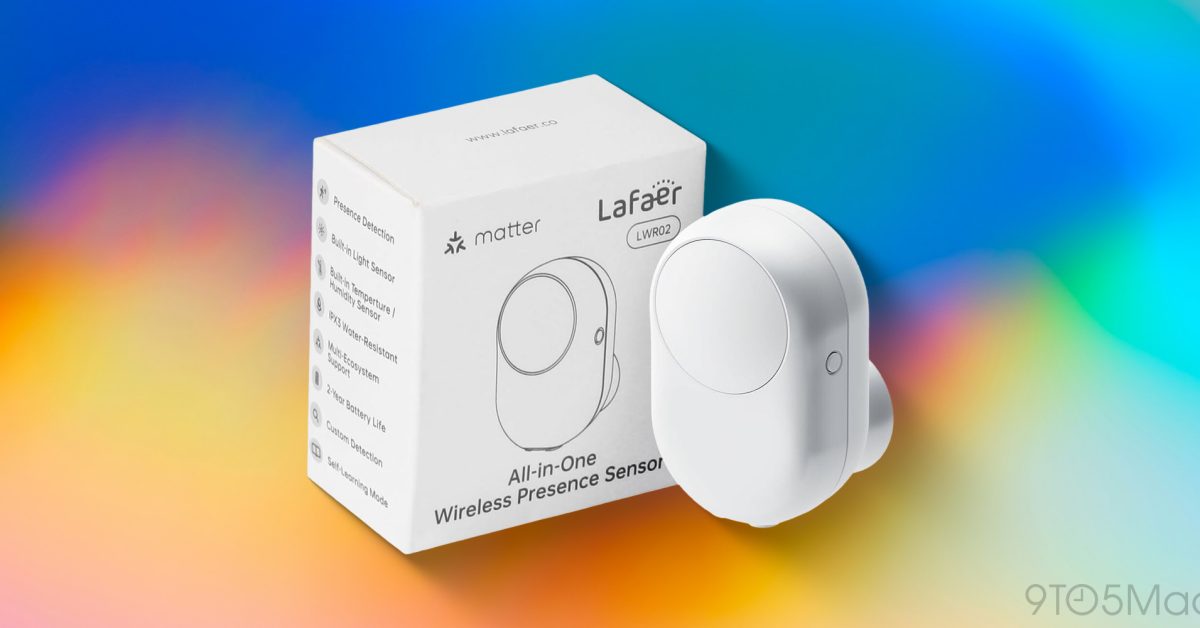
Motion-based automations are generally straightforward in Apple Home. The only carve-out is lighting, because some rooms are hard to judge by time of day alone. Depending on the windows and placement against the sun, some rooms might need light-based automations earlier in the day than others. The Lafaer 5-in-1 presence sensor fixes that with a light sensor most motion sensors lack, along with mmWave radar. HomeKit Weekly is a series focused on smart home accessories, automation tips and tricks, and everything to do with Apple’s smart home framework. A standard motion sensor uses PIR, which only detects movement, and that works fine in many situations. If you’re still for long periods, you’re invisible, and the automation assumes the room is empty. The Lafaer LWR02 pairs PIR with 2.4 GHz mmWave radar. The PIR-based motion sees you walking in, and the radar sees the minor stuff, like breathing and shifting on the couch, so the room stays “occupied” for as long as you are in it. The two together also reduce false positives from ceiling fans, curtains, and the dog, because the radar and PIR both must agree before the sensor reports motion. In Apple Home, that shows up as an occupancy sensor and a motion sensor from the same device. The light sensor is the key part “Turn on the lights when someone enters” is a common automation I use, but it can be tricky. What if you only want it when it’s not light outside? Doing it based on time of day sometimes works, but what about depending on where the windows are facing, etc.? You might have a room that gets darker an hour earlier than another room. “Turn on the lights when someone enters, and it’s dark in the room” is what the light sensor can handle for you. In the Home app, that means triggering a sensor for occupancy, then converting the automation into a Shortcut and adding a condition for the light level. It’s a few extra steps, but it does really give you more fine control over how it works. Five Apple Home sensors built-in Presence, motion, light, temperature, and humidity all come from the same device, and each one appears in Apple Home as its own sensor, so you can build automations around whichever ones fit the room. It’s IPX3-rated, so bathrooms, kitchens, and laundry rooms are fine to use in. Coverage is about 13 feet for presence and 26 for motion across about 120 degrees, which works in a bedroom, office, or bathroom. It’s not going to cover a great room from one corner. The base is a magnetic half sphere, so you can aim it, and it mounts with adhesive or sits on a shelf. I generally like to use the shelf for these types of sensors. Thread and two AAA batteries The Lafaer LWR02 is Matter over Thread, so it pairs directly with a HomePod, HomePod mini, or Apple TV 4K with no Lafaer hub or account needed. It runs on two included AAA batteries, is rated for up to two years, and rechargeable AAAs work with it as well. Thread is why a sensor doing this much can last that long on batteries. All sensor data is processed locally, so it only uses a trickle on the batteries. Wrap up on Lafaer LWR02 Lights that turn off while you’re sitting still in the room are the reason a lot of people stop using motion automations in smart homes. The Lafaer LWR02 fixes that with mmWave radar and then lets you have more granular control of light-based automations based on what’s actually in the environment in the room, not just the time of day. The Lafaer 5-in-1 presence sensor is available on Amazon. FTC: We use income earning auto affiliate links. More.
HomeKit Weekly: Lafaer’s 5-in-1 presence sensor fixes an annoying automation in Apple Home
Full Article
Original Source
Read the full article at 9to5mac →KhanList aggregates and links to publicly available news content. We do not host full articles from third-party sources. Always verify important information with original sources.