
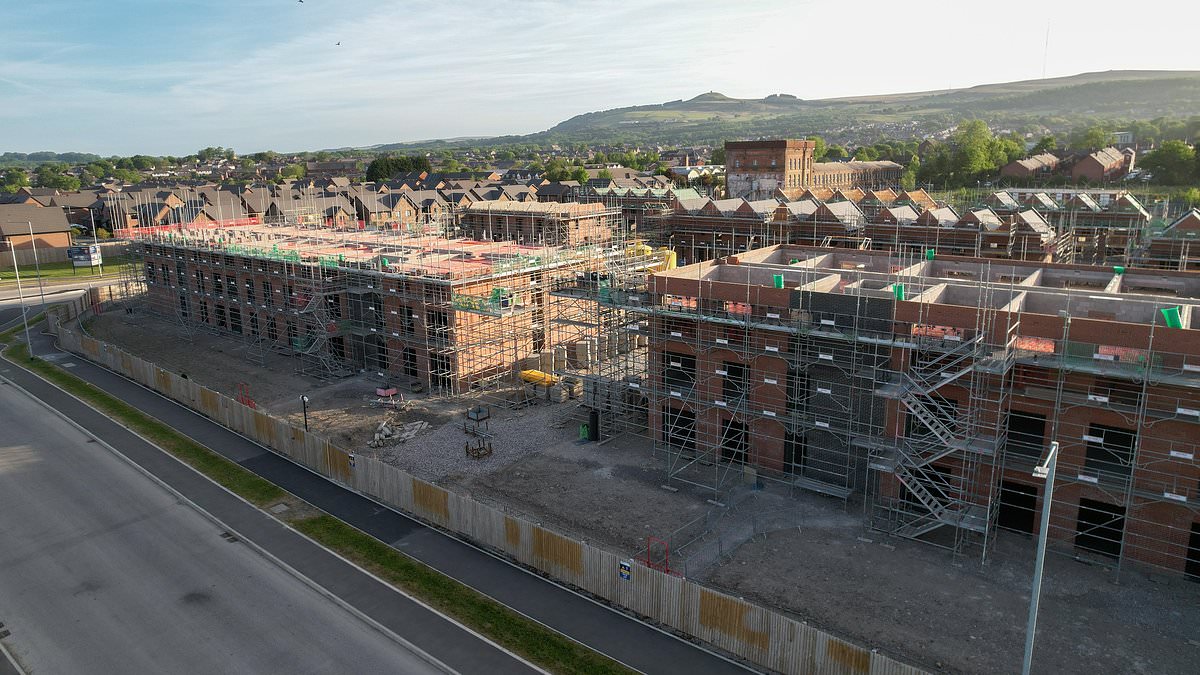
The number of homes being built is still falling far short of the Government's 1.5million target, new data shows, as a major property firm warned the completion rate is set to worsen. Only 202,700 homes were built in the year to June 2026, according to data analysed by estate agent Savills - a rise of 0.4 per cent from the previous three month period. This was based on the number of new Energy Performance Certificates issued. The documents are mandatory for all new homes.The Government needed to build an average of 300,000 new homes each year in order to meet its goal of 1.5million by the end of the current parliament in 2029. Savills has warned that the rate of homes being finished is set to slow between now and then, falling to an average of 167,500 per year over the five years to 2029-30. In an interview, housing minister Matthew Pennycook admitted it is 'looking really tough' for the Government to meet its five-year goal.' Only 202,700 homes were built in the year to June 2026, according to Energy Performance Certificate (EPC) data.The number of developments getting planning permission also fell to a new low in the first three months of this year, according to data from Glenigan and the Home Builders Federation. It revealed just 1,220 sites for private housing granted planning approval across England, the lowest since the dataset began in 2006. This was down from around 2,000 in 2022 and nearly 3,000 in 2017. Why is the Government failing to hit its target?Housing minister Pennycook blamed the slowdown on the Iran conflict, which has increased the cost of materials to builders, as well as increasing mortgage rates.During an interview with LBC this weekend, Pennycook said: 'We always knew things were tough, and things are really tough for house builders at the moment.'Not least given the conflict in the Middle East; materials prices are going up, demand for new homes is really sluggish not least because of mortgage rates. So it's a very, very challenging time for the housing market.'The rate of construction cost inflation has been 80 per cent higher than the rate of house price growth between 2020 and 2025, according to Savills' analysis. The HBF estimates that the cost of building a new house has increased on average by £76,000 since 2020, with even higher costs for new apartments. A construction source recently told This is Money that delivering a typical two-bed flat of 70 square metres in London has gone from £245,000 in 2016 to around £430,000 today, representing a 75 per cent increase.Meanwhile, the average selling price of a flat in the capital is lower than it was in 2016.The gap between build costs and property prices is putting pressure on developers' profit margins. The gap has been the most pronounced in London and the South East, where house price growth has been constrained by limited affordability and greater exposure to higher mortgage rates – but effects are still being felt all over the country.Savills says a sustained period of house price growth would be needed to get developers building again, but even then, there were other increasing costs.New building regulations and environmental planning policies have also significantly increased costs over the last five years, according to the HBF. The upcoming Future Homes Standard and Building Safety Levy is expected to hit developers' margins even more, with little prospect of imminent house price growth to offset increasing costs. The Building Safety Levy is a tax on new residential buildings that will come into force in October. It is intended to collect £3.4billion from UK home builders with the income raised from the levy being used to fix building safety issues across England such as unsafe cladding, ensuring people are safe.It will be charged before completion of the building work and collected by local authorities.The HBF says the levy will make development financially unviable in some parts of the country – adding £3,000 per plot on average. Neil Jefferson, chief executive of the HBF, said: 'If the Government wants to see housing supply increase it has got to look wider than planning and tackle the two major constraints of site viability and affordability.'Positive moves to boost housing supply are being thwarted by the growing level of taxation and cost of policy requirements that are making many sites simply unviable to develop. 'In a little over a month, the Government will introduce another new tax on new homes in the form of the Building Safety Levy, which will make a host of potential sites unviable at a stroke so the overall environment for home building looks like it will remain tricky in the short term.'Meanwhile, concerns around interest rates and the economy and a lack of affordable mortgage lending, in particular for young people, is suppressing demand for new homes and so limiting industry's ability to build them.'Best mortgage rates and how to find them Mortgage rates have shot up again due to inflation triggered by the conflict with Iran reversing hopes that the Bank of England would cut rates. This means those remortgaging or buying a home face higher costs.That makes it even more important to search out the best possible rate for you and get good mortgage advice, whether you are a first-time buyer, home owner or buy-to-let landlord.This is Money's partner L&C can help you with its fee-free mortgage service.> Compare mortgage rates> Find the right mortgage for you To help our readers find the best mortgage, This is Money has partnered with the UK's leading fee-free broker L&C.This is Money and L&C's mortgage calculator can let you compare deals to see which ones suit your home's value and level of deposit.You can compare fixed rate lengths, from two-year fixes, to five-year fixes and ten-year fixes.If you’re ready to find your next mortgage, why not use This is Money and L&C’s online Mortgage Finder. It will search 1,000’s of deals from more than 90 different lenders to discover the best deal for you.> Find your best mortgage deal with This is Money and L&C Mortgage service provided by London & Country Mortgages (L&C), which is authorised and regulated by the Financial Conduct Authority (registered number: 143002). The FCA does not regulate most Buy to Let mortgages. Your home or property may be repossessed if you do not keep up repayments on your mortgage.
Home building falling well short of Labour's 1.5m target - as property giant warns completion rate is set to worsen
Full Article
Original Source
Read the full article at Dailymail →KhanList aggregates and links to publicly available news content. We do not host full articles from third-party sources. Always verify important information with original sources.