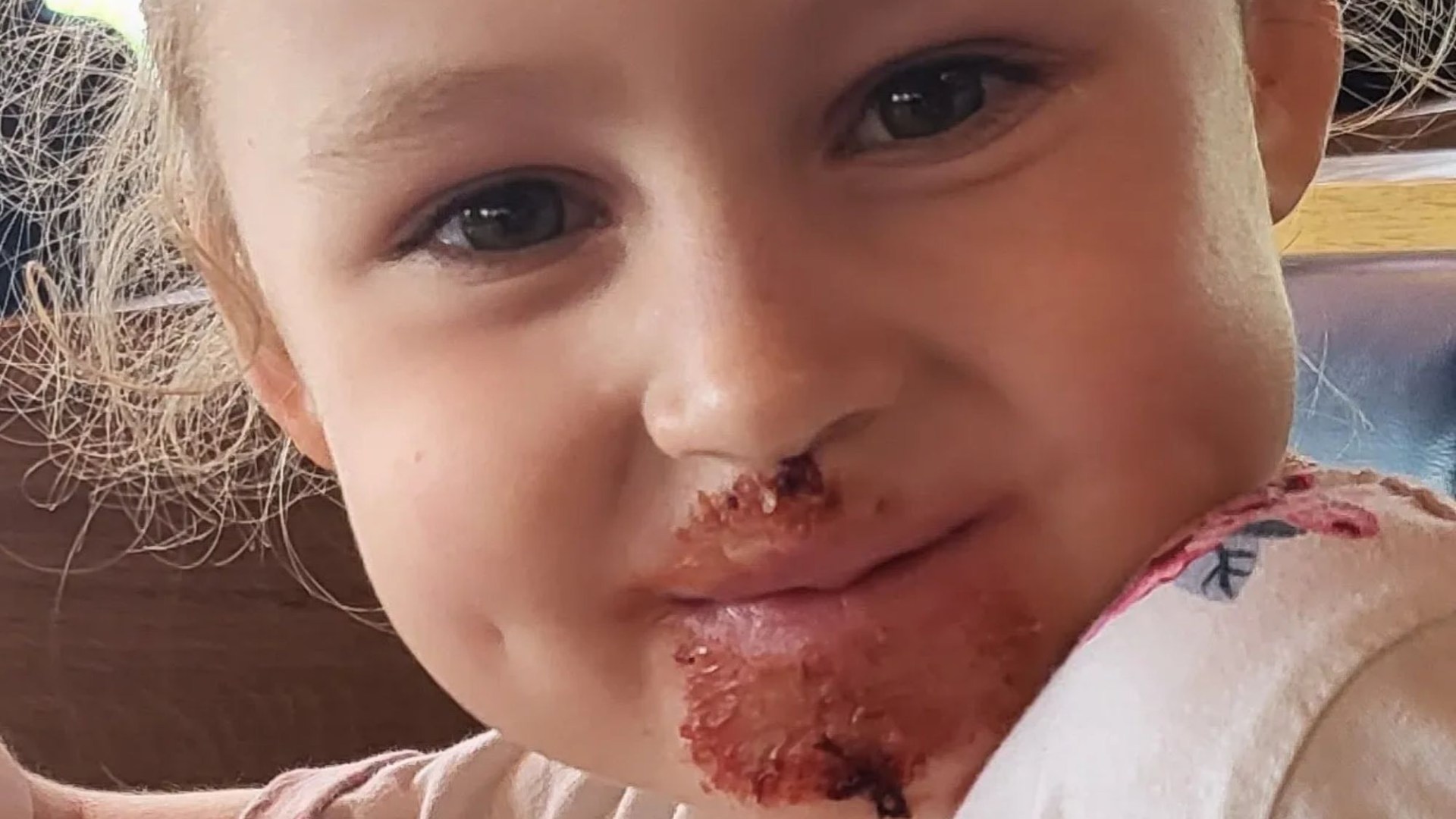
A LITTLE girl who was unable to smile due to agonising eczema has been given her childhood back after going through a pioneering drug trail. Hollie Wilcock, from Sheffield, first got eczema as a toddler which frequently became infected, meaning she has been in-and-out of hospital for the majority of her life, including with deadly sepsis. Hollie Wilcock has been left unable to smile at times because of her eczema Credit: Jam Press She first experienced eczema as a toddler and it would frequently become infected, meaning she’d be hospitalised Credit: Jam Press Her eczema got so bad that her skin used to crack and bleed, and other children wouldn’t understand. Mum Beckii, 35, told Sun Health: “Sometimes, other children would be mean about the way she looked. Sign up for the Health newsletter Thank you! “I had to bandage her fingers one-by-one when her skin was really bad and they’d call her a boxer or a mummy. “When it was on her face, people would say she had dirt on her or that she was covered in chocolate because it was around her mouth. “Hollie would get really upset and refuse to go to school. “It was heartbreaking for us to watch her struggling. “She’s such a positive and happy girl, but it did get her down – how could it not?” But her life has been transformed after taking part in a clinical trial for an undisclosed drug. Most read in Health “It’s changed our lives,” Hollie’s dad, Liam, 33, says. “Hollie’s skin is so much better. Mum Beckii, 35, says it was “hearbreaking” to watch her daughter’s struggle Credit: Jam Press “I had to bandage her fingers one-by-one when her skin was really bad and they’d call her a boxer or a mummy,” says Hollie Credit: Jam Press Her eczema got so bad that her skin used to crack and bleed, and she once got deadly sepsis Credit: Jam Press “She’s able to do all the things any 10-year-old should be doing; it’s given her childhood back. “We are so blessed this trial was available to us. She’s a brand new girl who always has a smile on her face. “And she’s back to taking part in all the activities she loves.” Eczema affects one in every five children. But the majority grow out of it. Hollie’s battle began with dry skin that gradually got worse. This becomes itchy – the key component of eczema that keeps sufferers trapped, with scratching leading to cracks, bleeding and scabbing. “It has been absolutely horrendous,” says Beckii. “She couldn’t wear dresses or T-shirts as she needed to keep her skin covered because it was so sore. “In the winter, her skin would crack so much that walking was difficult. “She was in agony. As well as the pain, it affected her confidence. “The eczema on her face made her self-conscious. “Luckily, as she’s gotten older, she’s educated people, including her class and teachers, so they have a better understanding of what she is going through.” Little Hollie Wilcock, from Sheffield, first got eczema as a toddler would become infected, meaning she has been in-and-out of hospital for the majority of her life, including with deadly sepsis. Credit: Jam Press Hollie was referred to specialist dermatologists at Sheffield Children’s NHS Foundation Trust Credit: Jam Press Liam, who works in sales, said: “It was relentless. At one point, she ended up in hospital for 10 days with septicaemia. “She was so poorly that we thought we might lose her.” Hollie’s parents had tried methods such as different moisturisers, steroid creams, bandage wrapping and wearing gloves in a bid to get her skin under control. But after little-to-no success, they were referred to specialist dermatologists at Sheffield Children’s NHS Foundation Trust. While there, they were told about a clinical research trial for a new drug. It involved fortnightly injections that can be given at home. Hollie began treatment in September 2023 and ended in December 2025. Professor Mike Cork, who worked with Hollie, says: “We are incredibly proud that through research […] we can offer hope, access to pioneering treatments and the chance for children to simply enjoy being children again.” Hollie says: “I was so scared at first because I don’t like needles. “But now, I’m much more happy and I can enjoy my life without being in pain all the time. “I used to get upset, because I couldn’t wear a dress without leggings or tights on underneath, since I used to scratch my skin all the time. “On hot days, this wasn’t fun. I can wear a dress properly now. Hollie’s dad, Liam, 33, says: “It was relentless. At one point, she ended up in hospital for 10 days with septicaemia” Credit: Jam Press Tips for managing eczema KEEP AN EYE ON TRIGGERS THERE are lots of things that can trigger and worsen eczema flares. “House dust mites, grass pollen, cat and dog fur, temperature changes, overheating, sweating, [in rare cases] sunlight,” lists Dr Jamil. “Soaps, shower gels, some detergents, cleaning products, some perfumes and sprays.” It’s about knowing what your triggers are and limiting contact as much as possible. AVOID COMMON ALLERGENS “Maintenance with non steroidal creams [between steroid use] is essential to prevent flares,” says Dr Jamil. Just make sure to check the labels. “They shouldn’t contain lanolin, perfumes, parabens, sodium lauryl sulphate (SLS). “Some people may use cocoa or shea butter, and they find it useful, but others could be really allergic. “Essential oils in coconut products can be an irritant. “Any product that has a strong fragrance and longer shelf life [will likely] contain a lot of preservatives. “To be on the safer side, use prescription products. “I like to introduce something called Topical Tecrolimus, which is a non-steroid. “But if you are still finding prescription products that irritate the skin, we go down the road of allergy testing to eliminate which ingredient an individual could be allergic to.” “Strengthening and restoring the skin barrier is crucial,” she adds. “You can do that by using emollients regularly, at least 500g of emollient at the time of a flare, over seven days.” CORRECTLY MANAGE STEROID USE “TOPICAL Steroid Withdrawal is horrendous,” says Dr Jamil. “People can be under-using or over-using topical steroid creams. “The Finger Tip Unit method (FTU) is used to explain how much steroid ointment you should be using. “We don’t like using steroids long term. “If frequent flares are happening, and steroids are being used too much, it’s an indication the individual may need to go down the next route of immune suppressant treatment.” CUT DOWN ON SUGAR “CUTTING sugar reduces inflammation, and going on an anti-inflammatory diet can help a lot with eczema,” says Dr Jamil. “That helps reduce inflammation markers in your skin, so your skin reacts less [during flares].” GET YOUR REST “WHEN you’ve got a flare of eczema, there’s a lot of stress on the body. “Stress can make eczema worse, so try to be as calm as possible. “If you’ve got a stressful job, speak to your employer [about making stress reducing changes], hydrate and get enough sleep.” Rest is so important because good sleep contributes to skin health and repair. “I love dressing up and singing and dancing with my sister. “I can do all of this without pain. I love my life now.” The drug type, known as biologics, tackle the underlying disease process and lowers inflammation. This is because at a deeper level, eczema is not a skin condition but an overactive immune system. It pumps out proteins telling the skin to inflame and itch. Severe eczema in children is also treated with broad immunosuppressants (like cyclosporine or methotrexate) that dampen the entire immune system. But rather than acting like a blanket on the immune system, biologics are more targeted. Recent trials have included tralokinumab, a biologic that blocks interleukin-13 (IL-13), a key driver of eczema inflammation. Another is lebrikizumab (Ebglyss), also a IL-13 inhibitor. Dupilumab (Dupixent) was the first biologic drug, called a monoclonal antibody, approved for treating eczema in the UK, in 2018. It is available on the NHS but to be eligible, patients would need very severe eczema and to have already tried a systemic immunosuppressant first, with no improvement. Holly still suffers from eczema flare-ups every now and again, though these are very minor and not a constant battle as before. Beckii said other children would be cruel Credit: Jam Press But now Hollie is brimming with confidence and able to live her life to the fullest, says Beckii Credit: Jam Press Beckii, a teaching assistant, added: “I can’t put into words just how much this trial has changed Hollie’s, and our, lives. “She is a different child. To think of what Hollie was like before the trial and the afterwards; it’s saved her life. “She still has flare ups, but not as bad. And she doesn’t get skin infections anymore. “So we’re able to enjoy our family time – and she can enjoy her childhood. “She sleeps better, doesn’t have to be bandage wrapped from head-to-toe or soak in the bathtub in oils every night. “It’s just amazing to see Hollie happy and living life to its fullest.” Comment now
Hollie struggled to walk and was left fighting for her life with sepsis from ECZEMA… now new drug has ‘cured’ her
Full Article
Original Source
Read the full article at Thesun →KhanList aggregates and links to publicly available news content. We do not host full articles from third-party sources. Always verify important information with original sources.