
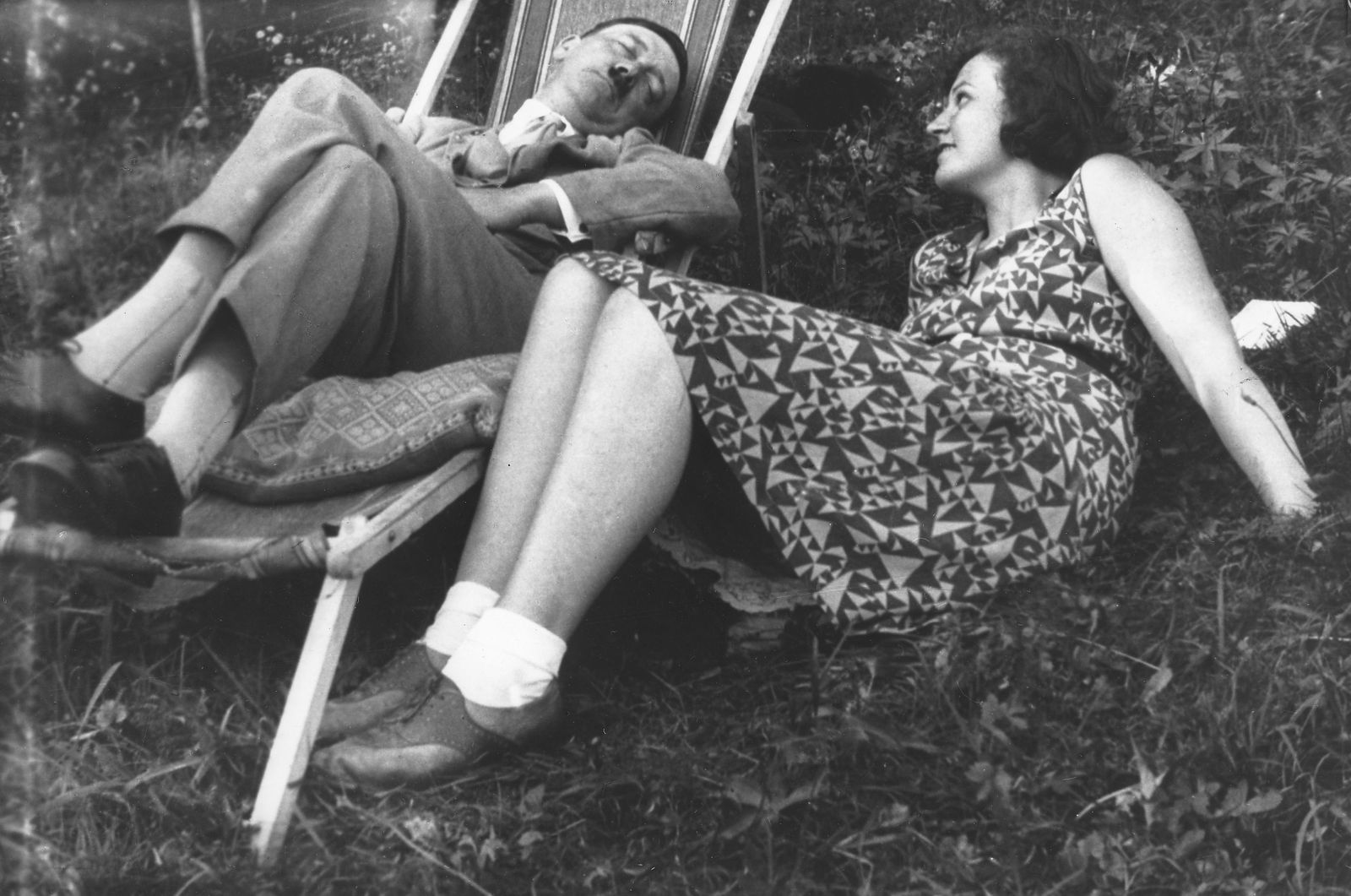
Recently uncovered documents about the timing of Geli Raubal’s death cast new doubt on the Nazi leader’s alibi, which had been considered reasonably sound for nearly a century September 25, 2026 3:07 p.m. Hitler and his half-niece Geli Raubald photographed in 1930 ullstein bild / Getty Images As the leader of the Nazi Party, Adolf Hitler had a direct role in the systematic murder of millions of people across Europe and beyond that is undisputed and well documented. But the German dictator’s potential involvement in the mysterious death of his half-sister’s daughter, with whom he shared an oddly close relationship, has remained much more ambiguous for nearly a century. In 1931, Hitler’s half-niece Geli Raubal, then 23 years old, was found dead in his Munich apartment, where she lived, from a gunshot wound to her lungs. According to official accounts, Hitler’s servant discovered her body sometime on September 19. Hitler was a leading suspect, not least because his own Walther pistol was the murder weapon, but he had a strong alibi: The ascendant far-right extremist was away that day in Nuremberg. For decades, the police report’s classification of Raubal’s death as a suicide—though questioned even at the time—has stood unchallenged in the absence of any other plausible explanation. Now, recent research, first reported by the German outlet Der Spiegel, appears to shed new light on the case. Harald Sandner, a German historian, tells the Telegraph’s Jörg Luyken that he has found a “crushing mass” of evidentiary details that “completely contradict the official, 95-year-old narrative put forward by the Bavarian judiciary” and the Nazi Party. In Munich’s archives, Sandner found two death notices and an official entry in the local death register that change the timeline of Rabaul’s death. They show that her body was recovered by police on the morning of September 18, when Hitler was known to still be in Munich. Hitler, Raubal and Raubal’s mother (far right) on a trip to the North Sea in 1930 ullstein bild / Getty Images The discrepancies may have been deliberate. In the days following Raubal’s death, a Munich newspaper reported that Nazi officials had met to strategize how to share the news publicly, according to the Telegraph. Hitler was gaining momentum as a political force with the party, and bad press threatened to derail his rise. Adding to their concerns were allegations that he and his half-niece had been arguing intensely in the days before her death, and that her corpse exhibited other injuries, such as a shattered nose. Sandner believes that the outcome of these meetings was to provide an alibi for Hitler by fudging dates and times in the public record. If true, the plan succeeded. “For generations, people simply copied this version off each other,” Sandner tells the London Times’ Oliver Moody. “My research exposes this document as a historical work of deception and shows precisely 62 mistakes, lies and deliberate manipulations by [officials] in the justice system and functionaries who were close to the Nazi Party, to formally conclude the case in Hitler’s favor.” Hitler’s relationship with his half-niece has long been the subject of speculation. She moved to Munich in 1927, and into his apartment in 1929. That Hitler wielded obsessive control over Raubal is well documented, and something that even family members have spoken about directly. “When I visited Berlin in 1931, the family was in trouble,” William Stuart-Houston, Hitler’s nephew, wrote in a 1939 article quoted in the Guardian in 2017. “Everyone knew that Hitler and she had long been intimate and that she had been expecting a child—a fact that enraged Hitler.” Did you know? A Navy appointment Despite his British citizenship and familial ties to the Third Reich, William Stuart-Houston served in the U.S. Navy during World War II. American journalist William Shirer described Hitler’s relationship with Raubal as “the only truly deep love affair of his life.” Biographer Joachim Fest called her “his great love, a tabooed love of Tristan moods and tragic sentimentality.” Thomas Weber, a historian at the University of Aberdeen in Scotland and an expert on Nazi Germany, tells the Times that an outside check of Sandner’s latest research seems to validate it. “From the outset, I was really trying to play devil’s advocate and try to poke holes in Sandner’s claim, but I can’t come up with a persuasive answer as to why this evidence would not seriously undermine the chronology of the death,” Weber tells the outlet. “At first, I thought this surely must just be a mistake. But … there is a discrepancy between these three documents and the established record.” You Might Also Like Get the latest stories in your inbox every weekday. More about: Adolf Hitler Crime Murder Nazis New Research World War II
Hitler Had an Intense, Mysterious Relationship With His Half-Niece. New Research Suggests His Alibi for Her Murder Might Not Hold Up
Full Article
Original Source
Read the full article at Smithsonianmag →KhanList aggregates and links to publicly available news content. We do not host full articles from third-party sources. Always verify important information with original sources.