
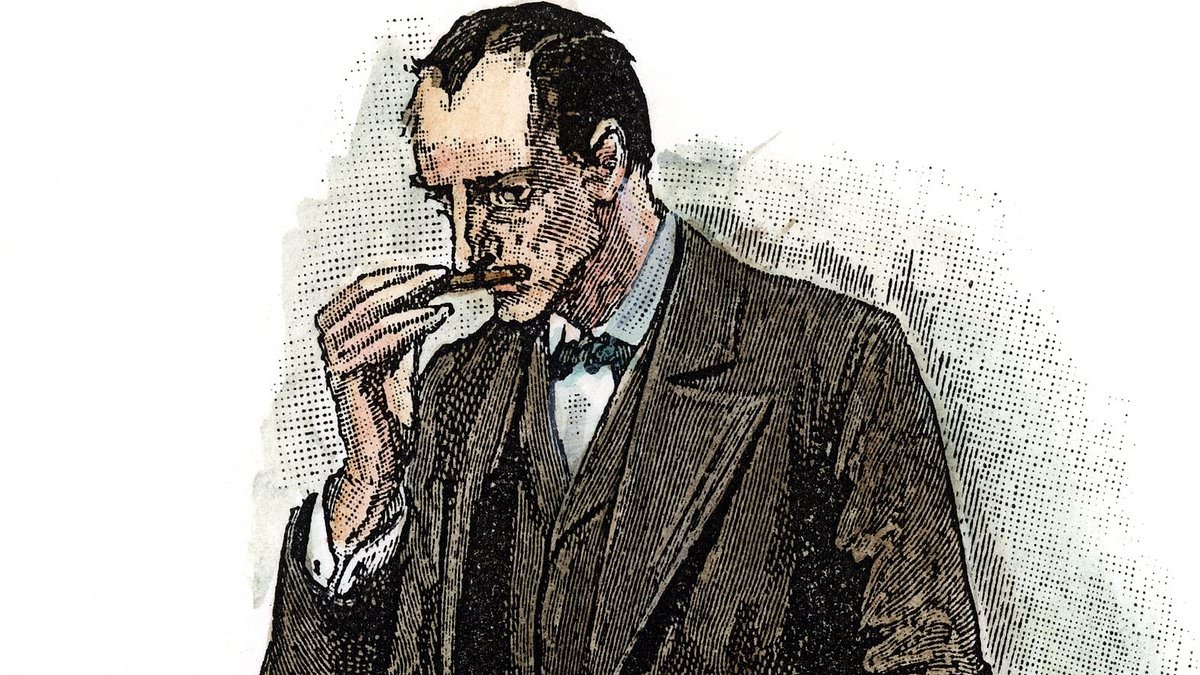
A historic pub with links to a Sherlock Holmes story was at the centre of a real-life whodunnit over unpaid bills and takings that disappeared, a court heard.Clive Stockton and his wife Sue, who ran 16th century Hill House Inn pub in Happisburgh, Norfolk, turned sleuths after receiving a surprise utility bill of £21,000 caused by their business falling behind on payments.They started ‘making inquiries into the cash flows and expenditure’ and discovered financial 'anomalies', with money repeatedly being paid out, according to prosecutor Oliver Haswell.The mystery was solved when Clive’s son Sam Stockton, 47, was challenged and admitted stealing cash while he was working at the pub and was responsible for the accounts.He later admitted splashing out much of the cash on gambling and cocaine which he said he used as pain relief for a debilitating medical condition.Sam, who turned up at court using a walking stick, was charged with the theft of £63,572 from the pub between January 2018 and November 2020 after his parents went to the police. Sam Stockton, 47, stole cash from the pub run by his parents, Clive and Sue, in Happisburgh, Norfolk The thief admitted taking up to £53,000 from 16th century Hill House InnHe denied the offence when he first appeared at Norwich Crown Court but later changed his plea to guilty on the basis that he had only taken between £48,000 and £53,000, which was accepted by the prosecution.The diabetic, who is in remission from cancer, had been warned at an earlier hearing that he faced a likely jail sentence. But he was shown mercy by Recorder Nicola Fitches despite his ‘despicably dishonest’ crime spree.Instead of imprisoning him immediately, she gave him a 30-month jail term suspended for three years and ordered him to carry out 200 hours of unpaid work after ruling his thefts were unsophisticated and lacked planning.Sam’s wife Jenny, 46, who lives with him in Norwich, had faced an identical theft charge but the case was not proceeded with as a result of his guilty plea and Recorder Fitches ordered her charge to lie on file.The Hill House Inn has a place in the canon of Sherlock Holmes tales after Sir Arthur Conan Doyle booked a room at the pub while on a motoring holiday in 1903.During his stay, the landlord's son, Gilbert Cubitt, showed him a curious script he had developed using drawings of pin men, leading to the author writing a story about the drawings. Clive Stockton died earlier this year, before he saw his son face justiceHis story The Dancing Men, which appeared in Strand magazine before being renamed The Adventures of the Dancing Men, told of a fictional Norfolk squire called Hilton Cubitt who asked the detective to solve the mystery of a series of pictures of dancing men sent to his wife.Holmes used his famous skills to work out that the pictures were actually a secret code of messages putting the Cubitts in deadly danger.The Grade II listed pub has a blue plaque marking the association and it also inspired the name of the Dancing Men brewery run from the pub.The court heard yesterday how Sam and his wife had been employed by his father and lived rent free with all bills paid in the flat upstairs with their four children, while his parents stayed in a smaller annexe.Mr Haswell said the pub’s office was in a small room in the upstairs accommodation and at first continued to be used by Clive Stockton, a former chairman of North Norfolk District Council, and his wife.But Sam and Jenny claimed that his parents' use of the office intruded on their privacy and asked them to stop using it. The pub inspired a Sherlock Holmes tale after Sir Arthur Conan Doyle booked a room at the pub while on a motoring holiday in 1903 The Dancing Men involved a fictional Norfolk squire called Hilton Cubitt who asked the detective to solve the mystery of a series of pictures of stick men sent to his wife.He ended up taking on responsibility for all the pub accounts including the payroll for staff, which he moved from a paper-based system to digital software on his computer in line with new Government rules for small businesses.Mr Haswell said Sam admitted taking money when challenged by his father, telling him that he had done so to support his drug and gambling habit, and saying: ‘So, you had better call the police.’Jenny wrote a letter of apology to her husband’s parents and ‘cobbled together’ a total of £5,437 to partly pay them back while urging them not to go to police, said Mr Haswell.But the prosecutor said that Clive had to report the thefts due to the pub being a business which was partly owned by people outside their family.He added that Sam took ‘a rather robust stance’ when first interviewed by police, claiming that he had been underpaid by his parents, earning just £130 a week – while ‘forgetting that he was provided with accommodation, including bills’.His wife later clarified that he was actually paid £230 a week and she was paid £130, Mr Haswell added. The defendant's wife, Jenny, 46, had faced an identical theft charge but the case was not proceeded with as a result of his guilty pleaPolice investigations into the thefts were hampered by much of the paperwork going missing and officers, and Sam’s parents, being unable to access the pub’s online accounts.The court heard that Clive Stockton had died earlier this year after a period of ill health.But his wife Sue told in a victim impact statement how the thefts had ruined their plans for retirement and had left them unable to pay for the proper upkeep of their pub.Andrew Oliver, defending, said his client was 'working very long hours, sometimes up to 100 hours a week. 'There were feelings of resentment because his pay was low, albeit he also had living accommodation in the pub,’ he added.Sam also had issues with his father over how he had been treated as a child and had been left in ‘constant pain’ as a result of ‘debilitating’ illness which could not be adequately treated by prescribed medication, the court was told.Mr Oliver said: ‘He accepts there were occasions when he was using cocaine as pain relief and he accepts that he was gambling regularly and this had become a problem.'It was as a result of the stress of working in the pub and a distraction from the pain he was in.’Sam was remorseful and accepted that his thefts had ‘deeply affected’ his relationship with his parents, and had caused them ‘upset and distress’. His relationship with his father had ‘remained fractious’ up to his death, Mr Oliver added.He continued: ‘This was mean spirited offending committed against people who should have been able to trust him. He has let them down in a very big way.’Recorder Fitches told Sam: ‘You stole money from others including your own parents. This was a despicably dishonest crime which had a devastating impact on your parents and others.’
Historic pub which inspired Sherlock Holmes story faces own 'whodunnit' in case of the disappearing cash
Full Article
Original Source
Read the full article at Dailymail →KhanList aggregates and links to publicly available news content. We do not host full articles from third-party sources. Always verify important information with original sources.