
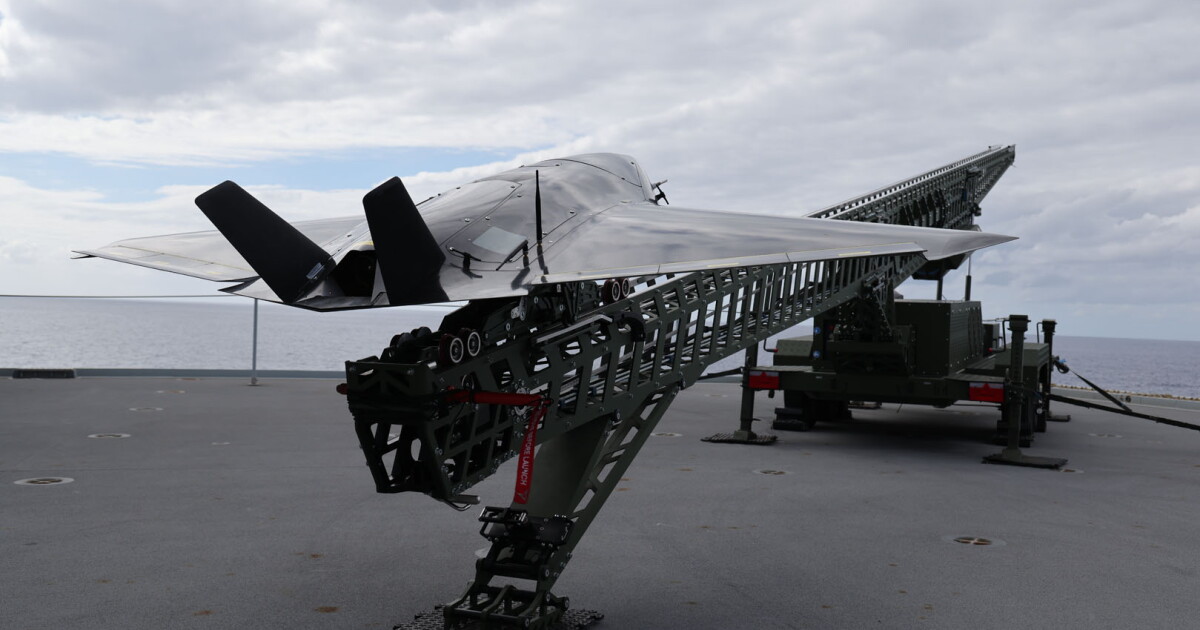
Naval drone warfare reached a historic milestone as four strike drones were launched from the deck of the supercarrier HMS Queen Elizabeth as part of an exercise demonstrating how uncrewed combat aircraft can operate alongside fighter jets and other assets.Some view large ships and drones as an either/or proposition, but the reality is far more complex. While drones are revolutionizing military operations across the board, they are not sweeping everything else aside. Instead, they serve as assistants, scouts, and force multipliers that expand the reach of conventional forces. As a result, drones rely on large capital ships just as much as those ships need them.Recent exercises have reinforced the need for both platforms. This is why the Royal Navy is committed to developing a hybrid fleet – and specifically a hybrid carrier air wing – to augment Britain's fleet of carriers, pilots, and F-35B Lightning II stealth fighters. Nyan For this vision to succeed, strike drones must be capable of operating directly from aircraft carriers – specifically STOVL (short takeoff/vertical landing) carriers like the Queen Elizabeth class. Unlike the US and French navies, which rely on built-in CATOBAR catapult systems, most allied navies operate short takeoff systems with ski jumps. Consequently, future uncrewed systems must operate not only from ski-jump carriers, but also from amphibious assault ships and helicopter docks.In the North Atlantic during Exercise Neptune Reach B and Heavy Lift Challenge 3, the 65,000-tonne HMS Queen Elizabeth successfully launched four Nyan strikestrike drones developed by BAE Systems subsidiary Callen-Lenz. A Nyan drone hitting the airRoyal Navy The launches were carried out using a bespoke pneumatic catapult assembled directly on the carrier’s flight deck, demonstrating that the system can be retrofitted to any vessel with sufficient deck space. Because the Nyan drone is a loitering munition designed for one-way strike missions, deck recovery is unnecessary.According to the Royal Navy, the Nyan drones operated alongside a TEKEVER AR5 medium-altitude, medium-endurance (MAME) uncrewed aerial vehicle, which provided surveillance, logistics, and targeting support – enabling all Nyan strike effectors to reach their designated targets.The hope is that such carrier/drone operations will help NATO to reinforce deterrence patrols in the Greenland–Iceland–UK (GIUK) gap."These trials give us the evidence and confidence to decide how uncrewed systems can work alongside crewed aircraft," said Lieutenant Commander David Burton, trials sponsor for Navy Capability. "The lessons will help us build a hybrid Navy that gives commanders greater choice and ensures our carriers remain at the cutting edge of naval warfare."Source: Royal Navy
Historic launch sees 4 strike drones catapulted off British supercarrier
Full Article
Original Source
Read the full article at Newatlas →KhanList aggregates and links to publicly available news content. We do not host full articles from third-party sources. Always verify important information with original sources.