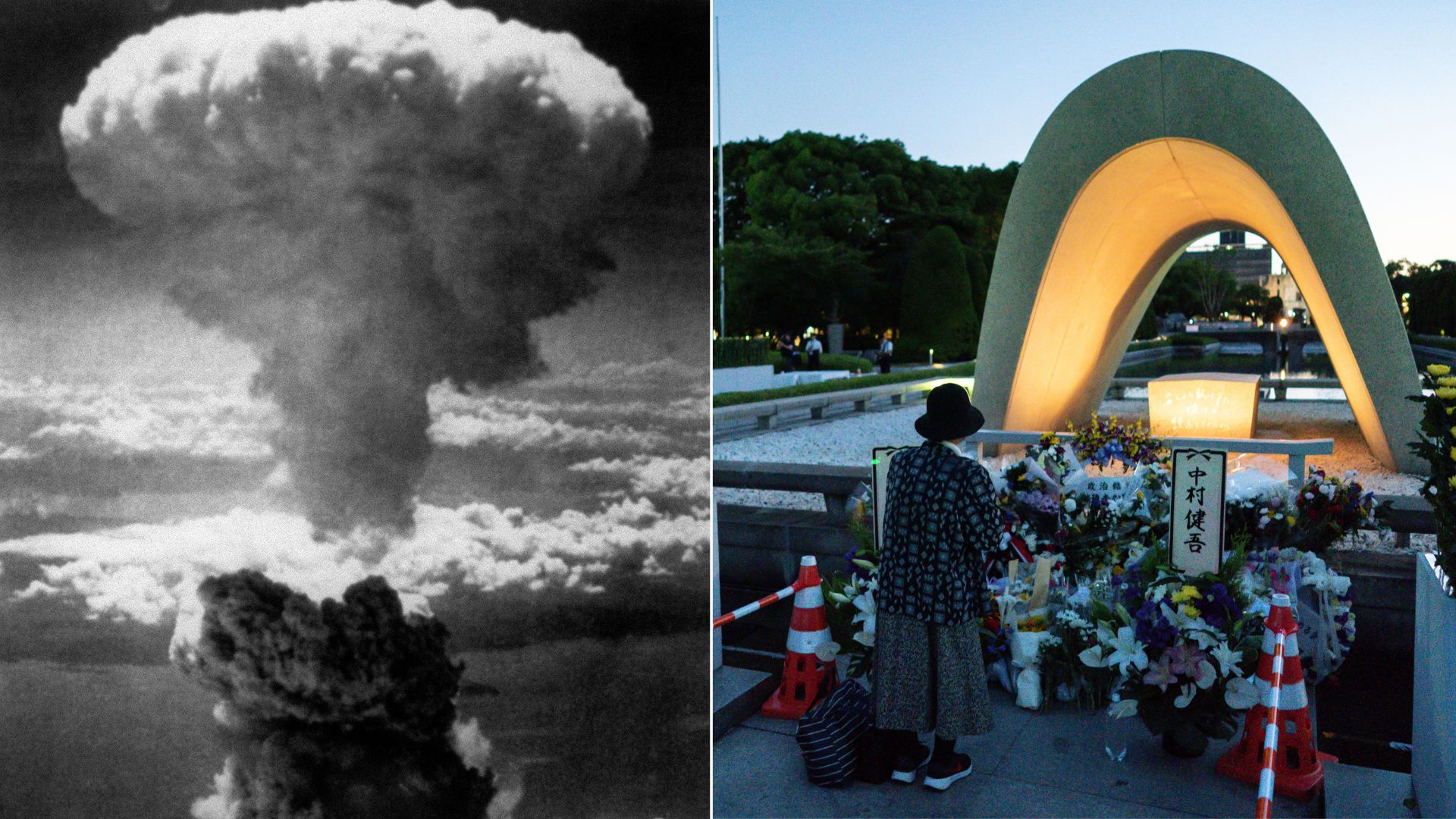
Japan has marked the 81st anniversary of the Hiroshima atomic bombing with renewed calls for a world free of nuclear weapons, as leaders and survivors warned that the lessons of 1945 remain increasingly relevant amid growing geopolitical tensions and renewed debate over nuclear deterrence. Thousands gathered at Hiroshima Peace Memorial Park on Wednesday morning to commemorate the world’s first wartime use of an atomic weapon. Representatives from more than 120 countries and regions joined survivors, government officials, and residents for the annual ceremony, where a minute of silence was observed at 8:15 a.m., the exact time the US B-29 bomber Enola Gay dropped the uranium bomb Little Boy over the city on August 6, 1945. An updated register containing the names of 353,639 atomic bomb victims was placed inside the park’s cenotaph, as Japan once again remembered those who lost their lives while urging the international community not to forget the devastating humanitarian consequences of nuclear war. Remembering the human cost The bombing destroyed much of Hiroshima within seconds. By the end of 1945, an estimated 140,000 people had died from the blast, severe burns, and radiation exposure. Three days later, the Fat Man plutonium bomb devastated Nagasaki before Japan announced its surrender on August 15, bringing World War II to a close. For many survivors, however, the suffering continued long after the war ended. Thousands of hibakusha, survivors of the atomic bombings, spent decades living with cancers, chronic illnesses, and other long-term effects linked to radiation exposure. They also became some of the world’s most prominent advocates for nuclear disarmament. According to Japanese government figures cited during this year’s ceremony, around 91,000 hibakusha remain alive today, with an average age of 86, underscoring the urgency of preserving their testimonies as the generation that witnessed the bombings continues to diminish. A message aimed at today’s world This year’s commemoration came against the backdrop of rising international tensions and renewed debate over nuclear deterrence. In his annual Peace Declaration, Hiroshima Mayor Kazumi Matsui warned that attempts to justify nuclear weapons as instruments of security risk repeating the tragedies of the past. “Downplaying the inhumanity of nuclear weapons and accepting the use of force to pursue one’s own prosperity risk cycles of violent retaliation that could ultimately result in another Hiroshima or Nagasaki,” Matsui said. He argued that too many political leaders continue to view nuclear deterrence as a realistic security strategy, a mindset he said pushes the goal of a world free of nuclear weapons further out of reach. Matsui also urged younger generations to learn from history and take an active role in promoting peace. Nuclear policy remains under scrutiny Prime Minister Sanae Takaichi also addressed the ceremony, emphasizing Japan’s commitment to its long-standing non-nuclear principles while renewing calls for global nuclear disarmament. At the same time, Japan’s nuclear policy remains the subject of domestic debate. Takaichi has previously expressed support for reviewing the country’s Three Non-Nuclear Principles, including the provision that prohibits the introduction of nuclear weapons into Japan. While she said Japan has upheld those principles since World War II, she stopped short of explicitly committing to maintain the current policy indefinitely. The discussion comes as concerns over nuclear security have intensified worldwide, with arms-control agreements weakening and several major powers continuing to modernize their nuclear arsenals. A warning that still resonates More than eight decades after the bombing, Hiroshima’s annual memorial continues to serve as both a tribute to those who lost their lives and a reminder of the consequences of nuclear conflict. As the number of living hibakusha steadily declines, the responsibility for preserving their experiences increasingly shifts to future generations. The ceremony’s message remains as relevant today as it was decades ago: while technology, politics, and global alliances may change, the humanitarian consequences of nuclear war remain unchanged—and should never be forgotten. Recommended ArticlesGet the latest in engineering, tech, space & science - delivered daily to your inbox.Kaif Shaikh is a journalist and writer passionate about turning complex information into clear, impactful stories. His writing covers technology, sustainability, geopolitics, and occasionally fiction. A graduate in Journalism and Mass Communication, his work has appeared in the Times of India and beyond. After a near-fatal experience, Kaif began seeing both stories and silences differently. Outside work, he juggles far too many projects and passions, but always makes time to read, reflect, and hold onto the thread of wonder.
Hiroshima marks 81 years since atomic bombing with renewed plea for nuclear-free world
Full Article
Original Source
Read the full article at Interestingengineering →KhanList aggregates and links to publicly available news content. We do not host full articles from third-party sources. Always verify important information with original sources.