
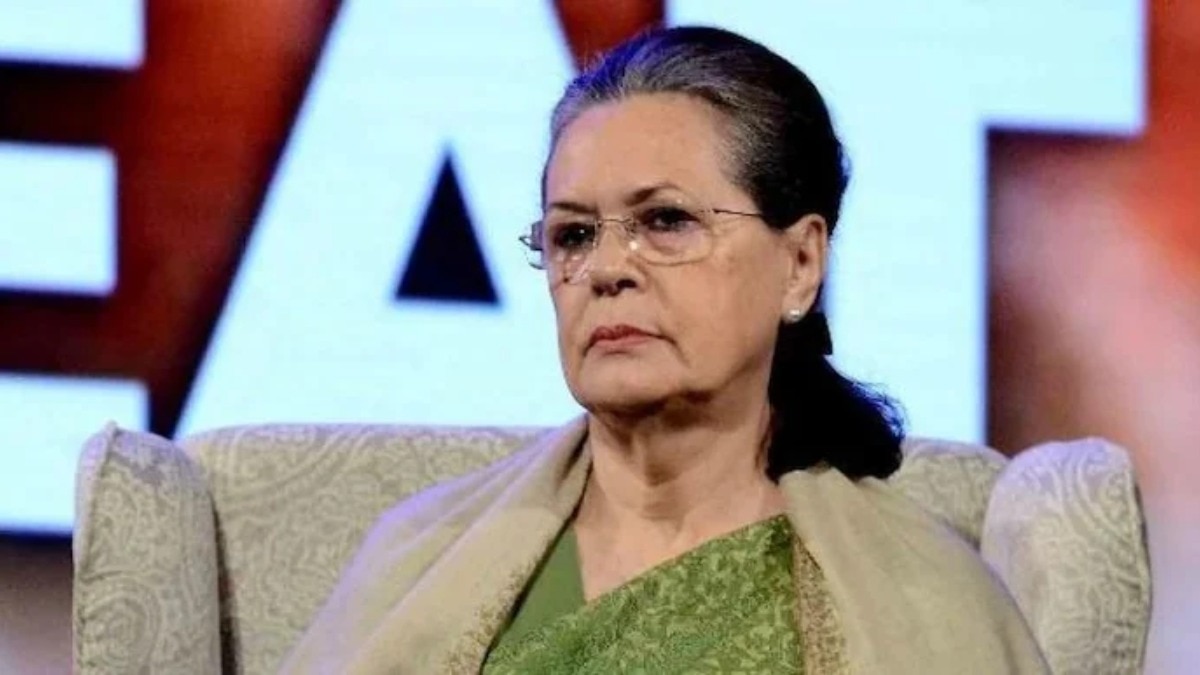
Sonia Gandhi’s personal memoir Belonging: A Journey of Love is as much a defence of the Congress’s ideological inheritance as it is an account of her personal and political journey. In presenting the Congress as the custodian of secularism, pluralism and social justice, she draws a sharp ideological distinction between her party and the BJP-RSS.But how do intellectuals on the other side of this ideological divide read her account? RSS ideologue S. Gurumurthy and BJP national executive member and former Rajya Sabha MP Vinay Sahasrabuddhe challenge her interpretation of the Congress’s historical evolution, its claims to social justice, its understanding of Hinduism and its explanations for electoral setbacks. Their arguments also reflect a larger contest over the political and intellectual ownership of India’s national movement and civilisational heritage.In separate interviews to INDIA TODAY managing editor Kaushik Deka, the two thinkers offered their counterarguments to Gandhi’s narrative. Edited excerpts from their responses follow.S. GurumurthyI was in the Congress till 1975 under K. Kamaraj’s leadership. I have known three Congresses. One, the pre-Independence Congress, which accepted the Hindu civilisational foundation of India till 1937, when M.A. Jinnah began politically dividing Muslims from Hindus. Mahatma Gandhi said in his Hind Swaraj (1909, which he refused to change even in 1940) that Gangajal in every home and “the Setubandha (Rameshwar) in the South, Jagannath in the East and Haridwar in the North as places of pilgrimage”, established by our far-seeing ancestors as places of worship, made us one nation and one people “in the sense in which no two Englishmen are” (p. 42).Jawaharlal Nehru accepted in his Glimpses of World History (1935) Hindu nationalism, preached by Swami Vivekananda, as “not against Muslims or anyone” (p. 437). Again, he says (p. 72), “It is difficult to draw a line between Hindu nationalism and broader Indian nationalism because Hindus formed the majority in India.”Even a communist, Rajani Palme Dutt, wrote in his India Today, “Even if Indians had not learnt English, they would have got their ideas and slogans for freedom from the remote Ved Pathshalas and Vedas.” The Congress fought for freedom under the leadership of Bharat Mata, sang Vande Mataram in full and believed in Ram Rajya.Next came the Congress which, in its bid to avoid Partition, gave up its Hindu civilisational orientation, began compromising by cutting Vande Mataram to two stanzas and gave up Bharat Mata Ki Jai. After Independence, Nehru is even said to have remarked that Muslim communalism was more aggressive but Hindu communalism was more dangerous. But he, in principle, did not oppose the Uniform Civil Code, called Article 370 temporary and said it would wither away. I was in this Congress.Third, the Congress under the leadership of Rajiv Gandhi, Sonia Gandhi and her son Rahul, which opposed the Ram Mandir movement, temple construction (even filed an affidavit in court saying Rama was a mythological character), the repeal of Article 370, the Uniform Civil Code and Vande Mataram, and said that minorities must have the first charge on national resources and that there must be a Muslim quota in jobs, even in the army.I don’t know which Congress Sonia Gandhi characterises as the defender of constitutional secularism, pluralism and social justice. Obviously not the pre-Independence Congress, which is very much like the RSS/BJP today. The philosophy of the pre-Independence Congress, which the latter two Congresses discarded, has been adopted by the RSS/BJP.The RSS/BJP stands for Hindutva as articulated by the Supreme Court in the Hindutva judgement in 1996. The court said that Hindutva or Hinduism is not limited to the religion of Hinduism but represents the ethos, culture and way of life of India. The court also said that Hinduism and Hindutva are one and the same. The Supreme Court thrice refused to review that judgement.The RSS treats Hindu nationalism as religion-neutral, as Vivekananda and Aurobindo said and as was also accepted by Nehru. By the way, the Hindu Rashtra concept is not the RSS’s. It was articulated by Swami Vivekananda and Maharishi Aurobindo before the RSS was born and accepted by Nehru himself after the RSS had accepted Hindu Rashtra as its creed. The RSS accepts Hinduism and Hindutva as expounded by the Supreme Court. It is the Congress which hates the concept of Hindutva.Those who quote Mahatma Gandhi have not read him. This is what Gandhiji says in Hind Swaraj. The nation must know it as Gandhi’s name is repeatedly misused. I quote: “We were one nation before they came to India. One thought inspired us. Our mode of life was the same. It was because we were one nation that they were able to establish one kingdom. Subsequently they divided us. I do not wish to suggest that because we were one nation we had no differences, but it is submitted that our leading men travelled throughout India either on foot or in bullock carts. They learned one another's languages and there was no aloofness between them. What do you think could have been the intention of those far-seeing ancestors of ours who established Setubandha (Rameshwar) in the South, Jagannath in the East and Hardwar in the North as places of pilgrimage?”“You will admit they were no fools. They knew that worship of God could have been performed just as well at home. They taught us that those whose hearts were aglow with righteousness had the Ganges in their own homes. But they saw that India was one undivided land so made by nature. They, therefore, argued that it must be one nation. Arguing thus, they established holy places in various parts of India, and fired people with an idea of nationality in a manner unknown in other parts of the world.”When asked whether that view, which is a Hindu view, would be valid after Muslims had come in, Gandhi said: “India cannot cease to be one nation because people belonging to different religions live in it. The introduction of foreigners does not necessarily destroy the nation; they merge in it. A country is one nation only when such a condition obtains in it. That country must have a faculty for assimilation. India has ever been such a country.”“In reality there are as many religions as there are individuals; but those who are conscious of the spirit of nationality do not interfere with one another's religion. If they do, they are not fit to be considered a nation. If the Hindus believe that India should be peopled only by Hindus, they are living in dreamland. The Hindus, the Mahomedans, the Parsis and the Christians who have made India their country are fellow countrymen, and they will have to live in unity, if only for their own interest. In no part of the world are one nationality and one religion synonymous terms; nor has it ever been so in India.”Is Mahatma Gandhi’s view closer to the RSS’s or Sonia Gandhi’s views? Gandhi’s view that Muslims must be assimilated into the core culture was convergent with the RSS view. I had written about it.By the way, she invokes Vedic principles as inclusive, but if the RSS or BJP wants the Vedas or Sanskrit included in education, the Congress calls it saffron! How can the inclusive Vedas be saffron?Public anger against massive scams, the UPA’s complete failure to tackle terrorism, poor economic performance, high inflation and trying to find excuses for Islamist terror by inventing Hindu terror all helped [Narendra] Modi, who had faced the onslaught of the Congress and Gandhi for more than a decade and shown outstanding performance as the chief minister of Gujarat, to crush the Congress. To say that corporate support could win elections is a poor assessment of Indian democracy. If corporate support meant money, I don’t think that corporates supported the Congress less and the BJP more.Vinay SahasrabuddheThe book is titled Belonging, yet, read closely, it is a book about longing. Sonia Gandhi says she never wanted the prime ministership, yet she led the Congress’s 2004 election campaign without revealing to even her closest colleagues that she had no intention of accepting the post. She also recalls feeling slighted when colleagues questioned her suitability to lead the campaign.Such contradictions extend beyond her personal political journey to her portrayal of the Congress’s ideological commitments. The book invokes Nyay (justice), a central theme of the Congress’s recent political campaigns, and presents the party as the champion of social justice. Yet it was A.B. Vajpayee who, in 1998, renamed the Ministry of Welfare as the Ministry of Social Justice and Empowerment, moving away from a paternalistic conception of welfare.Any account of social justice must also reckon with the Mandal Commission, appointed in 1979 by the Morarji Desai government, in which Vajpayee and L.K. Advani served as ministers. The commission submitted its report in December 1980, but its recommendations remained unimplemented throughout the governments led by Soniaji’s mother-in-law, Indira Gandhi, and her husband, Rajiv Gandhi. On September 6, 1990, Rajiv Gandhi sharply criticised the V.P. Singh government’s decision to implement the recommendations, in a Lok Sabha speech. It was the Modi government that, through the 102nd Constitutional Amendment in 2018, granted constitutional status to the National Commission for Backward Classes.A similar inconsistency marks her treatment of India’s cultural and religious traditions. She describes the Ram temple’s consecration as a ‘political spectacle’ (p. 492), overlooking the fact that the temple’s construction followed the Supreme Court’s unanimous five-judge verdict of November 9, 2019. That judgment settled a decades-old title dispute that had remained unresolved through successive governments, including those led by the Congress. She credits Rajiv Gandhi with attempting to revive Mahatma Gandhi’s ideal of ‘Ram Rajya’, without acknowledging that this, too, draws upon a Hindu civilisational tradition. When the Congress invokes Ram, she presents it as Gandhian. When the BJP does so, she sees communal politics.But perhaps the deeper flaw in her account is a certain condescension towards the voter. When the Congress won in 2004 and 2009, she credits its combination of economic growth and social justice. When it lost in 2014, her emphasis shifts to corporate backing, media influence and propaganda. The same electorate cannot be wise when it chooses you and duped when it rejects you.Subscribe to India Today Magazine- Ends
Hindutva to social justice, how two BJP-RSS ideologues contest Sonia Gandhi's claims
Full Article
Original Source
Read the full article at Indiatoday →KhanList aggregates and links to publicly available news content. We do not host full articles from third-party sources. Always verify important information with original sources.