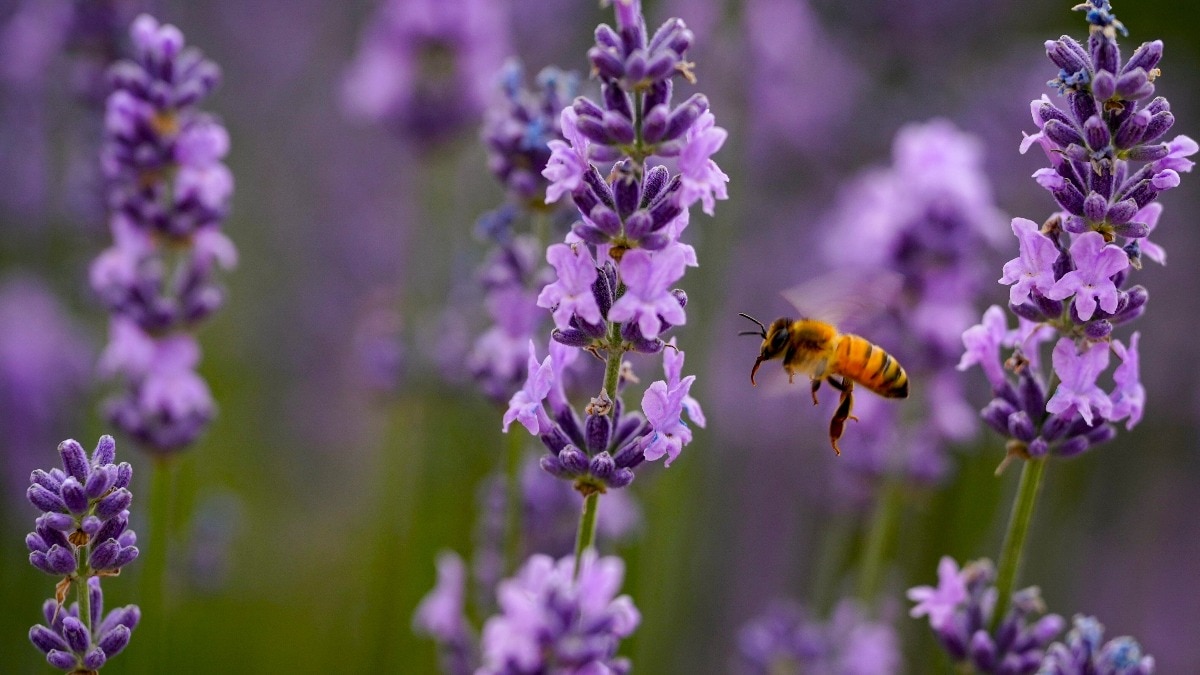
Scientists have recorded the rare solitary Himalayan bee Colletes Bhutanicus in Arunachal Pradesh for the first time. The find expands India's known pollinator range and reinforces calls for deeper surveys in remote mountain habitats.A bee hovers over a lavender flower in full bloom. (Representational Photo: PTI)Scientists from the Zoological Survey of India (ZSI) have recorded a rare Himalayan bee in India for the first time, expanding the known range of a species previously documented only in Bhutan and China.The solitary bee, Colletes bhutanicus, was found during a recent ZSI survey in Tawang district of Arunachal Pradesh.Researchers said the discovery adds to the understanding of Himalayan pollinators and highlights the rich, but still poorly documented, bee diversity of the eastern Himalayas.The species was recorded by ZSI scientists Dibyajyoti Ghosh, K A Subramanian and Dhriti Banerjee. A BEE THAT LIVES ALONEUnlike the familiar honeybee, which lives in large colonies, Colletes bees are solitary creatures.Individual bees generally build and occupy their own nests rather than living together in a single hive. And yet, despite their solitary lifestyle, these bees play an important role in pollination.As they move from flower to flower collecting pollen and nectar, they help plants reproduce and can support the productivity of flowering crops.#FloraAndFaunaA rare Himalayan bee, Colletes bhutanicus, has been recorded in Tawang by the Zoological Survey of India at elevations ranging from 1,500–3,800 metres. Kudos to the researchers for their valuable contribution to biodiversity documentation. pic.twitter.com/SdHKcemHWq— MyGov Arunachal Pradesh (@MyGovArunachal) August 10, 2026The newly recorded bee was found at elevations between 1,500-3,800 metres and was observed visiting 25 species of flowering plants, including mustard, buckwheat, coriander, beans, chilli and eggplant.That range of plants is something that researchers tend to pay close attention to as it shows the bee interacting not only with wild vegetation but also with crops grown in mountain landscapes.WHAT MAKES THE DISCOVERY OF RARE BEE IMPORTANT?C. Bhutanicus had previously been recorded in Bhutan and China, including China's Xizang region.A 2014 study published in Zootaxa listed the species among Colletes bees recorded from China, while records from Xizang documented it at several high-altitude locations, including areas above 3,800 metres.Its presence in Tawang therefore extends the known distribution of the species into India and adds another piece to the picture of Himalayan pollinator diversity. A honey bee collects nectar and pollen from mustard flowers. (Representational Photo: PTI) Arunachal Pradesh is particularly important for such discoveries because its landscape spans large differences in altitude, climate and vegetation.Many remote mountain areas remain difficult to survey, meaning species occurring there can remain undocumented for years.Officials said the findings point to the need for continued biodiversity surveys across the state's remote regions.Deputy Chief Minister Chowna Mein called the discovery a matter of pride for Arunachal Pradesh and said it highlighted the potential importance of native pollinators for mountain agriculture.For scientists, however, the significance goes beyond a single bee.Documenting where pollinators live and which plants they visit can help build a clearer picture of the ecological web that covers and sustains the Himalayan region.- EndsPublished By: India Today Web Desk Published On: Aug 12, 2026 10:17 IST
Himalayan been never-before-seen in India found in Arunachal Pradesh
Full Article
Original Source
Read the full article at Indiatoday →KhanList aggregates and links to publicly available news content. We do not host full articles from third-party sources. Always verify important information with original sources.