
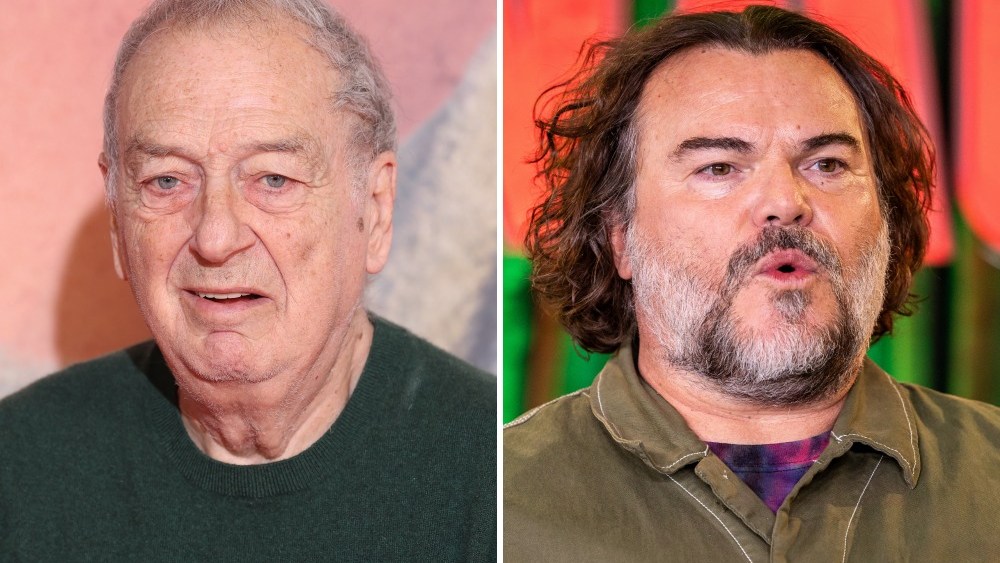
Honored with a lifetime achievement award, director Stephen Frears arrived at the Torino Film Festival in a reflective mood. Over a storied career, the British filmmaker embodied the anti-Thatcher counterculture with features like “My Beautiful Laundrette” and “Sammy and Rosie Get Laid,” before earning Oscar glory with dramas such as “Dangerous Liaisons” and “The Queen.” But above all, Frears takes pride in his pop-culture footprint, particularly films “that have found audiences and touched people.” Chief among them is “High Fidelity,” his 2000 romantic comedy starring John Cusack, Lisa Bonet and Catherine Zeta-Jones. A famously unfaithful adaptation, the cult classic moved Nick Hornby’s London-set novel to Chicago’s Wicker Park and built a soundtrack that film music aficionados still obsess over. Frears is happy to take some credit for the coup. “I always thought it was a very good book, and that it was really about love,” he says, explaining the geographical liberty. Only in crossing the Atlantic, he found a new set of collaborators, steeped in the music that would define the film. “I was very, very lucky. I was already quite old, so I didn’t really know the music,” he says with a laugh. “Everyone who worked on the film knew about music. So I said, ‘I’ll sit over here. You bring me the music, and I’ll tell you if it goes in the film or not!'” Discovering Jack Black was another “stroke of luck.” At the time, Black was known for bit parts in films like “Mars Attacks!” and “Bob Roberts,” as well as his musical comedy duo Tenacious D. His turn as a bombastic music snob in “High Fidelity” catapulted him to leading-man status and cemented a screen persona that has since proved durable and lucrative. Frears certainly agrees. “[In 2003,] he took me to the premiere of ‘School of Rock,'” the filmmaker recalls. “As the lights went down, I told him, ‘You owe all this to me.’ And Jack replied, ‘I know!’ I recently had lunch with him in London, and teased him, asking, ‘Do you have any films that aren’t successful?'” Frears followed “High Fidelity” with 2002’s “Dirty Pretty Things,” which, in turn, gave Chiwetel Ejiofor his star-making role. The film tackled the exploitation of undocumented migrants, a subject Frears believes cinema had largely overlooked. “It was the first time a film was made about modern Britain,” he says. “So many people entering the country were illegal immigrants, and this was the first film to address that.” Having chronicled Britain under Thatcher and Blair, Frears is just as bleak about the country today. “We’re broke,” he says. “We have no money. You know, it’s all a disaster. So the biggest story today is how to sort that out.” He has little doubt where to place the blame. “The people who did Brexit should be in prison,” he says. “These people have destroyed the British economy. Now anybody sensible would like to [get back into Europe], but [the anti-EU people] all still out there making trouble. They’re dreadful, dreadful people. My poor country!” “[Brexit] cost about 5 or 6% of our GDP,” he continues. “I mean, it was completely idiotic. You would see these politicians on television talking about sovereignty. Nobody’s interested in sovereignty. We have a queen and a king, so we don’t have to worry about that. What were all the conversations about? I never understood. It was clearly economic ruin.” Until another project crosses his desk (“All I do is read scripts and pick them out,” he says), Frears has been catching up on contemporary releases. Heading home from Turin, he is especially keen to see recent Palme d’Or winner “Fjord.” Indeed, as with Ejiofor and Black, “Fjord” director Cristian Mungiu can thank the Torino honoree for a career milestone. As president of the Cannes jury in 2007, Frears did, after all, award the Romanian filmmaker his first Palme d’Or, for “4 Months, 3 Weeks and 2 Days.” “It was a very tough year, with a lot of good films,” Frears recalls. “[‘The Diving Bell and the Butterfly’ director] Julian Schnabel was very cross with me for not giving him the prize. He told me as much!” Frears also peeled back the curtain onto that year’s jury deliberations, which famously saw the Coen brothers’ eventual Oscar winner “No Country for Old Men” leave the Croisette empty-handed. “The jury just refused to talk about it,” says Frears, attributing their reticence to “anti-Americanism.” He adds: “But I said, ‘This is the film that people all over the world will actually go see!'”
‘High Fidelity’ Director Stephen Frears Still Teases Jack Black: ‘I Told Him, You Owe All This to Me!’
Full Article
Original Source
Read the full article at Variety →KhanList aggregates and links to publicly available news content. We do not host full articles from third-party sources. Always verify important information with original sources.