
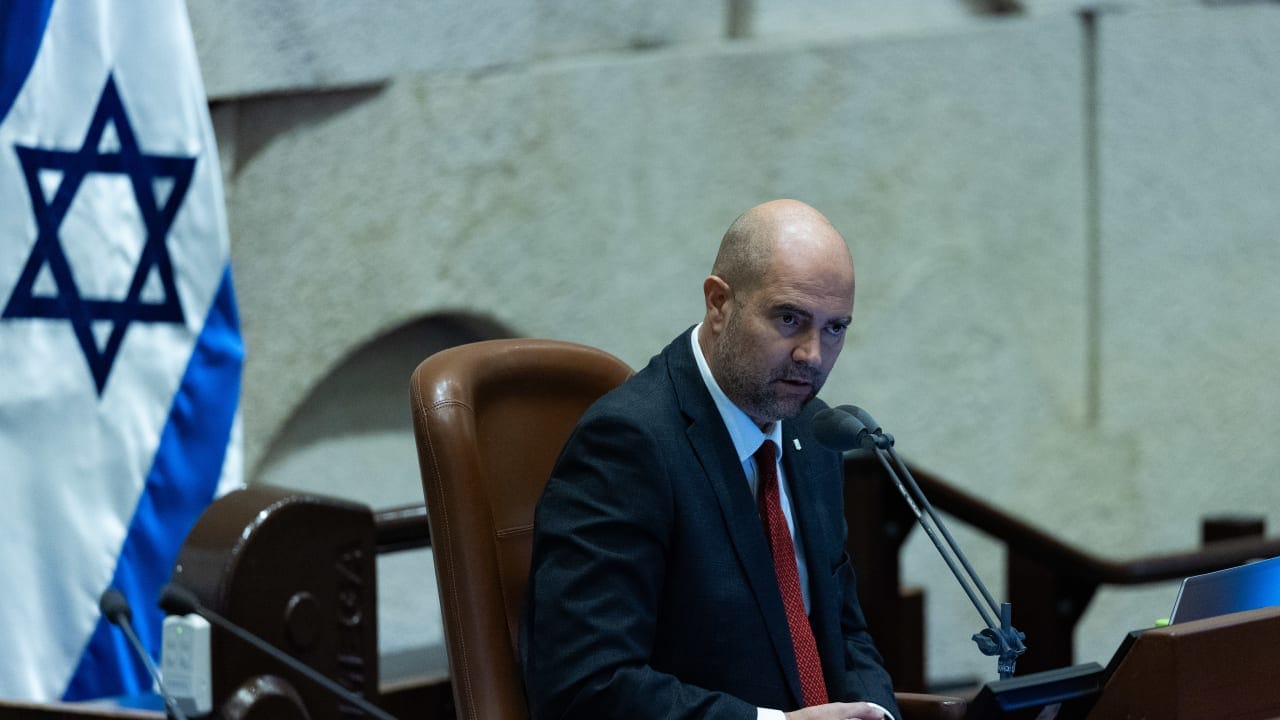
NOVEMBER 4, 2026 18:03Updated: NOVEMBER 4, 2026 18:39The High Court of Justice dismissed a petition on Tuesday seeking to compel Knesset Speaker Amir Ohana to hold a repeat vote for state comptroller, despite finding that his prolonged failure to arrange it amounted to a breach of the court’s earlier ruling.Too much time has passed, and a new Knesset is on its way to being elected. The justices concluded that the choice should now be left to the incoming parliament, rather than imposed on the outgoing one in its final days.Court orders Ohana, Knesset to pay GadotThe ruling, written by Justice Ruth Ronnen with the agreement of Supreme Court President Isaac Amit and Justice Khaled Kabub, leaves Israel without a state comptroller four months after Matanyahu Englman’s term ended. The vacancy has blocked the completion and publication of dozens of audit reports and the issuing of protection orders for whistleblowers, according to an explanation provided to The Jerusalem Post by the comptroller’s office.“Alongside this outcome, it is important to emphasize that dismissing the petition does not constitute approval of the Knesset speaker’s grave conduct,” Ronnen wrote.The court ordered Ohana and the Knesset to pay petitioner Yaron Gadot NIS 10,000 in costs.The nine-member panel at the High Court of Justice looks on as the hearing opens in Jerusalem. (credit: MARC ISRAEL SELLEM/THE JERUSALEM POST)The office continues to function, but powers reserved for the comptroller cannot be exercised. Audit teams are still working under the annual plan drawn up during Englman’s tenure, conducting fieldwork, meeting audited bodies and analyzing information, the office explained. They cannot finalize and publish the reports or begin new audits.Nor can the office determine whether parties and Knesset factions complied with financing rules and impose sanctions for violations. The comptroller’s absence also prevents the permits committee dealing with ministers’ and deputy ministers’ conflicts of interest from convening.Public complaints investigators continue helping residents. But the comptroller, who also serves as ombudsman, alone holds the authority to issue protection orders for employees who expose corruption.“In the situation that has arisen, we have no legal means of helping employees who turn to us,” the office said of those seeking whistleblower protection.It all started on June 3, when the Knesset voted for a new state comptroller ahead of the end of Englman’s term in early July.Two candidates ran: retired Supreme Court justice Yosef Elron and attorney Michael Rabello, a longtime lawyer for Prime Minister Benjamin Netanyahu who has also represented Likud.To win in the first round, a candidate needed the support of at least 61 MKs. Neither got it: Elron received 60 votes and Rabello 57. Ohana called a second round, which eventually gave Rabello a 61-57 victory.The voting was marred by coalition lawmakers recording their ballots amid reported pressure to prove support for Rabello. An initial attempt at the second round was halted and restarted following a dispute over the filming. Ohana permitted lawmakers to film themselves, while saying they could not be instructed to do so.On July 2, following a series of petitions, the High Court annulled the second round and ordered it repeated because ballot secrecy had been materially violated. The court identified five Likud lawmakers who filmed their votes - Shlomo Karhi, Gila Gamliel, May Golan, Sasson Guetta and Ariel Kallner - and a sixth, Shas MK Yinon Azoulay, who openly displayed his ballot. It found a real possibility that the breaches had affected the result.Ohana had already rejected a proposal for a fresh vote before that judgment. “The Knesset has already had its say,” he said on June 21.'He failed to comply with the judgment'After the July ruling, the next step was for Ohana to set a new date. Section 2 of the State Comptroller Law assigns that responsibility to the speaker, in consultation with his deputies, and provides for convening the Knesset even during recess.Ronnen acknowledged that the law does not specifically address the unusual situation of a court ordering the second round repeated, but that did not make compliance optional. The previous judgment clearly required another vote as soon as possible, she wrote, and the speaker’s power to schedule it was a duty he had to exercise with appropriate speed.“Moreover, the pleadings before us paint a troubling picture of the reasons underlying the Knesset speaker’s inaction: he failed to comply with the judgment… and acted contrary to the clear position of the Knesset legal adviser, as conveyed to him on several occasions,” Ronnen wrote.“The duty to obey and respect judgments is a fundamental condition of a democratic system governed by the rule of law. This duty applies to the public as a whole, and all the more so to government authorities, which are not above the law.”His prolonged failure to comply was tantamount to violating the judgment, she added.Knesset legal adviser Sagit Afik had told the court that the ruling must be implemented as soon as possible, preferably during the outgoing Knesset’s term. In her October 5 response, she identified practical difficulties close to the election, including assembling MKs during recess, providing sufficient notice and the absence of preliminary coordination between coalition and opposition. She also warned that election-period voting could be influenced by factional considerations.Those difficulties did not excuse compliance, she stressed. The court also recorded her statement that an MK’s July 8 approach to Ohana on the matter had, to her knowledge, gone unanswered.Ohana, represented separately from the Knesset, argued that the statutory timetable did not apply to this exceptional situation and that choosing the voting date fell within his discretion. With a general election approaching and the comptroller appointed for seven years, the next Knesset should make the choice, he said. He also disputed that the vacancy was causing substantial disruption to the office’s work.Gadot seeks repeat of second round Gadot, who filed his petition on September 6, sought a repeat second round in the outgoing Knesset. After the October 27 election, he maintained that it could still vote before the incoming parliament’s first sitting on November 10.The court disagreed. Beyond the difficulty of arranging a vote at such short notice, Ronnen identified a more fundamental problem: the outgoing parliament would be making a consequential appointment after voters had elected its replacement.The judgment did not decide whether the new Knesset must resume the contest between Rabello and Elron or begin the election process again. Ronnen said resuming where the previous parliament left off appeared problematic, given the changed membership and absence of a legal continuity provision, but expressly left the question open.The decision comes as opposition leaders seek to replace Ohana after the new Knesset is sworn in. Their choice of speaker will matter directly to the comptroller’s appointment: whoever holds the position will be responsible for setting the voting date.For Ronnen, the harm extended beyond the two comptroller candidates and the standing of the Knesset and the court. Above all, she wrote, the public had been harmed by the prolonged vacancy.Follow us on Google
High Court says Ohana breached ruling, but leaves comptroller vote to next Knesset
Full Article
Original Source
Read the full article at Jpost →KhanList aggregates and links to publicly available news content. We do not host full articles from third-party sources. Always verify important information with original sources.