
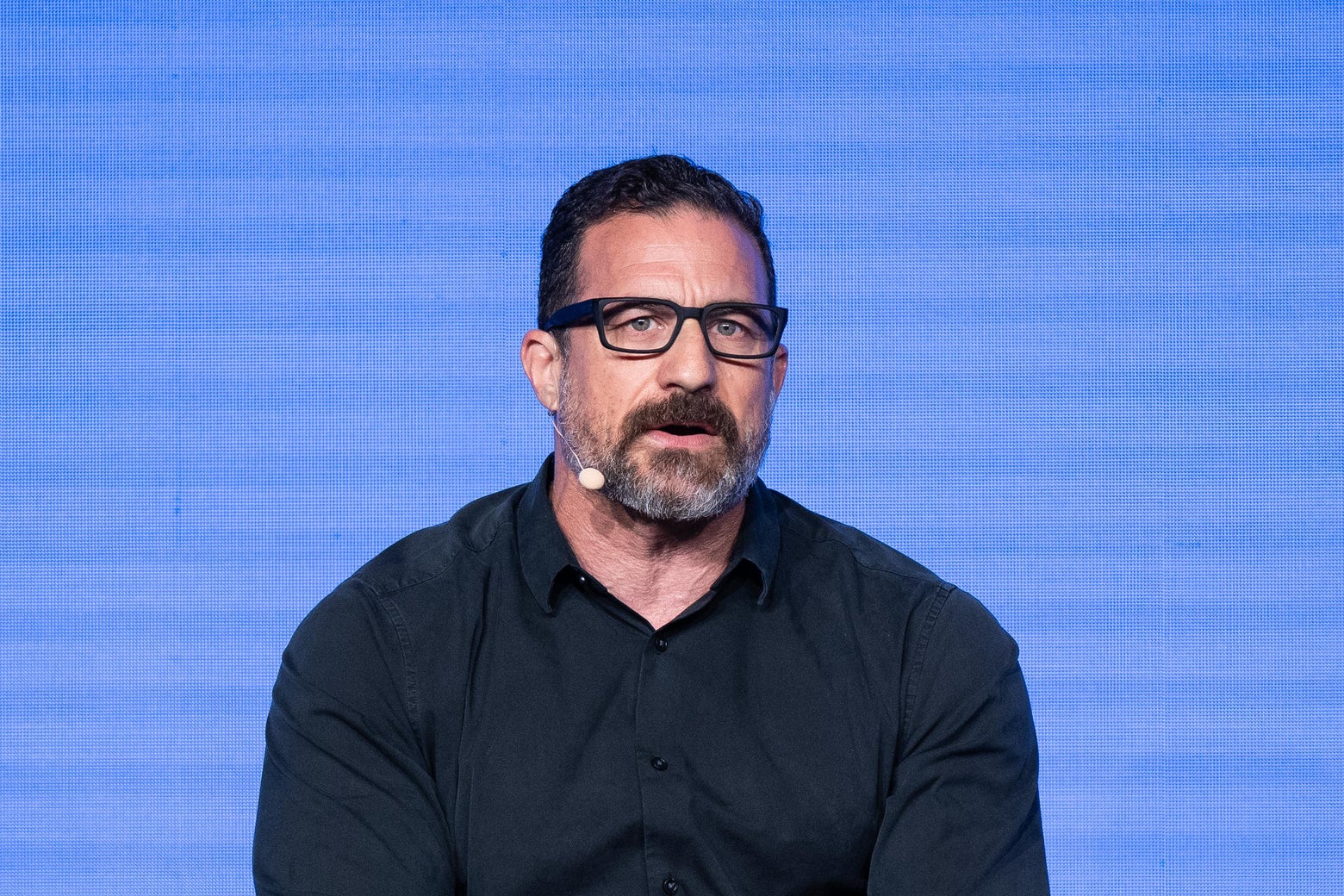
Medical Examiner What I learned from Andrew Huberman’s Protocols: An Operating Manual for the Human Body. By Enter your email to receive alerts for this author. Sign in or create an account to better manage your email preferences. Unsubscribe from email alerts Are you sure you want to unsubscribe from email alerts for Rebecca Onion? Sept 18, 202612:20 PM Jeff Spicer/Getty Images Sign up for the Slatest to get the most insightful analysis, criticism, and advice out there, delivered to your inbox daily. Andrew Huberman has a new book, Protocols: An Operating Manual for the Human Body, a chunker that’s 540 pages long. Before I read this book, I had only an ambient sense of Huberman’s typical recommendations, gleaned from Instagram reels, gym conversations, and that one juicy 2024 New York magazine profile of the podcaster and Stanford scientist who’s been a pillar of the last half-decade’s turbocharged online wellness movement. I’m also an insomniac who only gets restful sleep one out of every three nights, despite already having implemented many of the more commonsense “protocols” described in this book, at no small cost to my social life (neurotically consistent sleep/wake times, freezing-cold bedroom, no caffeine after noon, zero alcohol). What harm, I thought, could come from getting a bit more advice? A “protocol”—as Andrew Huberman refers to his advice—sounds clinical, even militaristic, but is really just a way of doing things. Maybe there’s something else I could be doing? I wish now I had never read Protocols. For people tinkering around the edges, with the goal of feeling stronger and more energetic, the glut of recommendations in here could feel empowering, perhaps like a sturdy reference text. For anyone who is desperate to improve their health, like, say, a person who only sleeps well one out of every three nights, reading the protocols in this book—divided into the seven not-entirely-intuitive categories of sleep; exercise; stress control; nutrition; light; focus, motivation, and learning; and personal growth—can provoke a frenzied feeling of insufficiency, an unhealthy fixation on getting everything right. Lying awake in bed a few nights ago, after hacking my way through a couple hundred Huberpages, I did the opposite of what the only helpful insomnia advice I’ve ever read tells you to do: I panicked, and blamed myself. Huberman’s proposition, familiar to his many, many fans, is that “science,” well applied, can help you optimize your meatsuit for the highest possible performance. (Hearing that I was reading this book, a friend asked a good question: “What does Huberman think people need to be at their best for?” My best answer, after getting through the oddly robotic “personal growth” chapter and rereading that New York magazine profile, is “Work.”) In the introduction to Protocols Huberman describes a period of his life when he kept running into friends and colleagues who seemed “out of shape” and “often in pain”: “They complained about their backs, or insomnia, or autoimmune issues.” They were often doctors or academics who “knew the science,” but “that didn’t seem to matter.” What Huberman’s worldview proposes is that motivated people can take small actions to relieve themselves of these endemic problems of middle age. What it implies is that if you don’t, you kind of deserve what you get. In case you feel that that characterization is unfair, consider this: Part of Huberman’s personal lore is that he emerged from a somewhat troubled adolescence and decided to apply himself in college after discovering within his mind a specific, gritty kind of willpower. In the book, he sums up the thoughts that helped him get out of his rut at the time, and writes that he has “heard in my head in fragments, over and over since I was nineteen,” the following ideas, which are italicized for emphasis in the original text: “Losers take the negative things that happen to them and the feelings that come from things that suck … and they wallow and they use it for self- or outward-destruction. … Winners however take whatever they feel—even it if sucks—and they transmute those feelings into actions that are good for themselves and for the world.” Whether the protocols are straightforwardly good for you depends on who you ask. Huberman’s critics have argued that his objectivity around health advice is compromised because of his extensive sponsorships and partnerships with wellness products. This is the first book I’ve ever read that sounds just like a social media feed, with the author recommending product after product, and then stipulating whether or not he is affiliated with them. Huberman uses the red incandescent light from SaunaSpace (no affiliation). He recommends a temperature-controlling, sleep-tracking mattress cover from Eight Sleep (the company sponsors his podcast, and he’s a scientific adviser). He’s a partial owner of the canned yerba mate brand Mateina, but he “loves it without bias.” He recommends you use the “diet-coaching” app Carbon, which is “the sponsor of my podcast, because I believe it to be a terrific product.” During my Protocols-induced panic over the lighting in my house (it’s a foundational Huberman belief that during the last hour of your evening you should not be looking at screens, a big problem for me because following this recommendation would largely eliminate movies from my life), I looked up his recommended Roka “wind-down glasses,” which are apparently better than “traditional blue blockers” because they “prevent all short wavelength light, not just blue light, from reaching your eyes.” They are $125, and the website features a thoughtful banner image of Huberman looking at a phone while wearing them. On Amazon, you can get blue-blockers for $20—if you want to be a sucker whose eyes are drowning in other short-wavelength light! The other knock against Huberman, summed up by scientist Andrea Love in a Slate piece in 2024, is that on his podcasts, he plays fast and loose with scientific evidence in supporting his own recommendations, using “scientific-sounding jargon” and referring to his own authority often to buttress his arguments, while cherry-picking and extrapolating to come to his conclusions. The book does this as well, though often, Huberman will include a qualifier, disavowing responsibility after sharing evidence that’s scantier than you might like. In the long section on sleep supplementation, for example, he writes that in one study, 10 people drank tart cherry juice for seven days, and the study found elevated melatonin levels and improved sleep quality, so while “larger and longer-term studies are needed,” you might as well try it. (You can take capsules “if you don’t want the added calories from the juice.”) Huberman himself takes AGZ, a “nightly sleep support” packet from AG1, which he “helped design,” and while he admits he’s “incentivized” to say that it works, he adds: “I am measuring my sleep stats most nights”—a sample size of one. [Ed. note: And in a very poorly controlled experiment!] You just have to trust him. Protocols’ recommendations, often presented as “simple,” collectively make up a firehose that’s impossible to drink from. Huberman doesn’t think it’s that complex—talking about his morning routine, he writes, “When people ask me, ‘Who has time for all this?’ I respond that it takes mere seconds to drink 16 ounces of water, a few minutes to make a caffeinated beverage and step outside into the sun while you drink it, and then depending on your schedule, exercise.” But it’s not just the time necessary for executing—it’s the mental load of considering so many little details, just for the keeping of your own body. I used Protocols to make myself a checklist of daily habits to try to adopt: the morning sunlight walk, 16 ounces of water after waking and 80 ounces of water by 2 p.m., the yoga-nidra-esque practice he calls “NSDR” sometime midday, the evening sunlight walk. The tally came to 15 new things I am supposed to remember to do, and I’m not even touching the sections on nutrition and exercise, full of horrifying recommendations (sugar only once a week; “it’s best not to think of plant-based foods as proteins at all”) that I plan to ignore completely. (No, that’s not entirely true; I did try the Founder Exercise, one of three mobility poses he recommends, and liked it.) Will I feel better if I succeed at doing these things with consistency? Will I feel more like a winner, less like a loser? “Studies are starting to indirectly suggest” that following a certain eye movement pattern (lying down, move eyes right, left, up, down, counterclockwise, clockwise, then slightly cross, then take a big inhale and long exhale) can help you fall asleep. Last night I tried it, lying awake at 3 a.m., and it worked. Why? I couldn’t begin to say. Maybe I was just really, really tired. Books Health Nutrition Sleep Fitness Podcasts
He’s a Controversial Titan of “Wellness.” I Read All 540 Pages of His New Book. Let Me Tell You the Maddening Truth.
Full Article
Original Source
Read the full article at Slate →KhanList aggregates and links to publicly available news content. We do not host full articles from third-party sources. Always verify important information with original sources.