
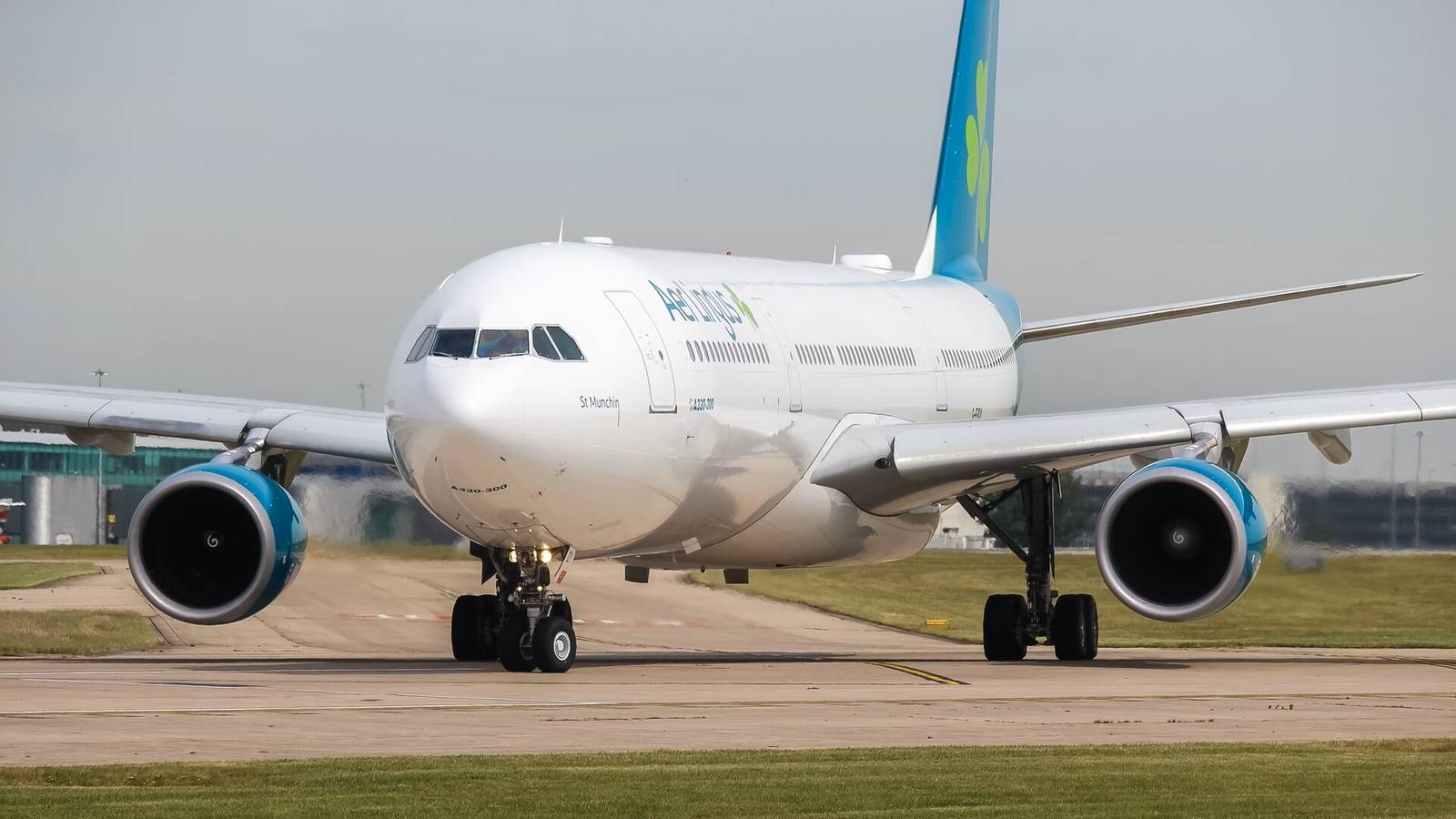
Published Aug 19, 2026, 6:10 AM EDT Paul has had a career of 25+ years focused on the international technology sector, which has taken him to over 100 countries. Along the way, he developed a deep love for aviation, with a travel bucket list measured by aircraft types flown rather than destinations reached. Now he brings that avgeek passion, along with the journalism experience he accumulated early in his career, to write insightful pieces for Simple Flying. Aer Lingus entered 2026 planning its largest-ever transatlantic schedule, but it will end the year having eliminated five routes to the United States. Two of these routes were eliminated early in the year with the closure of its Manchester base. But added to the disappointment is that a further three US routes from Dublin will disappear between September and December. However, the five US cuts are not the result of a single problem. Manchester was an opportunity-cost decision: its routes were carrying respectable numbers of passengers, but Aer Lingus believed its aircraft could generate better returns elsewhere. The more recent route cuts from Dublin Airport (DUB) are much closer to conventional network failures, with low load factors compounded by greater US airline competition, higher costs and a broader push to remove lower-margin flying. Manchester Transatlantic Routes: Profitable But Not Enough Credit: Shutterstock Aer Lingus launched nonstop transatlantic flying from Manchester Airport (MAN) in 2021, building a small operation around flights to New York JFK Airport (JFK), Orlando International Airport (MCO) and Barbados using a pair of Airbus A330-300s. But by late 2025, the airline was warning that it might exit Manchester, and ultimately suspended future ticket sales. It then confirmed in January that JFK would end on February 23 and the remaining long-haul operation on March 31, bringing the standalone Manchester experiment to an end after less than five years. Manchester route Started Ended Typical aircraft Why it disappeared Manchester–JFK 2021 Feb 2026 A330-300 Entire MAN long-haul base closed Manchester–Orlando 2021 Mar 2026 A330-300 Entire MAN long-haul base closed Manchester–Barbados 2021 Mar 2026 A330-300 Entire MAN long-haul base closed Empty aircraft were not the fundamental problem. Department of Transportation data compiled by Cirium showed Manchester-JFK and Manchester-Orlando averaging 78.9% full between January and September 2025, while their August peaks reached 92.6% and 88.2%, respectively. CEO Lynne Embleton subsequently confirmed that Manchester made money, but not enough: “Whilst the Manchester base is profitable, the margins at the base are significantly below that in other comparable parts of Aer Lingus’ business, which is what forced our decision.” While Aer Lingus and Aer Lingus Regional services connecting Manchester with Ireland continued, around 200 Manchester jobs were affected by the base closure. The two aircraft were also repatriated to Dublin and re-registered as part of the Aer Lingus mainline fleet. IAG ultimately described the Manchester decision as one that would allow Aer Lingus to “redeploy the assets aligned with strategic priorities,” effectively consolidating its A330 operation back at Dublin. Denver, Minneapolis And Las Vegas Were Struggling The subsequent Dublin cuts have a very different background. Aer Lingus had expanded rapidly in North America in recent years, restoring Minneapolis-St. Paul International Airport (MSP) and launching Denver International Airport (DEN) and Las Vegas's Harry Reid International Airport (LAS) in 2024 before adding more secondary US markets with the Airbus A321XLR. As recently as September 2025, it announced its biggest-ever transatlantic schedule for summer 2026, with a record 20 US destinations this summer. Yet the passenger numbers exposed some significant weak spots. DOT data for the 12 months through March 2026 showed Minneapolis filling just 61.8% of its seats, Denver 64.1%, and Las Vegas 71.3%. Denver had already fallen from 73.7% in 2024 to 63.9% in 2025 after Aer Lingus increased capacity, while Las Vegas' seemingly better annual result concealed winter months below 60%. Route Load Factor Final Service Dublin-Minneapolis 61.8% October 24 Dublin-Denver 64.1% September 28 Dublin-Las Vegas 71.3% December 3 Competition made those economics still harder. Aer Lingus says rival transatlantic capacity increased 45% during winter 2025/26. Minneapolis offers perhaps the clearest example: Delta Air Lines launched its own Dublin service from its MSP hub in 2024, and OAG data shows Delta scheduled around 100,500 two-way seats in the market this summer against roughly 75,100 for Aer Lingus. Aer Lingus' Minneapolis load factor collapsed to just 30% in February, while Seattle — which will now become summer-only — fell to 28%. Loading map… Drag to explore The cuts therefore form part of a much bigger retrenchment. Reuters reported that Aer Lingus lost €103 million in the first quarter of 2026 and subsequently announced plans to reduce overall flying by approximately 6%, remove lower-margin services and potentially cut up to 500 jobs. As a result, Denver ends after September 28, Minneapolis after October 24 and Las Vegas after December 3; Seattle-Tacoma International Airport (SEA) will, meanwhile, lose its winter operation. So Where Are All The Aircraft Going? Credit: Shutterstock This is where the contrast with Manchester becomes especially revealing. The Manchester A330s went back into Aer Lingus' Dublin-based fleet, but the capacity released by the latest route cuts is not being replaced one-for-one with new destinations. Linked to its network restructuring, Aer Lingus says peak summer 2027 will see a “reduction in the use” of two A330s and four Airbus A320s. That suggests the airline intends to use fewer aircraft rather than immediately finding somewhere else to fly them. Crucially, Aer Lingus has not announced that those six aircraft are being permanently retired, sold or returned to lessors, and it says “many fleet decisions” remain ahead. They could consequently see reduced utilization or periods out of service without necessarily representing six permanent fleet exits. Aer Lingus is simultaneously planning to retrofit ten A330s with a new premium economy product during 2027, showing that investment in the widebody fleet itself continues. Embleton provided the reasons for these changes: “Our accelerated transformation aims to set Aer Lingus up for the future [and] ensure the airline is a strong investment case going forward.” That investment case is central to the restructuring. Aer Lingus achieved an 11.1% operating margin in 2025, below the 12%-15% level it says it needs to sustain over the medium term, and below the 15%-plus margins achieved by fellow IAG operators British Airways and Iberia. Aer Lingus therefore needs to cut costs and raise its margins if it is to receive its fair share of ongoing investment from the group, such as receiving some of the 21 Airbus A330-900s that IAG has arriving between 2028 and 2033. That is the business driver behind the five US cancellations, which tell two related but distinct stories. Manchester showed Aer Lingus was willing to concentrate aircraft at Dublin when returns elsewhere were insufficient. Denver, Minneapolis and Las Vegas show it is now prepared to remove capacity altogether when even Dublin-based flying cannot deliver the returns it needs.
Here's Why Aer Lingus Has Cut A Massive 5 US Routes In 2026
Full Article
Original Source
Read the full article at Simpleflying →KhanList aggregates and links to publicly available news content. We do not host full articles from third-party sources. Always verify important information with original sources.