
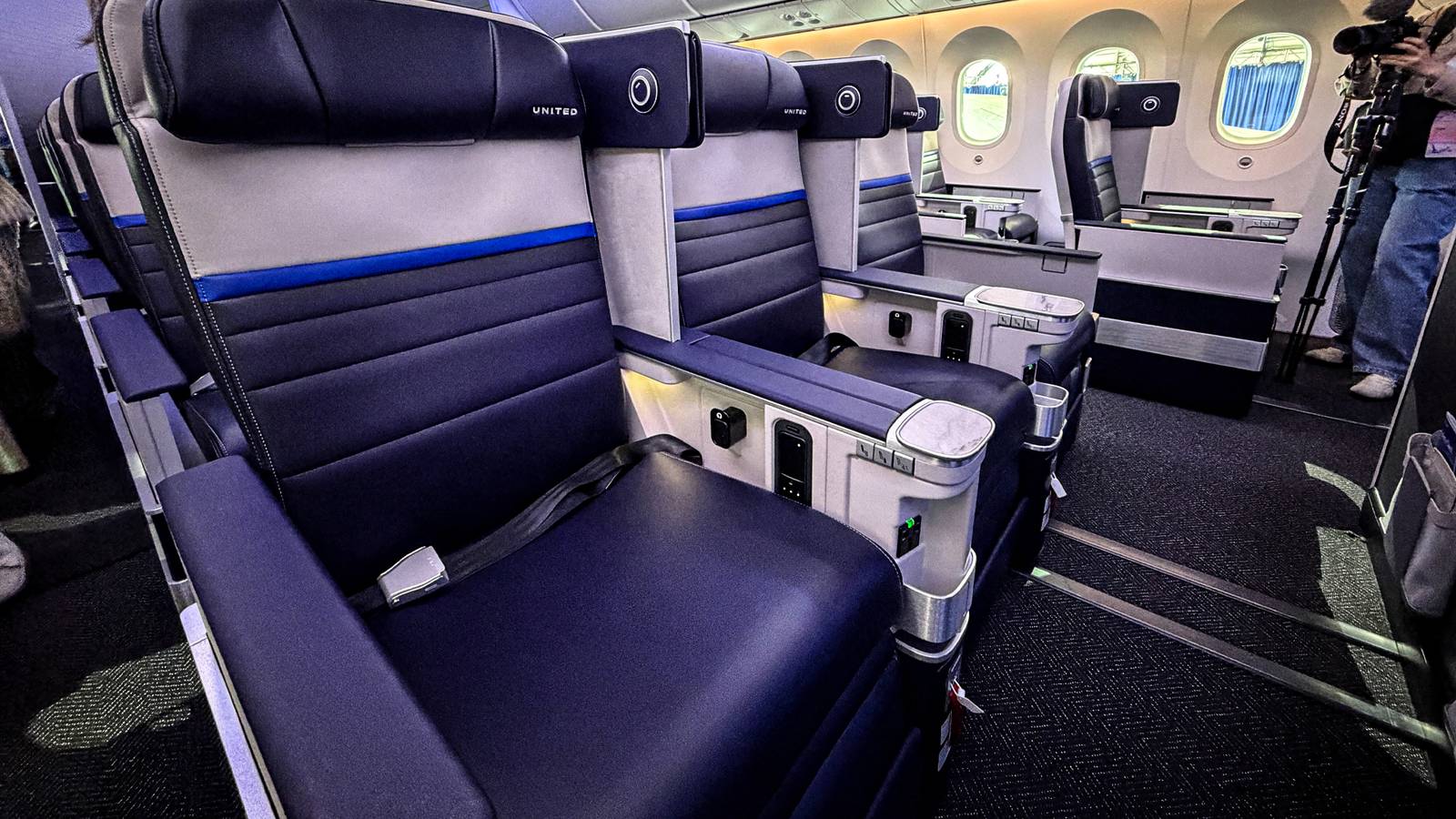
Credit: Channing Reid, Simple Flying Published Nov 14, 2026, 4:00 AM EST Based in Maastricht, the Netherlands, Nick joined Simple Flying in October 2025 and has a strong passion for travel and tourism, and in particular, the aviation industry, for as long as he can remember. Nick's focus is on aviation economics, airline strategy, and digital innovation. Before joining Simple Flying, he gained industry experience in ground handling and in a leading European airline group. Academically, Nick holds a Bachelor's degree in Aviation Management and is currently pursuing a Master's degree in Strategy & Innovation. Sign in to your Simple Flying account Premium economy has become an increasingly popular option for passengers on long-haul flights, offering significantly more comfort than economy class without the considerably higher fares associated with business class. In recent years, the cabin has become an important part of the long-haul products of carriers such as Delta Air Lines, Lufthansa, Emirates, and British Airways. Airlines are also continuing to increase the number of seats on their aircraft, often at the expense of regular economy capacity. According to Going's 2026 State of Travel report, premium economy was the fastest-growing cabin choice among surveyed travelers, increasing from 16% to 20% in just one year. This growing popularity comes as airlines invest heavily in premium products, while passengers become more willing to pay extra for comfort. However, with premium economy fares generally costing 30% to 100% more than regular economy, what do passengers actually get for the extra money? Premium Economy Offers More Space Than Regular Economy Credit: Alaska Airlines The most noticeable difference between premium economy and regular economy class is the amount of personal space available to passengers. On most long-haul aircraft, economy class seats have a pitch of approximately 30 to 32 inches (76 to 81 cm), compared to around 38 to 40 inches (97 to 102 cm) in premium economy. Seat pitch is the distance between the same point on two consecutive rows of seats, meaning passengers generally get around seven to nine additional inches of space between seats. Premium economy seats are also considerably wider than those found in economy class. While regular economy seats typically measure between 17 and 18 inches (43 to 46 cm), premium economy seats are often between 18.5 and 19.5 inches (47 to 50 cm) wide. Most airlines also provide additional recline, generally between six and eight inches (15 to 20 cm), and many seats feature adjustable headrests, calf rests, and footrests. These differences become particularly noticeable on overnight flights, where passengers may spend eight to 12 hours in the same seat. However, the actual differences depend on the airline and aircraft type. Lufthansa's new Allegris premium economy product, for example, offers 39 inches (99 cm) of seat pitch and features a fixed-shell design that lets passengers recline without disturbing the person behind them. Other carriers, including Emirates and Cathay Pacific, offer premium economy seats with up to 40 inches of pitch, while certain airlines provide even more space. Passengers Also Receive A Better Soft Product Credit: Tamme Wichmann | Shutterstock Besides the extra space, most airlines include other benefits for passengers traveling in premium economy. On long-haul flights, this often includes upgraded meal services, a wider selection of drinks, and better-quality amenities than those provided in regular economy. Depending on the airline, passengers may receive a welcome drink before departure, meals served on proper tableware, noise-canceling headphones, and an amenity kit. Many airlines have also installed larger inflight entertainment screens and additional power outlets in their premium economy seats. Emirates, for example, provides its premium economy passengers with upgraded dining, including meals served on proper tableware, along with larger entertainment screens and more personal space. Lufthansa has also improved its premium economy offering through its Allegris product, introducing wireless charging, additional storage compartments, and privacy features. These investments are part of a broader effort to differentiate premium economy from regular economy rather than simply selling passengers a seat with additional legroom. The differences also extend to the airport experience, as many airlines provide priority check-in and boarding. Moreover, premium economy fares often include a larger checked baggage allowance than economy tickets. However, these benefits can vary considerably depending on the airline and fare type, and lounge access is generally not included. For example, some airlines offer lower-priced premium economy fares with reduced baggage allowances, so passengers should not assume every premium economy ticket includes the same benefits. It is also important to distinguish premium economy from extra-legroom economy products, such as United Airlines' Economy Plus. While these seats generally provide more legroom, passengers still receive the same basic seat and onboard service as regular economy travelers. Dedicated premium economy cabins, such as United Premium Plus or Delta Premium Select, offer wider seats and a different onboard product. However, unlike modern business class suites, these seats do not convert into fully flat beds. How Much More Does Premium Economy Actually Cost? Credit: British Airways Premium economy is generally considerably more expensive than a regular economy class ticket, with passengers often paying between 30% and 100% more for the additional comfort and services. However, the actual difference depends heavily on the airline, route, and time of booking. While the upgrade can sometimes be relatively affordable, particularly on longer flights, premium economy fares can also approach those of discounted business class tickets. To put these differences into perspective, Simple Flying previously compared British Airways' premium economy and business class fares on three of the airline's busiest transatlantic routes from London Heathrow Airport (LHR). The analysis, conducted on May 25, 2026, examined one-way fares to New York, Boston, and Los Angeles for travel during July 2026 and February 2027. Peak Season Fares Route Premium Economy Business Class Savings London - John F. Kennedy International Airport (JFK) €3,220 ($3,559) €8,966 ($9,909) 64.1% London - Boston Logan International Airport (BOS) €2,744 ($3,033) €9,092 ($10,048) 69.8% London - Los Angeles International Airport (LAX) €3,580 ($3,957) €10,703 ($11,829) 66.6% Average €3,181 ($3,516) €9,587 ($10,596) 66.8% During the peak summer travel period, premium economy fares averaged €3,181 ($3,516) across the three routes, compared with €9,587 ($10,596) for business class. This represented a saving of approximately €6,400 ($7,080), or nearly 67%, for passengers choosing World Traveller Plus instead of Club World. Nevertheless, even premium economy tickets were far from inexpensive, with one-way fares exceeding €3,500 ($3,868) on the route to Los Angeles. Off-Peak Season Fares Route Premium Economy Business Class Savings John F. Kennedy International Airport (JFK) €1,261 ($1,394) €1,787 ($1,975) 29.4% London - Boston Logan International Airport (BOS) €1,360 ($1,503) €2,001 ($2,212) 32.0% London - Los Angeles International Airport (LAX) €1,391 ($1,537) €2,467 ($2,727) 43.6% Average €1,337 ($1,478) €2,085 ($2,304) 35.9% For travel in February 2027, the average premium economy fare was significantly lower at €1,337 ($1,478), compared with €2,085 ($2,304) for business class. However, the difference between the two cabins also narrowed substantially, with passengers saving an average of €748 ($827). Importantly, the February flights were examined approximately nine months before departure, while the July flights were only one to two months away. Consequently, the large differences between summer and winter fares cannot be attributed to seasonality alone, as booking lead times and available fare classes also influence prices, but they still provide a rough indication. USD equivalents have been converted using the European Central Bank's reference exchange rate of €1 = $1.1052 on November 13, 2026. The original fares were collected on May 25, 2026, and do not represent current ticket prices. Credit: Emirates According to Going's 2026 State of Travel and Flight Deals report, premium economy was the fastest-growing cabin choice among the travelers surveyed, increasing from 16% to 20% over the previous year. Furthermore, 59% of respondents indicated that they intended to spend more on premium cabin seating during 2026, making it one of the most popular travel upgrades. The same report found that 71% of travelers planned to spend more on accommodation, suggesting that many passengers are increasingly willing to spend more on the quality of their trips rather than simply taking additional vacations. Part of the increasing demand for premium economy also comes from business travelers, particularly as companies are looking for ways to control their travel expenses. While business class remains an important product for corporate travel, some employers are reconsidering whether employees need fully lie-flat seats on every long-haul journey. At the same time, affluent leisure travelers have become an increasingly important customer group for premium cabins after the pandemic. Unlike corporate travelers, these passengers generally pay for their own tickets and may be willing to spend additional money on comfort, particularly when traveling for longer vacations or special occasions. This has also blurred the traditional distinction between premium cabins designed primarily for corporate passengers and economy cabins serving leisure travelers. Why Premium Economy Is Becoming So Attractive For Airlines Credit: American Airlines While passengers benefit from additional comfort, premium economy has also become an important revenue-generating product for airlines. This is partly because premium economy seats occupy considerably less space than business class seats, while still allowing airlines to charge significantly more than regular economy fares. Unlike business class, which requires considerably more space for lie-flat beds and privacy features, premium economy generally uses seats that are only somewhat larger than those in economy. Airlines can therefore charge higher fares without necessarily sacrificing as much seating capacity. Of course, generating more revenue per square foot does not automatically mean that premium economy is more profitable, as this also depends on the costs of providing the additional services and the fares passengers are willing to pay. The broader shift toward premium travel has also become increasingly visible in airline financial results. During the second quarter of 2026, Delta Air Lines reported $6.92 billion in premium passenger revenue, compared to $6.85 billion in Main Cabin revenue. This marked the first time the airline's premium ticket revenue exceeded its Main Cabin revenue, although the figures include all premium products rather than premium economy alone. In the third quarter, Delta generated another $6.82 billion in premium revenue, up 18% from the previous year, while premium seating capacity increased by 6%. With passenger demand for premium economy continuing to grow, airlines are allocating an increasing proportion of their long-haul aircraft cabins to premium economy. Airlines such as American Airlines, Emirates, and Alaska Airlines are all continuing to invest heavily in their premium economy cabins. Cathay Pacific, for example, increased its premium economy capacity on updated Boeing 777-300ER aircraft from 34 to 48 seats, representing an increase of approximately 41%. Air France also doubled the size of its premium economy cabin from 24 to 48 seats on certain retrofitted 777-300ERs. These changes demonstrate how airlines are adjusting existing aircraft configurations rather than relying exclusively on new aircraft deliveries to expand their premium offerings.
Here's What Passengers Actually Get For The Extra Fare Of Premium Economy & Why It's Increasingly Popular
Full Article
Original Source
Read the full article at Simpleflying →KhanList aggregates and links to publicly available news content. We do not host full articles from third-party sources. Always verify important information with original sources.