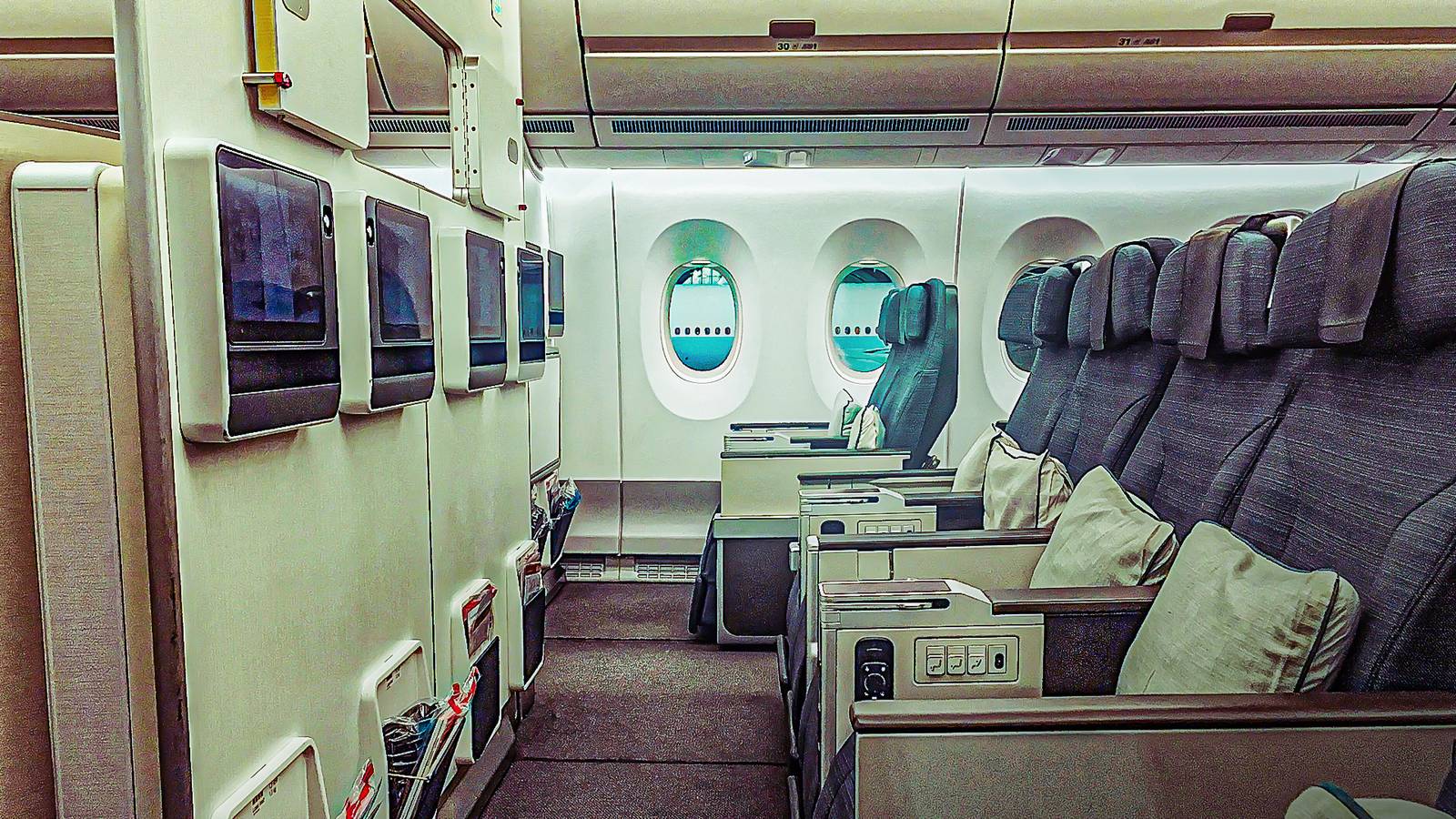
Published Aug 17, 2026, 9:45 PM EDT Experienced ICAO English Language Proficiency Instructor for pilots and ATCOs and conference interpreter who is passionate about facilitating effective communication within aviation-related businesses. Possess a deep understanding of the aviation industry, including aviation regulations, terminology, and industry-specific communication protocols. Has been working at numerous airshows across Europe since 2014. Being an ultralight pilot in her free time, she also promotes safety and efficiency in aviation operations. Based in Italy and Malta For millions of travelers each year, long-haul flying means choosing between comfort and cost. The rise of premium economy has helped bridge the gap, giving passengers a cabin that feels noticeably more relaxed than standard economy but far more affordable than business class. However, just how much more space and comfort do you actually get, and how significant is the difference on a real flight? Let's break down the actual, measurable gap between premium economy and economy class, including pitch, width, recline, amenities, and the overall cabin experience, using real traveler accounts, expert aviation analysis, and comparisons from major global airlines. Whether you're planning a long‐haul trip or simply curious, this article offers a definitive look at how this increasingly popular cabin compares. Why Premium Economy Exists The premium economy has become one of the most important developments in commercial aviation over the last two decades. The cabin was created to fill the void between low-cost economy seats and the exclusive, often unattainable world of business class. Airlines quickly discovered that many travelers were willing to pay extra for just a bit more space, more bags, comfort, and service, especially on long‐haul flights where cramped seating can take a toll on the body. According to Travel + Leisure, premium economy typically falls between economy plus and business class, both in terms of pricing and physical location. It’s designed to deliver a “meaningful comfort upgrade without the luxury pricing of premium cabins.” Over time, the definition of premium economy has expanded. What began as slightly wider seats and a few inches of extra pitch has developed into a category sometimes with its own dedicated cabin, upgraded service, enhanced meals, large entertainment screens, and even footrests on modern aircraft. In a world where space is scarce and comfort comes at a premium, this middle ground has proven pretty successful. How Much More Space You Really Get Credit: Emirates The most important question travelers ask is simple: how much more space does premium economy give you compared to economy? The answer, based on consistent reporting and multiple firsthand accounts, is quite a lot. Seat pitch, which is the distance between your seat and the one in front, is the most meaningful factor. Standard economy seating typically ranges from around 30 to 32 inches. By contrast, premium economy often expands this to 36–40 inches, giving passengers up to eight extra inches of legroom. Seat width is another key difference. While economy seats often measure around 17–18 inches, premium economy usually provides 18–20 inches, creating enough space to avoid shoulder bumping with your neighbor. An article by Kayak highlights that on many airlines, premium economy also gains an extra armrest or a fixed shell design that prevents the passenger in front from reclining into your space. Recline rounds out the upgrade. In standard economy, the recline rarely exceeds two to four inches. Premium economy, however, typically offers five to eight inches, giving you a deeper, more ergonomic angle for resting. Many carriers also include footrests or leg-rests in premium economy configurations. Feature Economy Premium Economy Seat Pitch ~30–32 inches ~36–40 inches Seat Width ~17–18 inches ~18–20 inches Recline ~2–4 inches ~5–8 inches (plus foot/legrest) Cabin Style Larger, more crowded Smaller, quieter Amenities Basic Enhanced meals, priority services Passengers often describe the difference not merely in inches but in overall experience. On Reddit, one user shared regarding a long flight that “the basics are normally a slightly wider seat with enhanced legroom. (...) You may get additional checked baggage allowance, priority check-in, and boarding.” Many other travelers on various forums noted that the seat width was what really made the difference. It’s this combination of measurable space and better service that makes premium economy feel like a meaningful upgrade, especially for long flights. How Airlines Differ In Their Premium Economy Cabins Credit: Virgin Atlantic Not all premium economy products are created equal, and not all airlines have one. These seats are usually available on longer flights. Some airlines tend to lean heavily into the upgraded experience, making the cabin feel almost like a light version of business class. Meanwhile, others take a more conservative approach, offering only slightly more room than the economy. For example, Emirates has been widely praised. Its premium economy cabins reportedly offer up to 40 inches of pitch, leather seats, calf/footrests, and multi-course meals in a quieter separate cabin. An article in Travel + Leisure described it as “a true step up” thanks to its modern look and design. Airline Seat Pitch Seat Width Notable Features British Airways 38 inches 18.5 inches Separate cabin, upgraded dining KLM 38 inches 18–19 inches Modern seats, large IFE screens Cathay Pacific 38–40 inches 18.5 inches Excellent recline, extra storage Emirates Up to ~40 inches 19.5–20 inches Leather seats, premium service Other carriers, like British Airways (World Traveller Plus), KLM (Premium Comfort) and Cathay Pacific each offer different configurations. British Airways has 38″ pitch and a dedicated cabin, KLM has 38″ pitch, leg rests, and 13″ screens, and Cathay Pacific has premium seats offering 38-40″ pitch and wide width. These differences underline that you really must check the specific aircraft and product rather than assume all premium economy seats are the same. What this shows is that while the headline numbers matter, it’s the combination of seat dimensions and layout, service, and cabin feel that creates the real difference. Why Travelers Choose Premium Economy Credit: Thai Airways Premium economy’s popularity is mainly driven by comfort, but the motivations run deeper than simply wanting more legroom. On long‐haul routes, the difference in personal well-being can be surprisingly substantial. Many travelers report sleeping better, experiencing less stiffness, and arriving at their destination more refreshed. Those extra inches of pitch allow them to stretch their legs, and the additional recline creates a posture that feels noticeably closer to business class than to economy. The atmosphere of the premium economy cabin also plays a significant role. Because it’s usually smaller and quieter, passengers experience fewer disturbances, quicker service, and less competition for lavatories. Several Reddit users have described it as “a calm haven compared to the chaos of economy." Service upgrades vary by airline but frequently include priority boarding, enhanced meals (sometimes served with metal cutlery, as in business class), welcome drinks, and, on select carriers, noise-canceling headphones or amenity kits. These enhancements don’t turn premium economy into a real business class where seats can become beds (apart from Thai Airways, as seen above), but they do elevate the experience enough that many travelers feel the price difference is justified. Value is perhaps the most compelling factor. For passengers unwilling or unable to pay business class prices, premium economy often feels like the right balance: a way to significantly improve comfort without doubling or tripling their fare. As noted in Travel + Leisure, the incremental cost may be steep, but for the long haul, many find it worthwhile. In addition, premium economy tickets usually include extra luggage and greater flexibility. These features are only available for an extra fee in economy. When Premium Economy Might Not Be Worth It Credit: Emirates Despite its advantages, premium economy isn’t always the right choice. On shorter flights, particularly those under four hours, the added comfort may not be significant enough to justify the extra cost. Some passengers find that exit row seats in economy or 'economy plus' products provide comparable legroom for less money. Condé Nast Traveler notes that economy plus is often a small upgrade, whereas premium economy really is a distinct cabin with elevated service. Aircraft type can also influence the value. On older or narrower aircraft, premium economy cabins may lack the refinement or generous space found on newer jets. Numerous trip reports have pointed out that premium economy on certain configurations feels only marginally better than economy, particularly if the upgrade cost is high. Price is another factor. Travelers who are more cost‐sensitive may find the fare jump too steep, especially during peak travel periods. Those with elite frequent flyer status might also prefer to save money and hope for an upgrade to business class through miles or operational upgrades. The cabin's layout plays a role as well. On some aircraft, premium economy uses a 2-4-2 layout, which can make middle seats less desirable. Passengers who prioritize aisle access or window privacy may not find the middle section appealing, even with the extra space. Evaluating Whether To Pay For Premium Economy Credit: Singapore Airlines Deciding whether to upgrade ultimately comes down to understanding your personal needs and flight circumstances. The first consideration is the aircraft itself. Premium economy varies dramatically between airlines, so researching seat maps and configurations can make a huge difference. Tools like aeroLOPA or the airline’s website can help you determine whether the cabin offers the recline, legroom, and amenities you expect. It can also be helpful to evaluate the upgrade in terms of value rather than price alone. Many travelers weigh the cost per inch of extra space, or consider how much better they will feel after a long flight. Those who rely heavily on in‐flight rest or who suffer from back pain or circulation issues often find premium economy transformative. Comparing premium economy with exit-row or economy plus seats is also worthwhile, as in some cases, a well‐placed economy plus seat may offer similar legroom for much less money, though it lacks the dedicated cabin experience. Finally, your loyalty status or ability to use points might tip the balance. Frequent flyers with loyalty miles can often upgrade at a lower cost or even for free, making premium economy an easy choice.
Here's How Much More Spacious Premium Economy Is Compared To Economy Class
Full Article
Original Source
Read the full article at Simpleflying →KhanList aggregates and links to publicly available news content. We do not host full articles from third-party sources. Always verify important information with original sources.