
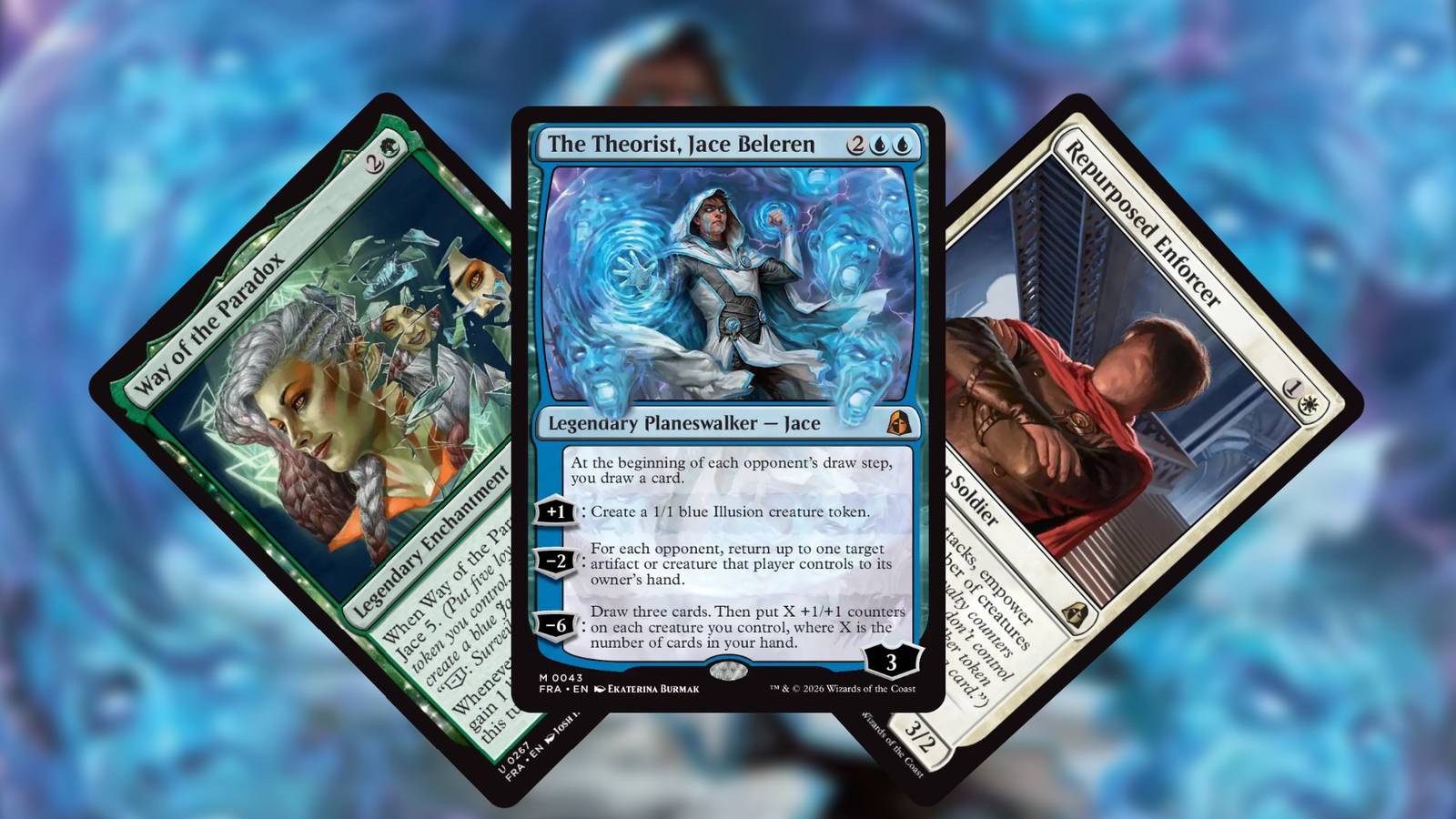
Published Oct 6, 2026, 8:09 AM EDT Niall (pronounced Ny-ul) is a UK-based writer who has been writing about Magic: The Gathering throughout his entire career, with everything from new set breakdowns and individual deck guides to offering his opinions on the state of formats and the general direction of the iconic TCG. Niall also has a rich history covering triple-A releases, sports games, and PC hardware. Magic: The Gathering's Reality Fracture set has no shortage of brilliant cards, but as usual, playability is split across multiple formats. We're going to focus on the best cards for Standard, Magic's default competitive 60-card format. This means these cards need to sit well within the current meta, but also have enough power and playability to withstand some changes, especially with the 2027 Standard rotation on the horizon. We'll also identify existing meta decks within Magic across paper and digital play, and highlight where these cards fit in, or whether they're just a generically good card that is worth trying to build around or fit into a deck that matches its identity. The "Way" Enchantment Cycle We're kicking off with a ten-card cycle build around the Empower Jace mechanic, which is already proving popular in both Standard and Draft formats. Each color identity has an Echoed Pair, but each card shares the same core mechanic: when it enters play, you Empower Jace 5. From there, each of the cards moves in a slightly different direction. The two blue cards either give your Planeswalkers an additional ability or let you draw a card when spending exactly two loyalty counters on an ability. The black cards either give your Planeswalker an additional ability to create token creatures, or make it so that when creatures you control die, your Planeswalkers get additional loyalty counters. Across all five colors, there are some really useful abilities, all of which interact with Planeswalkers you control, and knowing that you get to Empower Jace 5 when they are first cast, you know you're going to get some decent mileage out of them without having to scramble to get another Planeswalker into play somehow. Omnipresence While Omnipresence has a huge downside in the form of its eight-mana casting cost, the fact that it is a green spell somewhat negates it. Green ramp is still well and truly alive in Standard thanks to the many Landfall decks that are thriving. This enchantment lets you cast creature cards from your hand for free, provided you control a number of creatures equal to or greater than their mana cost. This can be a very real turn four to six spell, and if it resolves, you'll cast creatures for free for the rest of the game unless it's dealt with. This leaves you with more mana to pump into other spells, whether to power up your creatures or, more importantly, protect them. Karn, Argent Defender The ultimate counter to artifact-heavy decks, Karn, Argent Defender, prevents triggered abilities from activating whenever creatures and artifacts enter the battlefield. This means that if an artifact or creature enters and triggers another card's ability, this trigger is nullified. Other card types entering play will still activate any triggers, but it's still a huge dent for decks that rely heavily on artifact activations and cards like Simulacrum Synthesizer. Beware, this applies to all effects, not just ones that your opponents control. Repurposed Enforcer We've already pointed out how prominent Empower Jace is, and for good reason. While the enchantment cycle is a good way to bring a token Jace Planeswalker into play, there is a better way to introduce and keep a copy in play, and that's through Repurposed Enforcer. This two-mana 3/2 creature Empowers Jace X when it attacks, where X is the number of creatures you control. In mono-white decks, this creature is extremely useful as it doesn't restrict its ability to permanents, meaning token creatures count, too. If Empower Jace decks ever become a thing, which is unlikely, this card will be a staple. However, if you are building a multi-color deck where the mechanic, or Planeswalkers in general, play a big part, be sure to include a few copies of this card. Tarmogoyf It's baaaaaack. The return of Tarmogoyf was a hot topic when the card was first spoiled, and it's great to see it back in Standard play. This powerful two-mana green creature enters play with power and toughness equal to the number of different card types in each graveyard, plus one. The use of the wording "each graveyard" opens this card up to play in other formats, too, but even in Standard there is opportunity for this card to be very powerful, and that's before you look at buffing it with +1/+1 counters. Hexhaven College Creature Cycle Another cycle of cards is up next; this time it's the Hexhaven College creatures. These are all relatively cheap creatures that enter with a Prepared spell that can only be cast once (unless Prepared again via another card). These cards are the definition of value; they're good turn-two or three spells to populate your board, and the Prepare spells are useful and on-theme for the color identity. I first noticed their usefulness during prerelease and as the set started to be drafted, but even in Standard, it's worth trying these creatures if you're looking for great value and two-for-one spells. The Theorist, Jace Beleren The Theorist, Jace Beleren, is a card that has been pushed as one of the faces of this set, and thankfully, in Standard, it's highly playable. It costs four mana to get into play and draws you a card at the beginning of your opponent's draw step as a passive ability. As for its loyalty abilities, it can create Illusion tokens, bounce creatures or artifacts to your opponent's hand, and have you draw three cards while giving a creature X +1/+1 counters where X is the number of cards in your hand. Even as a standalone Planeswalker, this card is pretty great, but in a deck with cards that can alter Planeswalker abilities or add extra loyalty counters, it gets even better. Kiora Of Salt And Sand Next up is Kiora of Salt and Sand, a three-mana 2/4 creature who has some major interactions with Planeswalkers. First, if you've used a loyalty ability before attacking, you can untap an attacking creature, and it can't be blocked that turn. It also gives all Planeswalkers you control an additional ability that lets you create an 8/8 blue Leviathan creature token with Hexproof, but it costs eight loyalty counters. This is another card that plays very nicely with the Empower Jace mechanic and Reality Fracture's focus on making Planeswalkers highly playable. Flickering Hound Flickering Hound is effectively a white, Standard-safe, Displacer Kitten, so it has to make this list. This four-mana 2/2 lets you Flicker a target creature you control whenever you cast a creature spell. This allows you to retrigger any ETB effects or abilities of other creatures you control that activate when a creature you control enters play. Hexhaven Charm Cycle The third and final card cycle we're including in this list is the Hexhaven charms. These five instant spells all have a thematic choice of effects relevant to the color identity of the colleges. While they play especially nicely with decks built specifically around the Hexhaven colleges, you'll find that as two-mana instants, they have use in general meta decks, too. Chandra, Chill Of Compliance & Chandra, Torch Of Defiance The Chandra Planeswalkers are worth it in this list, as both do a great job of being highly playable both in mono and multicolor decks. If pushed for a definitive answer, I would argue that Chill of Defiance is the better card overall because it's cheaper and plays heavily into blue deck themes, but there's only a one-mana difference in the casting cost, and Torch of Defiance is still a real game changer for mono-red and Izzet decks. Planeswalkers in general are very playable in Standard right now, but these two, and the previously listed Jace, are the best of the bunch. Ferocity Of The Hunt This enchantment is highly playable thanks to one keyword, Flash. As a two-mana spell, when played, you use Ferocity of the Hunt to enchant a target creature; it gains +1/0 and Deathtouch. Then, when the enchanted creature dies, it returns to the battlefield under your control, but tapped. This is a great little enchantment to catch you opponent off guard if they're swinging in confidently, and you don't lose out if your creature dies in the process, and they come straight back, and any ETB triggers will occur all over again. Warrior's Blades A card that turned heads when it was first revealed, Warrior's Blades is an equipment card that also comes loaded with a copy of Lightning Helix. It's a four-mana spell that deals three damage to any target, and you gain three life. Then, it can be equipped to a creature to give it +2/+1. Its equip cost is an additional three mana, but this is reduced for every +1/+1 counter already on the creature it is being equipped to, so it can be equipped for free if the creature already has three counters on it. Gideon's Memorial Last but not least, the final card we're going to highlight is Gideon's Memorial, a two-mana white legendary artifact that gives all token creatures you control +1/0 and Vigilance. You can also tap it to add one mana of any color that can only be used to cast a Planeswalker spell. Finally, for two mana, you can also discard the card from your hand and deal four damage to a target attacking or blocking creature. The sheer versatility of this card is great for Standard play, and it's worth running three or four copies just because of the discard ability, which effectively turns it into an instant spell. Franchise Magic: The Gathering Original Release Date August 5, 1993 Publisher Wizards of the Coast Designer(s) Richard Garfield
Here Are The Best Standard Cards From MTG Reality Fracture
Full Article
Original Source
Read the full article at Thegamer →KhanList aggregates and links to publicly available news content. We do not host full articles from third-party sources. Always verify important information with original sources.