
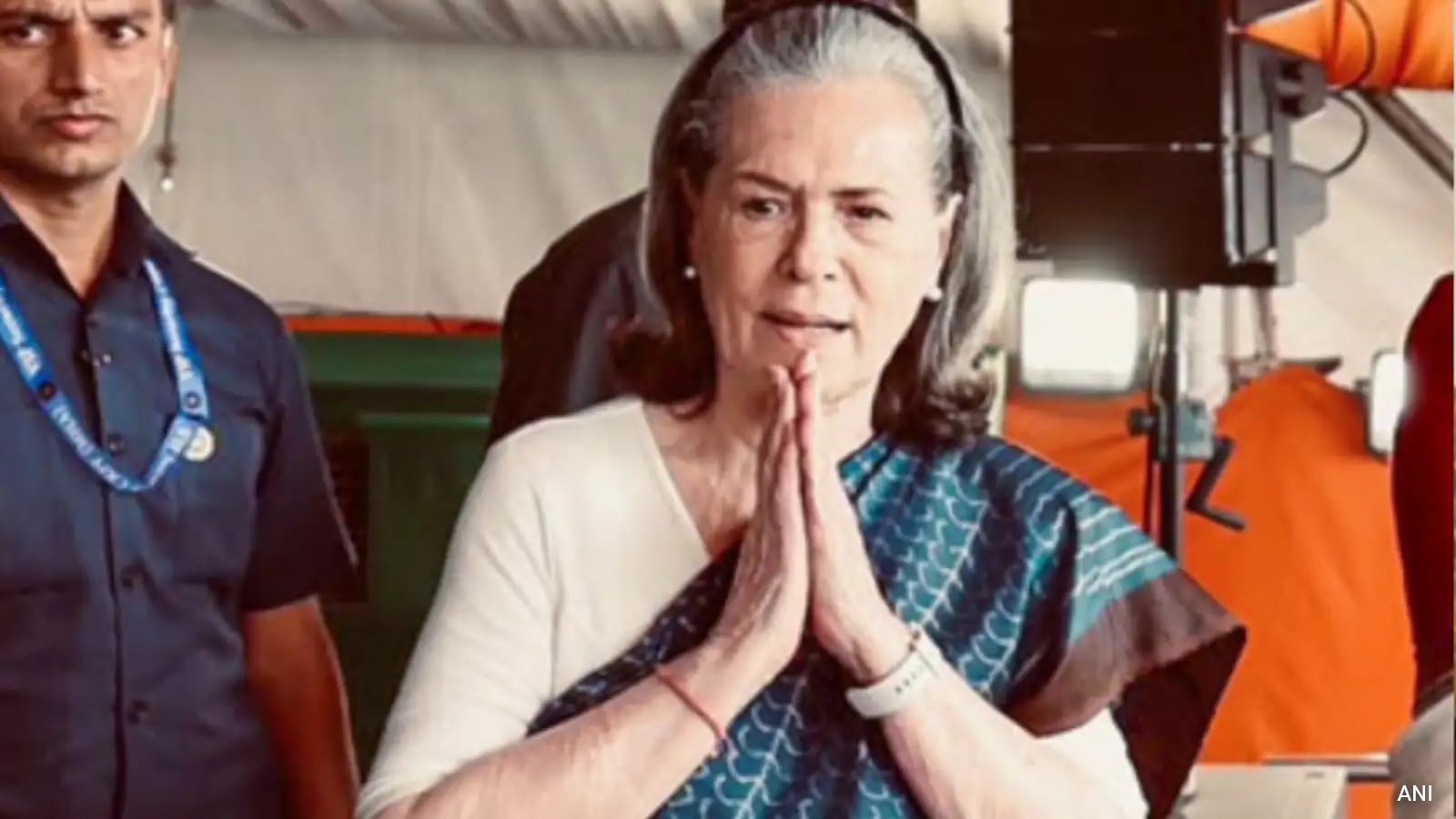
New Delhi: Sonia Gandhi refused to pin the blame entirely on Sanjay Gandhi for the so-called excesses during the Emergency, telling The Hindu's N Ram that there was a "lot of pressure" from some of the senior colleagues of the then Prime Minister Indira Gandhi.The comment comes as Sonia Gandhi's memoir 'Belonging: A Journey Of Love' releases worldwide on November 10."It was not only Sanjay, though in the public mind he is often seen as synonymous with the Emergency. There was a lot of pressure from some of her senior colleagues, and I think there were very few people around her like Rajiv who had a different point of view," Sonia Gandhi told The Hindu, adding that her husband, Rajiv Gandhi, used to report complaints or feedback he had heard to his mother.In the end, Sonia said Indira, her mother-in-law, began to understand the situation "through her own wisdom and took actions to remedy it"."I think eventually my mother-in-law began to understand the situation through her own wisdom and took actions to remedy it," she told the newspaper.When asked if it would not be correct to recognise the Emergency as "anti-democratic and authoritarian chapter", the 79-year-old leader agreed that "democratic rights had been curtailed"."It was only after the Emergency that I came to know the true gravity of what had been happening. Yes, democratic rights had been curtailed and there was a suspension of habeas corpus, but it was done constitutionally," she said.Sonia Gandhi listed out a set of deteriorating circumstances leading upto the period of Emergency, adding that Indira Gandhi later "publically expressed regret for the excesses during the Emergency"."When I take myself back to that period and try and see it from Mrs. Gandhi's point of view, I see her struggling to cope with the rapidly deteriorating prevailing circumstances: violent protests, government offices and public transport set on fire, widespread organised unrest and even a call for the bureaucracy and armed forces to disobey orders," she said.She emphasised that the decision to invoke Emergency was ultimately resolved through democratic means."Hindsight allows us to put things better in perspective. Let's not forget that it was Mrs. Gandhi herself who came to recognise what was happening and called for the March 1977 election. And you know very well that she herself later publicly expressed regret and apologised for excesses during the Emergency," she added.The formal declaration of Emergency on June 25, 1975 marked a turning point in Indian constitutional history. The executive acquired overriding powers, and state authority was brought under central control.Following the proclamation, constitutional safeguards were systematically suspended. The Emergency saw strict control over the press and public information through institutional mechanisms and administrative orders.Parliament passed a series of constitutional amendments during the Emergency that weakened judicial review and institutional checks. One of the most controversial aspects of the Emergency was the forced sterilisation campaign.The Emergency continued till March 21, 1977.
"Her Point Of View...": Sonia Gandhi Recalls Emergency, Indira Gandhi's "Regret"
Full Article
Original Source
Read the full article at Ndtv →KhanList aggregates and links to publicly available news content. We do not host full articles from third-party sources. Always verify important information with original sources.