
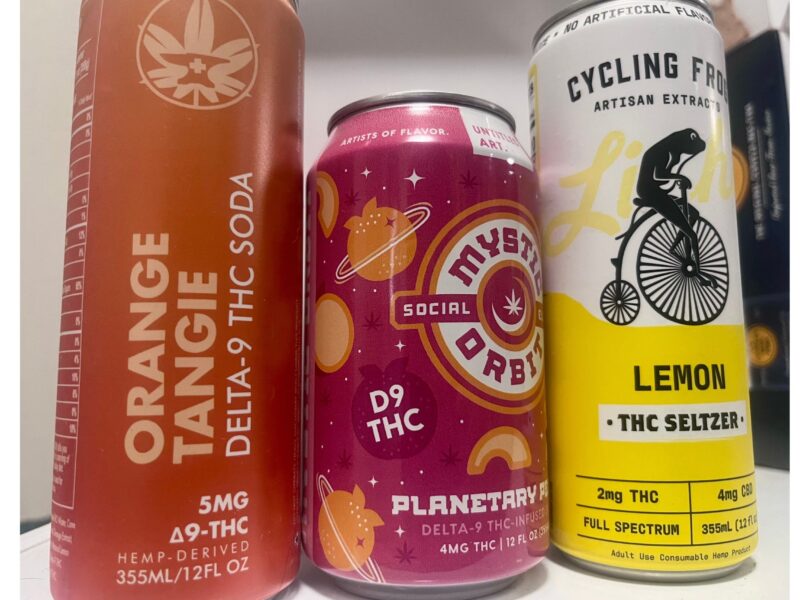
The ruling stops any hopes of blocking the new regulations that industry members claim will devastate their businesses on Saturday.ROANOKE, Va. —Virginia’s new hemp regulations will go into effect Saturday after a federal judge ruled againstindustry members Friday.A group of hemp manufacturers, sellers and processors sued for injunctive relief against Virginia regulations set to take effect Aug. 15. The rules eliminate a provision allowing retail hemp products to contain more than 2 milligrams of tetrahydrocannabinol (THC), the psychoactive component of cannabis, per package if they contained at least 25 times as much of the non-psychoactive cannabidiol (CBD).The plaintiffs say the regulations, aimed at restricting delta-9 products, amount to a taking in violation of the Fifth Amendment, as applied to states through the 14th Amendment. They say the rules would outlaw as much as 85% of their products.“By enforcing the new hemp prohibition to illegalize the hemp products that used to be legal, defendants damaged plaintiffs’ agricultural operations,” the plaintiffs said in their complaint. “Defendants facilitated the functional destruction and forced disposal of plaintiffs’ lawful hemp inventory. Therefore, defendants have ’taken or damaged’ plaintiffs’ property for a public purpose.”A physical taking occurs when the government occupies or takes possession of private property. U.S. District Judge Robert Ballou disagreed with the plaintiffs’ interpretation.“The challenged provisions merely impose restrictions on the sale of certain property,” the Joe Biden appointee said in his ruling. “The statute does not require plaintiffs to surrender, transfer or destroy their existing inventory, nor does it impose a general prohibition on the possession of non-compliant products."Ballou further ruled that the regulation does not leave the plaintiffs without economic value, as they can continue selling other compliant products and they’ve been given ample time to sell their existing inventory. The plaintiffs claim they had 40 days to sell their products after receiving notice on July 6.“Plaintiffs entered and invested in a heavily regulated and rapidly evolving industry,” Ballou said. “Federal and state governments have repeatedly altered the legal status and regulatory treatment of hemp-derived THC products. Against that backdrop, plaintiffs’ expectation that their products would remain lawful for sale indefinitely is not obviously reasonable.”Ballou also noted that the Takings Clause of the Fifth Amendment rarely applies to takings under the government’s police power.“The commonwealth of Virginia acted under its police power to enact legislation it believes to be in the interests of promoting the health and welfare of Virginia citizens, and it is not this court’s role to second-guess or overturn such a decision,” Ballou said.The plaintiffs also argued the regulations violate the 14th Amendment’s Due Process Clause. The General Assembly passed the rules through the state budget after rejecting Democratic Governor Abigail Spanberger’s proposed amendments to a separate retail market bill.“HB 30 was finalized and pushed through the General Assembly through a closed-door conference report, completely bypassing standard committee hearings, independent industry analysis and hemp industry stakeholder input,” the plaintiffs said of the budget legislation. “Indeed, nobody was given a chance to testify or suggest amendments – instead, an entire industry was erased through a closed process.”Ballou seemed sympathetic to the due process concerns.“It should be of little surprise that many of plaintiffs’ claims relate to the attendant complications and unintended consequences that rushed legislation creates,” Ballou said.However, Ballou still ruled for the government on the due process claim, holding that the Constitution does not require the state to allow each business to contest the regulations before enactment.The plaintiffs argue the new scheme, which effectively outlaws large amounts of their businesses while allowing cannabis dispensaries to sell even more potent products, gives the advantage to large cannabis companies over small Virginia hemp businesses.“The commonwealth cannot rationally maintain that 2.1 milligrams of THC in a hemp beverage sold by a licensed Virginia hemp business threatens public health, while materially higher doses of the same compound sold through a state-licensed dispensary do not,” the plaintiffs said.Ballou agreed with the government that the industries are not comparable because THC products are regulated separately. Plaintiff NOVA Hemp says the new rules outlaw 85% of its products, resulting in losses exceeding $300,000.The plaintiffs, like other sellers of hemp products, benefited from the 2014 Farm Bill, which allowed growers to sell products that comply with state laws and contain less than 0.3% THC. By the end of 2019, Virginia had more than 191 registered hemp processors and 955 growers, according to the Virginia Department of Agriculture and Consumer Services.Government representatives did not respond to a request for comment.“I’m disappointed in the result today but very proud of my clients who traveled from across Virginia on Wednesday to appear in court and provide compelling testimony,” attorney Chap Petersen, representing the plaintiffs, said in a statement. “Frankly, that testimony should have happened months ago in a committee hearing, before the assembly voted to shut down these businesses and deprive their customers of therapeutic remedies. We’ll see where the next steps take us.”Subscribe to our free newslettersOur weekly newsletter Closing Arguments offers the latest about ongoing trials, major litigation and rulings in courthouses around the U.S. and the world, while the monthly Under the Lights dishes the legal dirt from Hollywood, sports, Big Tech and the arts.Additional Reads
Hemp industry bid to keep THC loophole open goes up in smoke
Full Article
Original Source
Read the full article at Courthousenews →KhanList aggregates and links to publicly available news content. We do not host full articles from third-party sources. Always verify important information with original sources.