
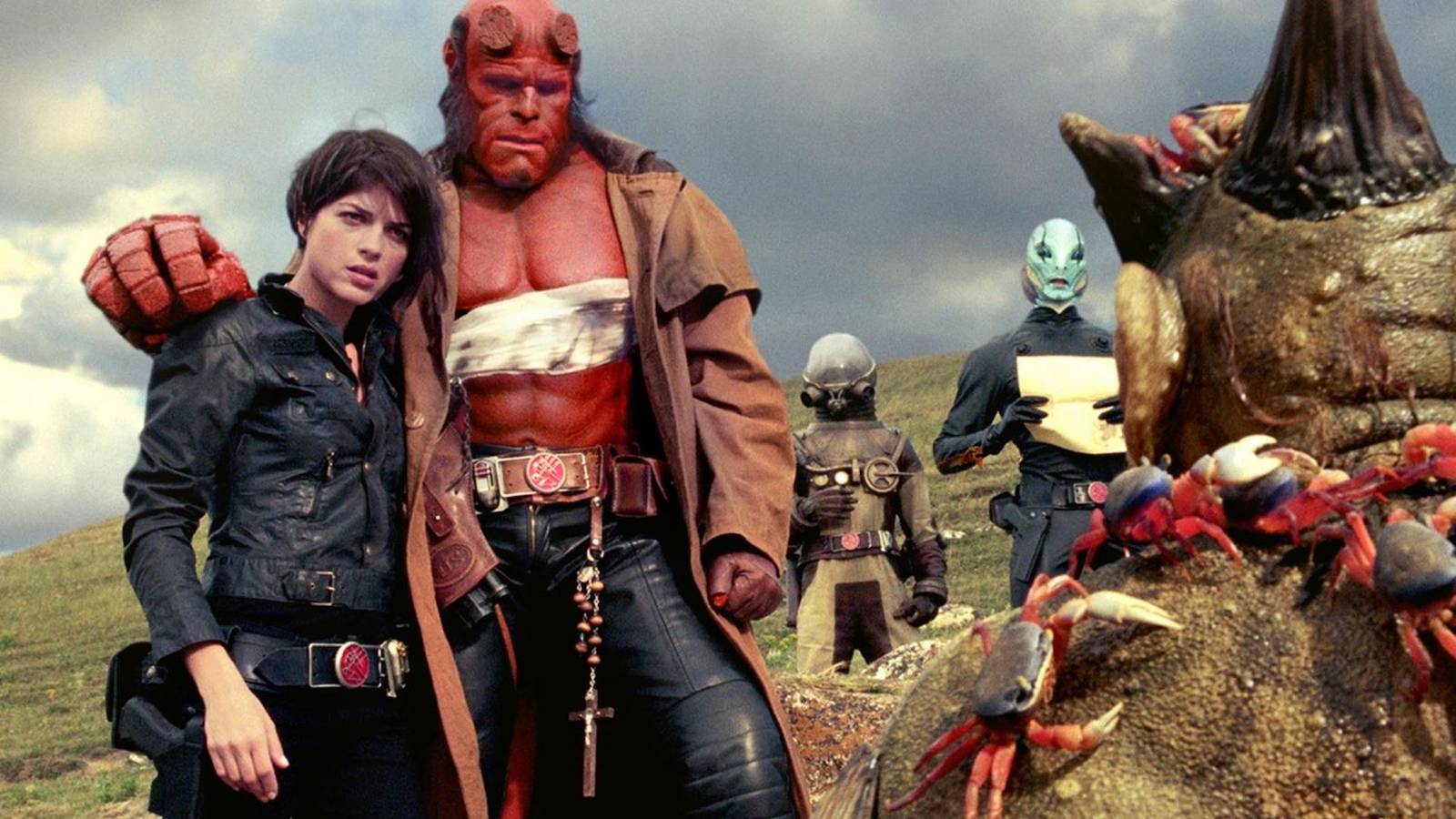
Published Nov 18, 2026, 5:13 PM EST TJ Mills is an editor on ScreenRant's Comic team, where she combines her lifelong passion for DC with her analytical background as a former Intelligence Analyst. Since joining ScreenRant in 2023, she has specialized in covering major DC storylines, character evolutions, and industry developments. Today is a great day for die-hard Hellboy fans, as the franchise's return to one of its most beloved eras is now officially complete. Last month brought the first installment, and now the second and final part has arrived, meaning fans can finally experience the entire release from beginning to end. Hellboy has 33 years' worth of stories and adaptations, so it's no surprise that a few eras in the character's history stand out. Among those considered truly golden is undoubtedly Guillermo del Toro's live-action era (2004–2008), which saw legendary actor Ron Perlman take on the role of the Red Devil and deliver two epic movie adaptations: Hellboy (2004) and Hellboy II: The Golden Army (2008). However, even more consequential to Hellboy's legacy than these two movies were, of course, Mike Mignola's comic runs, which is where the character was born. The Red Devil has had several notable comic eras, with Mignola's original run (1994–2001) standing out as one of the most important. This period solidified Hellboy's iconic personality and established the franchise-defining supernatural world that fans have come to love. The fan-favorite Conqueror Worm era (2001–2004) also brought major character developments and amplified the franchise's cosmic horror. Another notable period was Hellboy in Hell (2012–2016), a divisive but highly respected final chapter that delivered an exceptionally haunting atmosphere and a memorable conclusion to Hellboy's journey. In short, while Hellboy's various movie and television adaptations are iconic, the character is truly at his best when Mignola is behind the pen. And now, fans of Mignola's Hellboy in Hell can revisit this golden era, as Mignola, Cyrille Pomès, and Dave Stewart's two-part Hellboy in Hell: Nothing But Blood is now available to read in its entirety. Nothing But Blood's Place In Hellboy Continuity, Explained Main Cover by Cyrille Pomès for Hellboy in Hell: Nothing But Blood #2 (2026) Mike Mignola and colorist Dave Stewart’s original Hellboy in Hell series was a 10-part epic that launched in 2012 and wrapped up in 2016. While sometimes considered a divisive chapter in the character’s legacy, it is generally well-respected among the fanbase, as it was one of Hellboy’s most important story arcs in the franchise. It not only explored Hellboy’s time in Hell, but also significantly expanded the mythos and revealed key truths about his origins. 2026’s Nothing But Blood serves as a two-part expansion of this period in the mythos. However, rather than taking place after the original Hellboy in Hell storyline, Nothing But Blood takes place immediately after issue #8, which depicted Satan’s death and the fall of Pandemonium. As a result, Nothing But Blood adds an extra chapter to the story explored in the original series. This chapter follows Hellboy as he “steps in to save a young woman being chased by winged beasts deep in Hell in the midst of an uprising against the most powerful demons.” While readers can jump straight into Nothing But Blood, those looking for the best reading experience will want to revisit Mignola’s original run, reading issues #1–8 before diving into both parts of Nothing But Blood, then returning to the original series for its final two issues. Of course, another way to approach the story is to read Hellboy in Hell #1–10 before diving into Nothing But Blood #1–2. Ultimately, it comes down to personal preference for new readers, while longtime fans will likely favor the latter reading order, given that they have most likely already read Hellboy in Hell. Given that Nothing But Blood #2 just released today, the jury is still out on the overall fan consensus. However, the now month-old first issue has racked up mostly positive reviews from both old and new fans, as shown by review sites and forum discussions such as those on League of Comic Geeks. With this in mind, Mignola, Pomès, and Stewart’s return to this golden era of Hellboy will likely be viewed as a favorable addition to the mythos. Hellboy in Hell: Nothing But Blood #1-2 from Dark Horse Comics is now available to read! Hellboy
Hellboy’s New 2-Part Epic Is A Return To The Franchise’s Golden Era
Full Article
Original Source
Read the full article at Screenrant →KhanList aggregates and links to publicly available news content. We do not host full articles from third-party sources. Always verify important information with original sources.