
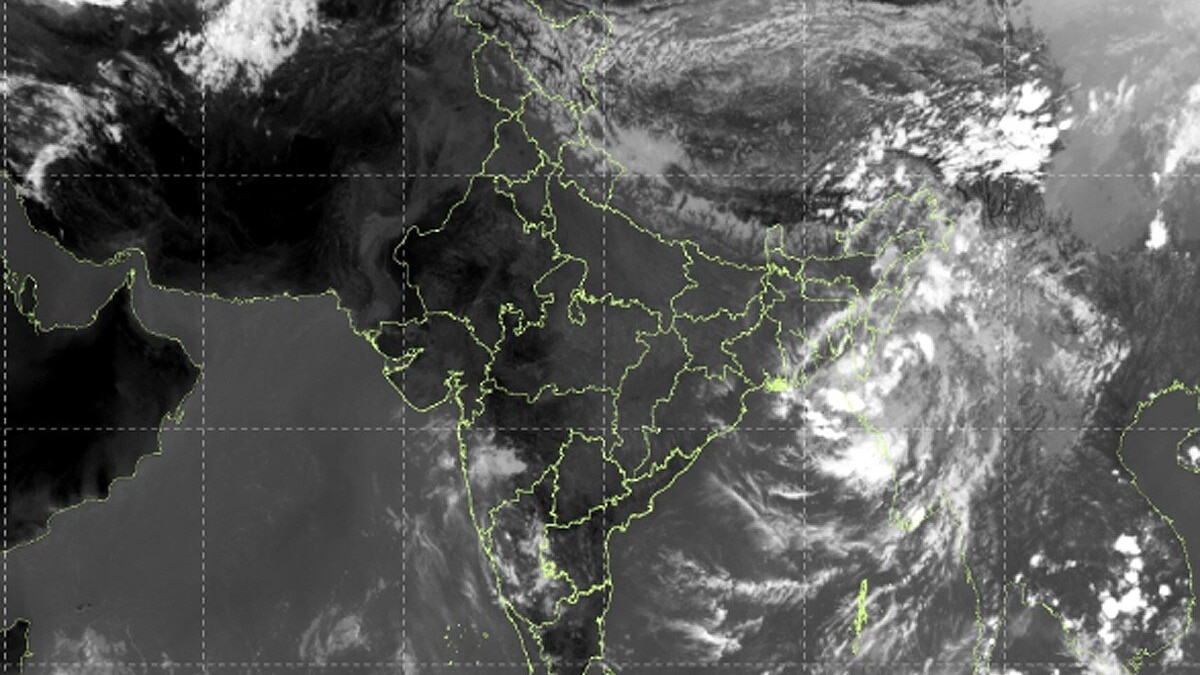
A Bay of Bengal deep depression is likely to intensify into a very severe cyclonic storm before crossing the Andhra Pradesh coast. Odisha has activated evacuations, closures and disaster teams as heavy rain threatens vulnerable districts.Deep depression over the Bay of Bengal is likely to intensify into a cyclone on Monday. (File Photo: IMD)A deep depression over the Bay of Bengal is likely to intensify into a cyclonic storm by Monday morning and further strengthen into a very severe cyclonic storm before making landfall along the Andhra Pradesh coast on Wednesday, October 28, prompting the India Meteorological Department (IMD) to forecast heavy to very heavy rainfall across Odisha and Andhra Pradesh.The IMD has forecast heavy to very heavy rainfall across Odisha from October 27 to 29 as the weather system approaches the eastern coast. Odisha has stepped up preparations, with Chief Minister Mohan Charan Majhi deputing eight ministers to vulnerable districts and mobilising disaster response teams.The system is expected to cross the Andhra Pradesh coast between Bapatla and Visakhapatnam around the forenoon of October 28, with maximum sustained wind speeds of 115-125 kmph, officials said.The projected landfall area is around 300 km from Odisha's Gopalpur. | A deep depression over the Bay of Bengal is likely to intensify into a cyclonic storm by tomorrow morning and further strengthen into a very severe cyclonic storm before crossing the Andhra Pradesh coast on Wednesday. The India Meteorological Department has forecast very heavy rainfall in Odisha and Andhra Pradesh from Tuesday to Thursday in view of the approaching weather system. #WeatherUpdate #CycloneAlert #AndhraPradesh #Odisha— All India Radio News (@airnewsalerts) October 25, 2026 RED ALERT FOR FIVE ODISHA DISTRICTSThe Odisha government has issued a red alert for Ganjam, Gajapati, Rayagada, Koraput and Malkangiri for October 28, as these districts are likely to bear the brunt of the approaching cyclone.The districts could receive heavy to very heavy rainfall, with isolated extremely heavy downpours exceeding 20 cm. The rainfall is likely to be accompanied by thunderstorms, lightning and gusty surface winds reaching 60-70 kmph, the IMD said. Chief Minister Mohan Charan Majhi said the weather system could affect southern and coastal Odisha with heavy rainfall and gusty winds of 70-90 kmph. Significant rainfall is also expected in other coastal areas.SCHOOLS SHUT IN FIVE DISTRICTSThe Odisha government has ordered the closure of all schools, colleges and Anganwadi centres in Ganjam, Gajapati, Rayagada, Koraput and Malkangiri on October 28 and 29.Collectors in other districts will decide on closing educational institutions depending on how the weather situation evolves.Majhi has directed officials to shift people from vulnerable areas to safer locations, with particular attention to elderly people, patients and pregnant women. Those requiring medical assistance should be moved to healthcare facilities if necessary.The chief minister reiterated the state's zero-casualty objective and asked officials to prioritise public safety, evacuation and emergency response.60 ODRAF, 17 NDRF TEAMS DEPLOYEDOdisha has positioned rescue teams from the Odisha Disaster Rapid Action Force (ODRAF), the National Disaster Response Force (NDRF) and the Fire Services in vulnerable areas."Around 60 ODRAF teams and 17 NDRF teams have been deployed, while 225 Fire Services teams are on high alert," Majhi said.Collectors in coastal and southern districts have been directed to keep cyclone shelters ready for people who may need to be evacuated.Ganjam District Collector Keerthi Vasan V said 100 cyclone shelters had been kept ready and 1,000 temporary locations identified to accommodate people if evacuation becomes necessary.The chief minister has also directed departments, including Health and Family Welfare, Water Resources, Energy, Agriculture, Panchayati Raj, Rural Development and engineering services, to remain prepared and promptly repair any damage caused by the cyclone and associated rainfall.EIGHT MINISTERS ASSIGNED TO VULNERABLE DISTRICTSMajhi has deputed eight ministers to oversee preparedness and response measures in vulnerable districts. They will remain in their assigned districts from October 27 to 29, officials said.Deputy Chief Minister K V Singh Deo has been assigned Koraput, while Deputy Chief Minister Pravati Parida will oversee arrangements in Rayagada.Rural Development, Panchayati Raj and Drinking Water Minister Rabi Narayan Naik has been assigned Kandhamal, while Commerce and Transport Minister Bibhuti Jena will oversee preparations in Ganjam.Food Supplies and Consumer Welfare Minister K C Patra will be in Nabarangpur, School and Mass Education Minister Nityananda Gond in Malkangiri, Higher Education Minister Suryabanshi Suraj in Gajapati and Health Minister Mukesh Mahaling in Kalahandi.Senior officials experienced in handling extreme weather events have also been assigned responsibilities in vulnerable districts. They include K Sudarshan Chakravarthy in Rayagada, Poma Tudu in Koraput, Bijay Kumar Dash in Gajapati, Yedula Vijay in Malkangiri and Maheshwar Swain in Nabarangpur.In a separate order, the state government cancelled the leave of all district collectors, district magistrates and other officers posted in critical offices. They have been directed to return to their respective headquarters immediately to ensure administrative readiness.FISHERMEN ADVISED NOT TO VENTURE INTO SEAThe IMD has advised fishermen not to venture into the sea from October 24 in view of the developing weather system.The weather department has also advised that Distant Cautionary Signal No-I (DC-1) be hoisted at all ports in Odisha.Majhi said that although the system is forecast to make landfall in neighbouring Andhra Pradesh, Odisha will remain fully prepared to deal with any eventuality.- Ends
Heavy rain alert: Deep depression to intensify into cyclone on Monday
Full Article
Original Source
Read the full article at Indiatoday →KhanList aggregates and links to publicly available news content. We do not host full articles from third-party sources. Always verify important information with original sources.