
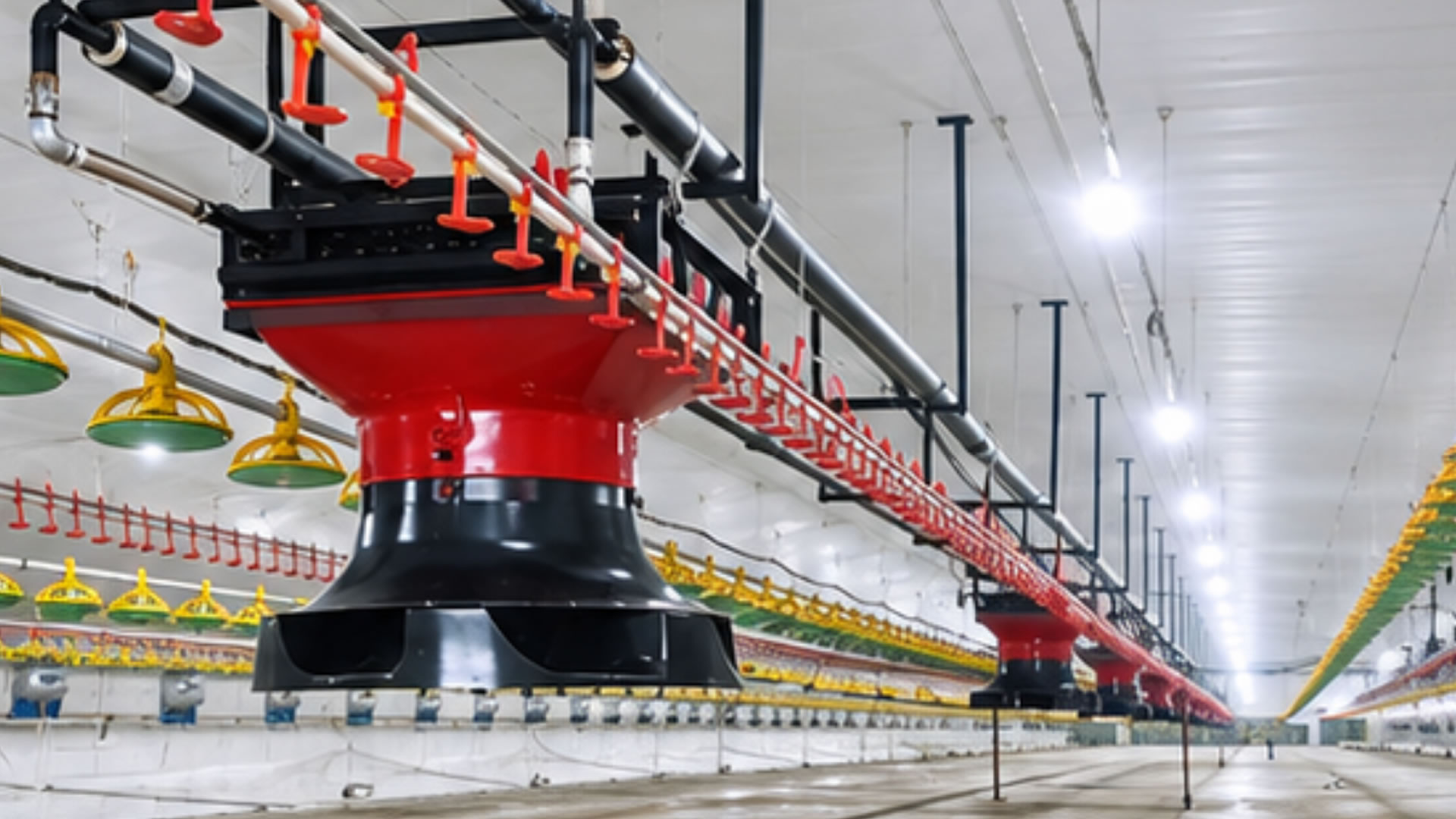
Researchers from Sakarya University and ETA4 Engineering in Turkey have tested an air-source heat pump (ASHP) heating system designed for commercial poultry houses. This, they found, can not only save money on heating, but can also precisely control the environmental conditions necessary for raising chickens commercially at scale. In fact, according to the researchers, using heat pumps can save around 44% in costs compared to comparable coal-fired heating. “The annual cost comparison showed a reduction from $15,506.26 for coal heating to $8,692.48 for the heat pump system, corresponding to approximately 44% lower annual heating costs,” study author Zekeriya Parlak told PV Magazine in an interview. “The comparative analysis also indicated that the heat pump offered additional cost savings of approximately 18% relative to coal, 42% relative to natural gas, 48% relative to fuel oil, and 65% relative to direct electric resistance heating under the evaluated conditions,” he added. At present, most poultry houses use a combination of coal-, gas-, or oil-fired boilers to circulate heated air throughout them. While very effective, this can be a very costly enterprise, especially in colder weather. The team, however, wondered if a heat pump could be a viable alternative. Heat pumps for happier chickens In case you are unaware, these work a bit like a refrigerator in reverse. Rather than generating heat by burning fuel, it extracts thermal energy from outside air, even when that air is cold, and transfers it indoors. The secret power of this setup is something called the coefficient of performance (COP). A conventional electric resistance heater converts approximately one unit of electricity into one unit of heat. A heat pump, on the other hand, can deliver several units of heat for every unit of electricity it consumes because it’s moving existing thermal energy rather than generating all the heat from electricity. While performance varies with outdoor temperatures, heat pumps can deliver substantially more useful heat per unit of energy purchased than conventional electric resistance heating. With the team’s new system, the heat pump heats water and uses a large tank to buffer the heat. From here, heated water is circulated to fan coil units (FCUs) to circulate warm air throughout the poultry house. To test their hypothesis, the team set up their system in one of three identical chicken houses at the same commercial chicken farm in Sakarya. Two of the buildings kept their conventional boiler setup, while the third had the new heat pump and FCU system installed. During testing, the team measured and monitored energy consumption, but also checked that warmth was evenly distributed throughout each test building. This matters because young broiler chickens (chickens raised for meat) require very warm conditions to mature. More efficient and cheaper Cold spots in buildings tend to cause young chickens to cluster together for warmth, which can impact growth and welfare. So, to ensure optimum conditions for the chickens, the team employed computational fluid dynamics (CFD) software to model how warm air moved through the building. Using this, they ran various models for FCU setup and found that seven units strategically placed within each 296-foot (90.3-meter) long, 49-foot (15-meter) wide chicken house offered the best temperature and airflow distribution. Each of these houses had a floor space of around 14,585 square feet (1,355 square meters) and contained around 21,000 chickens. “The main novelty of this research lies in its integrated experimental, numerical, and techno-economic evaluation of an ASHP as a direct replacement for conventional coal-fired heating in commercial broiler houses,” research lead Zekeriya Parlak told PV Magazine in an interview. “This work combines real-world energy consumption measurements from three identical broiler houses on the same farm, analytical heat-demand calculations, experimentally validated computational fluid dynamics (CFD) simulations, and comparative heating-cost assessments,” he added. Looking ahead, the team plans to integrate solar panels, batteries, and heat recovery systems to further improve efficiency. You can view the study for yourself in the journal Case Studies in Thermal Engineering. Get the latest in engineering, tech, space & science - delivered daily to your inbox.Christopher graduated from Cardiff University in 2004 with a Masters Degree in Geology. Since then, he has worked exclusively within the Built Environment, Occupational Health and Safety and Environmental Consultancy industries. He is a qualified and accredited Energy Consultant, Green Deal Assessor and Practitioner member of IEMA. Chris’s main interests range from Science and Engineering, Military and Ancient History to Politics and Philosophy.
Heat pumps cut heating costs by 44% compared to coal in poultry farms, study shows
Full Article
Original Source
Read the full article at Interestingengineering →KhanList aggregates and links to publicly available news content. We do not host full articles from third-party sources. Always verify important information with original sources.