
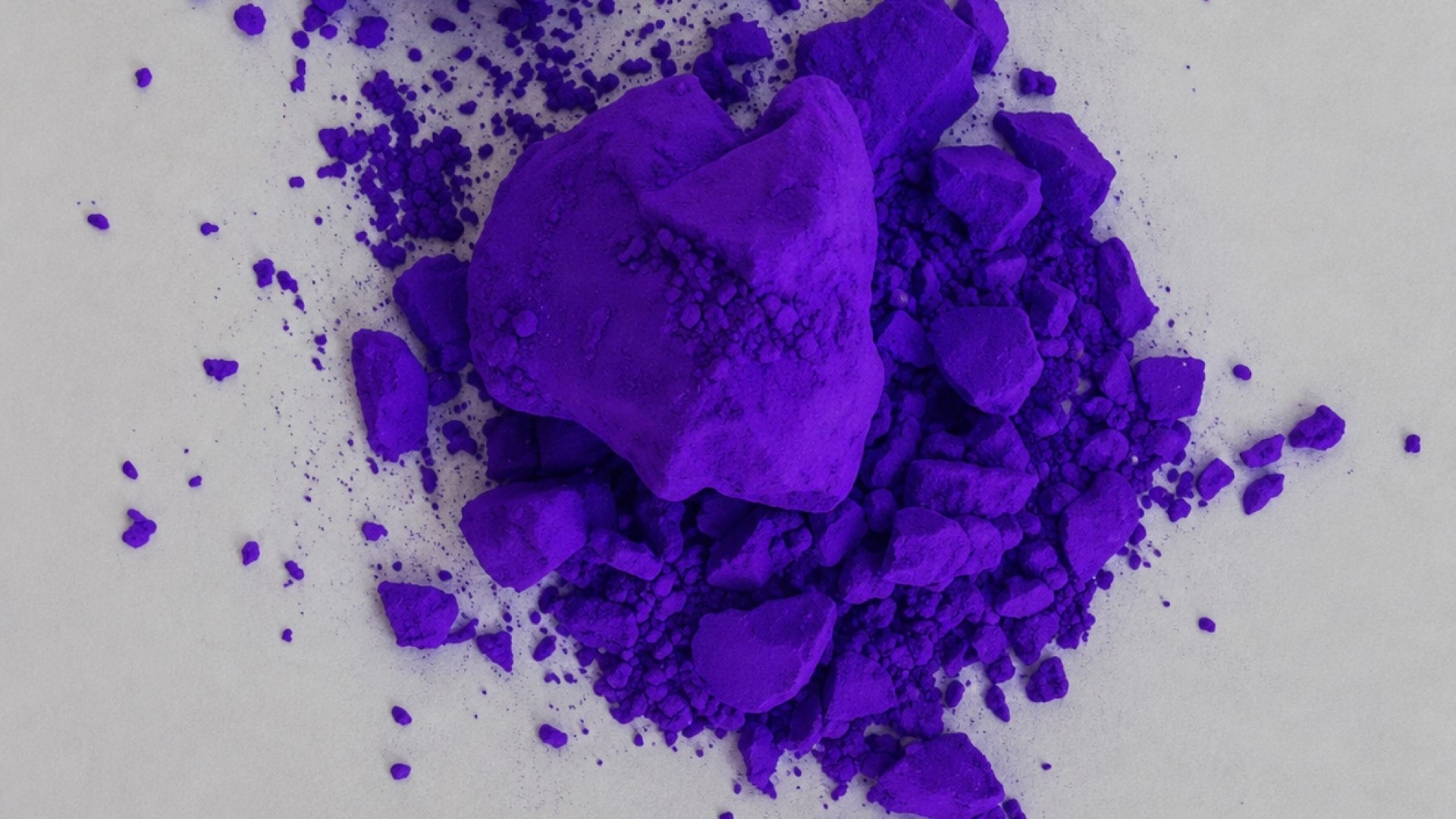
An international team of researchers has unveiled a purple fabric that reflects up to 88 percent of sunlight and can stay up to 11.2 degrees Fahrenheit cooler than conventional purple cotton. The smart material was created by scientists from Zhengzhou University in China, and their colleagues from Australia’s Adelaide University. The team believes that the breakthrough could pave the way for textiles that can beat the extreme heat without relying on white materials. In outdoor tests, the high-tech textile stayed up to 11.2 degrees Fahrenheit (6.2 degrees Celsius) cooler than commercially dyed purple cotton. Additionally, the fabric reflects an average of 87.6 percent of solar radiation. It emits 96.4 percent of mid-infrared radiation, allowing heat to escape through the atmosphere into space. Jun Ma, PhD, a materials engineering professor at Adelaide University and study co-author, said they wanted to prove that effective cooling doesn’t have to mean giving up on color. “We have traditionally had to make a choice between cooling performance and appearance,” Ma added. “Our research shows that we can have both.” Tiny fibers fight the sun Most passive cooling fabrics are white since lighter surfaces have a higher albedo. This means that they reflect a large portion of incoming sunlight. Snow, ice, sand, concrete, and light-color stone, are among such surfaces. Dark and colored materials absorb more solar energy and consequently heat up. Examples of such surfaces include forests, oceans, and asphalt. Purple, presents a particular challenge since producing the color requires absorbing green light. This falls within one of the strongest regions of the solar spectrum. That’s why to create the material, the research team produced microscopic fibers containing a purple metal-organic framework (MOF) and zinc oxide nanoparticles. The combination gave the textile its purple appearance and provided the optical properties needed for passive cooling. Tests revealed that the fabric can reflect about 87.6 percent of the incoming solar radiation. It also emitted about 96.4 percent of mid-infrared radiation. It delivered substantial temperature differences during outdoor experiments. Under direct sunlight, the material remained 7.6 degrees Fahrenheit (4.2 degrees Celsius) cooler than commercial white cotton and 11.2 degrees Fahrenheit (6.2 degrees Celsius) cooler than commercially dyed purple cotton. Furthermore, tests using simulated skin produced an even larger difference. Skin covered by the new textile was up to 14.4 degrees Fahrenheit (8 degrees Celsius) cooler than uncovered simulated skin during daytime conditions. By comparison, white cotton produced a maximum reduction of 8.3 degrees Fahrenheit (4.6 degrees Celsius), while conventional purple cotton lowered the temperature by only about 5 degrees Fahrenheit (2.8 degrees Celsius). Cooling without electricity According to the scientists, the fabric is lightweight and flexible. It can withstand significant stretching and allows water vapor, like perspiration, to pass through. It is also highly water-repellent. In addition, its cooling properties remained effective after 50 washing cycles. This, Yangzhe Hou, a PhD candidate in the School of Chemical Engineering at Adelaide University, and study co-author, could benefit people who spend hours outdoors. “For outdoor workers, athletes and anyone exposed to hot weather, staying cool is not just about comfort,” Hou noted in a press statement. ‘We are interested in developing fabrics that can help manage body temperature without consuming additional energy.” The textile also showed strong resistance to ultraviolet radiation. The team found that it retained its optical performance, after intensive UV aging tests equivalent to roughly 108 days of outdoor exposure. “The long-term opportunity is to move beyond the idea that cooling fabrics have to be white,” Hou concluded. “However, there is enormous potential to combine color, comfort and cooling performance in the next generation of textiles.” The study has been published in the journal Small. Get the latest in engineering, tech, space & science - delivered daily to your inbox.Based in Skopje, North Macedonia. Her work has appeared in Daily Mail, Mirror, Daily Star, Yahoo, NationalWorld, Newsweek, Press Gazette and others. She covers stories on batteries, wind energy, sustainable shipping and new discoveries. When she's not chasing the next big science story, she's traveling, exploring new cultures, or enjoying good food with even better wine.
Heat-defying purple fabric reflects 88% sunlight, keeps skin 14°F cooler, repels water
Full Article
Original Source
Read the full article at Interestingengineering →KhanList aggregates and links to publicly available news content. We do not host full articles from third-party sources. Always verify important information with original sources.