
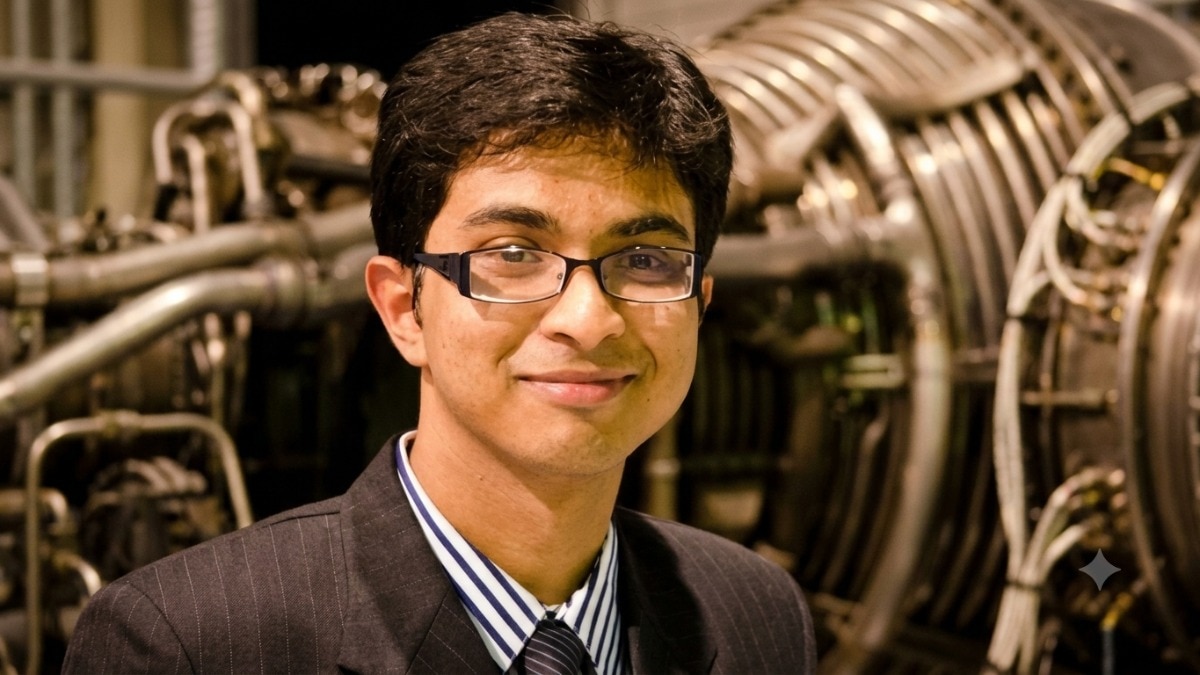
After working on hypersonic propulsion and scramjet research with NASA-linked teams at Argonne National Laboratory, aerospace researcher Prithwish Kundu returned to India and founded Green Aero in 2023. The startup is developing jet propulsion systems and autonomous aircraft, and has now raised $14 million in Series A funding.After working on hypersonic propulsion and scramjet research with NASA-linked teams at Argonne National Laboratory, aerospace researcher Prithwish Kundu returned to India and founded Green Aero in 2023. (Photo: Linkedin/@kunduprithwish | AI-enhanced)New Delhi,Nov 27, 2026 15:02 ISTAt a US national laboratory, Dr Prithwish Kundu worked on the science behind hypersonic propulsion, scramjet combustion and gas turbine engines. His research involved collaborations with NASA, the US Air Force, the US Army and some of the world's biggest aerospace companies.Today, the aerospace researcher is trying to put that experience to work in India. In November 2023, Kundu founded Bengaluru-based Green Aero, a startup developing jet propulsion systems, avionics and airframes for high-speed drones and autonomous combat aircraft.The company recently raised $14 million in Series A funding led by Crane Ventures, bringing fresh attention to an ambitious question: can India build its own advanced jet propulsion technology?FROM A PUNE UNIVERSITY TO US RESEARCH LABSKundu's academic journey began at Savitribai Phule Pune University before taking him to North Carolina State University in the US. He completed his master's in mechanical engineering between 2010 and 2012, specialising in gas turbine combustion chamber design for viscous fuels. His research involved developing and testing a combustion chamber capable of burning high-viscosity fuels while reducing harmful emissions.He then pursued a PhD in aerospace engineering at the same university, completing it in 2015. His doctoral research focused on high-pressure spray flames, combustion modelling and the complex chemical reactions that take place inside propulsion systems. It also involved developing computational models that were validated using high-performance computing facilities at Argonne National Laboratory.That association eventually became a major part of his professional career.FROM SCRAMJET RESEARCH TO BUILDING ENGINESKundu spent over five years at Argonne National Laboratory, first as a postdoctoral researcher and later as a research scientist.His work included developing combustion models for hypersonic propulsion in collaboration with NASA Langley. He worked on implementing combustion models into NASA's VULCAN computational fluid dynamics code for scramjet applications.He also collaborated with the US Army on gas turbine research and worked with aerospace companies including GE, Rolls-Royce, Honeywell and Caterpillar.One of his projects with Caterpillar even resulted in a joint patent related to internal combustion engine design.After returning to India, Kundu moved beyond academic research. He worked at AgniKul Cosmos for six months and later joined electric commercial vehicle company Euler Motors, where he led battery and thermal research and development.In November 2023, he took the entrepreneurial route.THE AMBITION BEHIND GREEN AEROGreen Aero is developing propulsion systems and other aerospace technologies for high-speed unmanned aircraft.The company says it has completed over 100 hot-fire tests in the sub-kilonewton engine category and developed an engine core called Blue Dragon.It has a team of around 50 people and operates an 87,000-square-foot research, development, assembly and testing facility in Bengaluru.The company also reports partnerships with Larsen & Toubro and support through Boeing's BUILD programme.Its latest funding will support further technology development and expansion. Green Aero is also looking to hire engineers across propulsion, avionics, software and airframe development over the next 12 to 18 months.For Kundu, the transition from studying combustion inside an engine to attempting to build propulsion systems in India marks a new chapter in a career spanning academic research, international laboratories and deep-tech entrepreneurship.- Ends
He worked with NASA and the US Army. Now he wants to build India's own jet engines
Full Article
Original Source
Read the full article at Indiatoday →KhanList aggregates and links to publicly available news content. We do not host full articles from third-party sources. Always verify important information with original sources.