
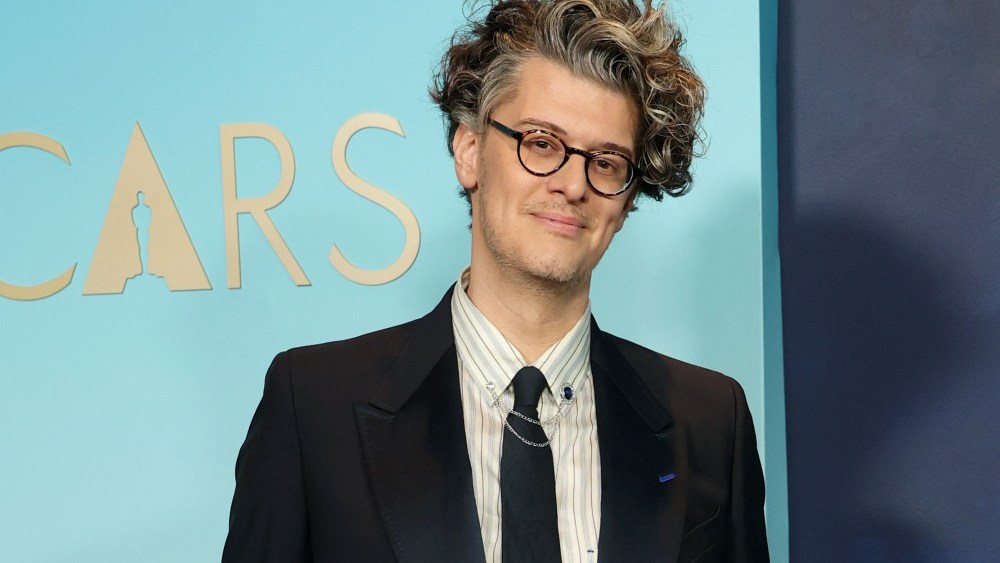
The reason so many of us cried at “Project Hail Mary” has five legs, no face and a voice that belongs to James Ortiz. And he’s so damn effective. In April, Variety exclusively reported that Amazon MGM would submit Ortiz for best supporting actor at the 99th Academy Awards for his performance as Rocky. We’ve written plenty of consideration stories. None has produced what that one did: TikToks, Instagram Reels and a corner of film Twitter demanding, with real passion, that someone “get this adorable rock creature nominated for an Oscar immediately,” as Mike Sawicki of the “Mike, Mike and Oscar” YouTube channel and podcast put it. The groundswell even made it to NBC’s “Today,” where Carson Daly spotlighted it. Months later, sitting in the Variety Awards Circuit Podcast studio, Ortiz still sounds like he’s processing all of it. “Did this actually happen?” he says with a wince. “It feels like it happened to somebody else two years ago.” It did happen. On this episode, Ortiz talks about bringing Rocky to life through his puppet artistry, from the eight weeks his team spent turning subtext into movement to the hours of reference footage that guided Framestore’s animators. He also lays out what he wants from Hollywood when it comes to recognizing and protecting puppetry work, why Phil Lord and Chris Miller’s set felt like “putting on a play in their parents’ garage” and the “Batman Forever” obsession that shaped him as a kid. Listen below. Lord and Miller’s adaptation of Andy Weir’s novel opened in March to $80.5 million domestically, a record for Amazon MGM and went on to gross more than $680 million worldwide, the non-franchise phenomenon the theatrical business had been praying for. At its center, opposite Ryan Gosling’s Ryland Grace, sits Rocky, the Eridian engineer built by Neal Scanlan’s creature shop and performed on set by Ortiz and a team of puppeteers he assembled. He was hired to operate the character. The voice was supposed to come later, from someone more famous. At the 11th hour, it was his. Born in Albany and raised in Texas, the Puerto Rican and Italian artist trained classically at Purchase College and found puppetry when the acting jobs didn’t come. His first agent told him he wouldn’t work until he was 40. He turned 40 a couple of months before cameras rolled. Onstage, he won an Obie for “The Woodsman,” designed the puppets for Lincoln Center’s “The Skin of Our Teeth” and created Milky White, the scene-stealing cow of the 2022 Broadway revival of “Into the Woods.” “Project Hail Mary” is his first film. What strikes me is how plainly he describes the work as acting. He breaks down a script the way he once broke down Prospero and Oberon. The only difference, he says, is that he funnels those choices “through an external shell.” That’s why the conversation around him matters. We’ve had versions of this debate before, with Frank Oz’s Yoda, Andy Serkis’ Gollum and Zoe Saldaña in “Avatar.” Ortiz is eligible for both the Oscars and the Actor Awards, where SAG-AFTRA covers puppeteers. In theater, he points out, puppeteers are most often classified as crew. He isn’t campaigning for a trophy so much as for recognition of a craft. “The goal is to create a character that you get lost in,” he says. “But I think there’s value in talking about the folks that made that.” Excerpts from the episode, edited and condensed for clarity, are below. See all Academy Awards predictions Variety Awards Circuit: Oscars “Project Hail Mary” Amazon MGM Studios You shot “Project Hail Mary” about two years ago. What was the wait like? The way we approached making that thing, even though it was my first film ever, felt, from what I understand, quite avant-garde. In a funny way, it felt like I was doing some downtown play every day. But I left every day going, “I don’t really know what we just made.” There was such an emphasis on crafting and improvising on the take that there were so many different versions of every single second of that film. So two years of waiting was pretty brutal. I was so pleased and surprised when I got to see the final thing, especially when, at the 11th hour, I was told I was going to be the voice. And then the studio and the team said, “Why don’t we talk about this?” That’s a really unusual thing for suit performers and mocap and puppeteers. You originally trained as an actor. How did puppetry become your career? My goal was always to be an actor. I went through this classical training program at Purchase, and it was all Shakespeare and Chekhov, all the things I’m still really passionate about. Then it’s that funny thing: What do you do with that information? How do you sell cereal? How do you do a bite and smile? The first agent I signed with, in my early 20s, the ink was literally still wet on the contract, said, “You know, you’re not going to work until you’re 40.” And I turned 40 a couple of months before we started shooting “Hail Mary.” Isn’t that nuts? So maybe he was right. Who cares? I was always drawn to painting and drawing and sculpting. My father was always engineering and tinkering and building things in the house. My mother is an academic, really literary and taught me about story structure. Long story short, all of those elements go directly into puppetry. I loved acting, performing, directing, engineering and fine art and it felt like I gamed the system by finding something where I didn’t have to pick one. When the acting gigs weren’t coming in, one thing accidentally led to another. I said, “Yeah, I can do that for this wacky downtown show for $200″ and it kick-started this thing. It’s become a way for me to play characters I would never, ever be cast as. That’s the thing I found about puppetry: It ends up being the most freeing form of acting because I don’t have to start from how you perceive me. Some people might see puppetry as a technical achievement. How do you approach it as an acting performance? On any other role I’ve played, sans puppet, I would have ripped the script apart trying to figure out who this soul is. How do they think? How do they love? What are they terrified of? Then the exercise becomes how you funnel that through your human shell, physically and emotionally. The only difference with puppetry is that I’m funneling it through an external shell. I’m doing all of the homework. My approach, maybe because I started as an actor, whether it was creating Milky White on Broadway or “The Skin of Our Teeth” for Lincoln Center or the operas I’m doing, was always: What do we want the audience to feel? The precision will come later. This is a tool to play a character that should not be played by a person. So let’s take advantage of it. Let’s not let it be pedestrian. Rocky became an ensemble performance involving multiple puppeteers. How did that collaboration work? I was originally going to play the puppet entirely by myself on set. Then we saw the scale of it and how many legs he had. We knew that from the book, but seeing the puppet, I raised my hand and said, “Guys, I do a lot of ensemble puppetry and ensemble direction in my theatrical career. I would love to bring in other local puppet artists and build a team.” Not people who are just there to hold a leg. I needed to get them inside my head so we could play this character together. For about eight weeks before we shot, we focused on how to use movement to express subtext. This is a character coming from a pretty traumatic 80 years alone in space. This character has never been alone before in their life. They’re a eusocial species, so they truly don’t know what it is to be solo. How does that existential pain manifest physically? That’s the delicious stuff. And I’m making it sound like we did a Bergman film. There was a lot of humor and silliness, but all of that has to come from something that feels grounded. How do you explain a performance that involves an entire team rather than one actor? This might sound a little crazy, but there is no such thing, especially on film, as an actor’s performance being entirely their own. There are costume people and other artists collaborating with them to create this character. The way the DP shoots you, the way the editor crafts it, that creates the final character. Your work on Rocky continued after filming, including helping the animators at Framestore. What did that involve? After we wrapped, I got to see a cut and Phil and Chris asked, “Do you have any thoughts?” I said, “Well, I do. Are you sure?” I sent about seven or eight pages of notes about who Rocky is and how he moves, so the animators had more information and Framestore implemented that. When you’re getting a puppet on camera, you’re focused on the frame. But if they need to go back later and add a CG counterpart, what are they basing it off of? So I gave them hours and hours of me and my team with a smaller puppet covered in dots, playing full scenes without any breaks. It was a chance to throw in every good idea or any bad idea I had left that we wouldn’t have been able to shoot on the day. My team and I had worked out little bits of funny business. There’s a moment when Rocky has an epiphany and runs from one place to the other, and he falls ass over teakettle down this ramp. That was something we did on the reference table. When he sits on the beach at the end, his little legs wrap around him like a cinnamon bun. One of my puppeteers said, “It’s so cute. I’m desperate to find a way to put this in there.” I went, “Yes, this is it.” And they did it. SAG-AFTRA recognizes puppeteers as performers. What needs to change in the rest of the industry? It’s one of the few unions ever that recognizes puppetry as performance. Theatrically, there’s actually no puppet representation, union-wise. Most of the time, puppeteers are considered crew and that means a variety of other things. Generally, when there’s on-set puppetry in a Star Wars movie or some big-budget genre thing, it’s been storyboarded within an inch of its life. The puppeteer is brought in: Here’s page five of scene six, he takes three steps and he turns. OK, that’s lunch. It’s much more technical. Phil and Chris and Ryan and all the producers were never interested in that. Working with Phil and Chris was such a, I’m trying not to curse, a friggin’ gift. It felt like being in a writers’ room, a fluid pitch meeting. I don’t know if credit is the point, but I do think acknowledging the effort, acknowledging that C-3PO was actually Anthony Daniels, there’s something to that. The goal of all of this is to create a character that you completely believe, so you don’t think about the other things. But from an industry standpoint, there’s going to be more genre storytelling, more characters we currently cannot imagine. How do we keep having these conversations? I have to keep giving flowers to Amazon MGM because they said this was such an unusual way of working, so why don’t we talk about it? How did Andy Serkis and his work as Gollum influence your approach to Rocky? He was such a touchstone for how we approached Rocky. I was of the age where I ate up all those “Lord of the Rings” docs and special features. There’s probably a two-hour doc just about Gollum. I logged it away years ago. He walked so I could run. I am standing on the shoulders of many giants. I did not invent anything. But sometimes it’s a huge gift that someone else came before you, and you can point at something and go, “Like this.” What has the response been like to the conversation around your Oscar eligibility? It’s overwhelming. I can’t process any of it. Who knows if any of this conversation leads to more? I don’t even want to say awareness. It’s not like a disease. Get tested for rocks. But this art form has always been there. It’s always going to be there. Obviously, the goal is to create a character that you get lost in, but I think there’s value in talking about the folks that made that. You’ve said that Rocky is the result of a collaborative art form. What do you hope audiences take away from that? It’s a collaborative art form. There’s no version of it that happens by one person. Many singular people are on the poster at the end of the day, but that’s why the credits are so long. Every single one of those people bled and sweat and cried and probably got a divorce while they were making this thing. 10 QUESTIONS WITH JAMES ORTIZ Something you loved as a kid that you can’t believe you were into? As a kid, I was such a fan of “Batman Forever.” I was so nuts about Jim Carrey in that movie. It’s a great film, but there’s also a longer conversation there about the queer identity that I discovered in myself from that film, which is not rapid fire. Go-to karaoke or sing-in-the-shower song? Oh, my God. Easy. I always run toward “Un-Break My Heart” by Toni Braxton, and occasionally, if we’re feeling frisky, I might do “Orange Colored Sky” by Natalie Cole. Give me an alternate title for “Project Hail Mary.” “This Rock and This Man: What an Adventure!” It’s wordy, but I think it gets us there. What’s your secret talent? I can clap with one hand. That’s going to sound disgusting, I know. It’s pretty terrifying. Favorite ice cream flavor? It’s a childhood thing. Blue Bell is a Texas ice cream brand, and in the ’90s, they had a different formula for cookies and cream. It’s changed now, and I don’t like it, but the original, I really, really loved. The one item you couldn’t live without? Probably my Apple Pencil, because I’m drawing all the time. What TV show or film in all of history do you wish you were a cast member of? God, am I only going to talk about Batman? “Batman: The Animated Series.” It’s a show I still go back to all the time. Fictional character you most relate to or admire? Honestly, the only thing that came to mind is Rocky. Your best piece of advice, either given or received? Calm down. Take a fucking breath. Variety’s “Awards Circuit” podcast, hosted by Clayton Davis, Jazz Tangcay, Emily Longeretta and Michael Schneider, who also produces, is your one-stop source for lively conversations about the best in film and television. Each episode, “Awards Circuit” features interviews with top film and TV talent and creatives, discussions and debates about awards races and industry headlines and much more. Subscribe via Apple Podcasts, Stitcher, Spotify or anywhere you download podcasts.
‘He Walked So I Could Run’: ‘Project Hail Mary’ Breakout James Ortiz on Andy Serkis, Becoming Rocky and the Art of Puppetry
Full Article
Original Source
Read the full article at Variety →KhanList aggregates and links to publicly available news content. We do not host full articles from third-party sources. Always verify important information with original sources.