
If there is something Daniel Levy’s former staff can all agree on, it is that he was only one face of Tottenham Hotspur over his 25 years in charge. “Joe ran the club,” one former manager tells The i Paper, referring to Enic’s majority owner Joe Lewis. “Joe owned the club, and Daniel ran the club for Joe, but Joe was always on the end of the phone. Daniel didn’t get rid of me, Joe Lewis got rid of me.” A year ago, Levy departed after a quarter of a century as chairman, a legacy looming as large as the £1bn stadium he installed on the Tottenham High Road. That legacy is still a divisive subject. He gained a reputation for ruthlessness, with 15 managers in 25 years – just eight shy of the number Liverpool have had in their entire history. Levy the man Though deeply private, he on occasion showed a more personal side. One of his former employees told The i Paper he received a kind letter from him after he had been sacked. He loved cars. At the old White Hart Lane, staff would speculate which model he was going to turn up in that day, with his own dedicated parking space close to the old Bill Nicholson gates. At dinners, he was “good company” but reserved, a man of “few words”. “He’s not going to be the life and soul of the table,” one former colleague said. “But I think that’s just his personality.” Players were amazed at how hands-on he could be, visiting them at home to seal the deal on contract negotiations. He even knew the kit men. Levy with chief executive Vinai Venkatesham (Photo: Getty) Rival Premier League executives considered him a shrewd operator, who could be obsessive about transfer negotiations, a detailed man who would never be cowed into paying inflated fees. “There was never a contract that was a straight contract that you’re happy with, and they’re happy with. You had to fight for most things,” sources added. “That’s the competitive part of Daniel. I always thought he was at his happiest when he managed to get the best deal.” In 2019, Tottenham allowed Amazon’s cameras to look behind the curtain with the series All or Nothing. Topics spanned including Mauricio Pochettino’s sacking and the arrival of box-office Jose Mourinho. Above all, it pained a picture of Levy as an almost ubiquitous presence – popping up in the canteen, the training ground, the manager’s office. That was not quite in line with reality. “He never interfered,” insists one of his managers. “Okay, once or twice, there were players I wanted to bring in, there was a transfer we didn’t agree on. But he was not at the training ground – he was there if I wanted to talk to him, but he didn’t interfere.” Biggest controversies It was around 2019 that frictions began to reemerge with supporters. “Levy Out” banners began to appear at games. Levy, and Enic more widely, were accused of putting “profit before glory”. The apocryphal lament of 1980s manager Keith Burkinshaw enjoyed a revival: “There used to be a football club over there.” These should have been halcyon days, with the temporary stay at Wembley finally over, two years after White Hart Lane had been pulverised in N17. Yet, on the pitch, Spurs seemed in perennial decline. A first ever Champions League final masked a decaying squad, just as years later Ange Postecoglou’s Europa League triumph jarred with the team’s 17th-placed finish. Therein lay the eternal paradox of Levy’s Spurs. Sustainability off the pitch – some success on it, but not enough. Upon Levy’s removal last September, Enic demanded “more wins, more often”. Martin Jol’s team took Spurs back into Europe (Photo: Getty) Some had already made up their mind on the Premier League’s highest-paid chairman years before. The immensely popular head coach Martin Jol, who took Spurs back into Europe, was sacked in 2007. In the early days of everyone having a mobile phone inside the stadium, news of his departure leaked at half-time. By the final whistle, he was one of the last people to find out. While Levy was not involved personally, leaked photographs showed members of the board meeting Jol’s successor, Juande Ramos, while he was still in a job. There were tensions in the corridors of power as the club flitted between a director of football model and giving the manager full control. The board then toyed with a controversial move to Stratford, to the ground eventually occupied by West Ham. A rumoured rebrand to “Stratford Spurs” prompted more protests. There were more managerial missteps, from the ill-fitting Ramos to the inexperienced Andre Villas-Boas and Tim Sherwood, and later sacking Mourinho days before the League Cup final. A wasted opportunity Levy had desperately wanted to appoint Louis van Gaal, who ended up at Manchester United instead, and so opted for Pochettino. The Pochettino years took in two title races, two FA Cup semi-finals, the Champions League final, and briefly established Spurs at the top table. They joined the European Super League, before pulling out due to universal backlash. Postecoglou was sacked within a fortnight of winning the Europa League (Photo: Getty) With Spurs at their peak, there was an 18-month period between 2017 and 2018 when they did not sign a single player, breaking a Premier League record. The squad had been remarkably organic, full of homegrown talents (Harry Kane, Harry Winks), English prospects (Eric Dier, Dele Alli, Danny Rose, and bargain signings from abroad (Jan Vertonghen, Christian Eriksen, Hugo Lloris). Somehow, it became synonymous with wasted opportunity. The trophy drought would extend to 17 years, until it was broken by Postecoglou in Bilbao. The Australian was sacked within a fortnight. Make Tottenham great again Many close to Levy felt he was forever shaped by what had come before him. Enic assumed control from Alan Sugar in February 2001, with the east-End businessman having saved the club from financial ruin. Alongside right-hand man Claude Littner on the board, Sugar immediately focused on cutting costs. Levy wanted to ensure Spurs never came so close to catastrophe again. In the early days, he vowed in his programme notes to “make Tottenham great again”. Still, he was no football populist. He wanted to stay largely out of the spotlight, only making rare public appearances with his family in quiet restaurants around Essex. Pochettino was sacked in 2019 (Photo: Getty) People found him “shy” and noted he did not spend much time in “trivial” conversation, because he “lived for work”. By his own admission he was not a “fanatical” fan – others felt his love of the club grew steadily during his time as chairman. How Levy’s exit changed Spurs forever Thomas Frank was Levy’s final appointment, with sporting director Johan Lange advocating strongly for the Dane. By the time of the real fallout surrounding Frank, Levy was gone. It was a profound shock on 4 September, 2025, when his acrimonious departure was announced. Insiders described a “business-like ruthlessness” about the decision, with no emotional farewells or chances to say goodbye. Peter Charrington was confirmed as his immediate successor, taking over as non-executive chairman. Charrington is not involved in the club’s day-to-day running, which falls primarily to CEO Vinai Venkatesham. Lange and director of football operations Rafi Moersen also play a key role in transfers. Lewis’ daughter Vivienne and son Charles, together with his grandson-in-law Nick Beucher – chair of Lewis’ Tavistock Group – also have a large influence. The old system of centralised power has been fragmented. Above all, Levy’s sense of caution went out the door with him. This summer saw a record £394m spent (including add-ons) and the wage ceiling shattered. Levy had first increased wages upwards of £100,000 a week, and later £200,000. In the current climate, they simply had to be raised again if Spurs are to realign with the Big Six. Read more Kat Lucas: Inside Tottenham’s ‘multi-year’ transfer plan after extraordinary £300m summer Tottenham: The little-known ‘rising star’ overseeing Tottenham’s transfer spree The change in direction is not a mere matter of Levy or no Levy. “Daniel, even in the role he had, had a boss,” an ex-colleague said. “If Daniel wanted an £80m player, I never felt somebody in Daniel’s position could do it without authority from the owner.” His pet projects, the stadium and training ground, were greenlit from above. It fell to him to finalise minor details, even down to the space between different rows of seats in the ground. “For all of those things to have happened, the stadium, the training ground, he must have absolutely had the backing of his boss.” That was, in part, why his exit rocked Tottenham. It felt sudden, brutal, but also a fresh start. Twelve months on, much about Spurs is unrecognisable. The thing that has not gone away is the sense of frustration among supporters – and it threatens to boil over again after a nightmare start to the season.
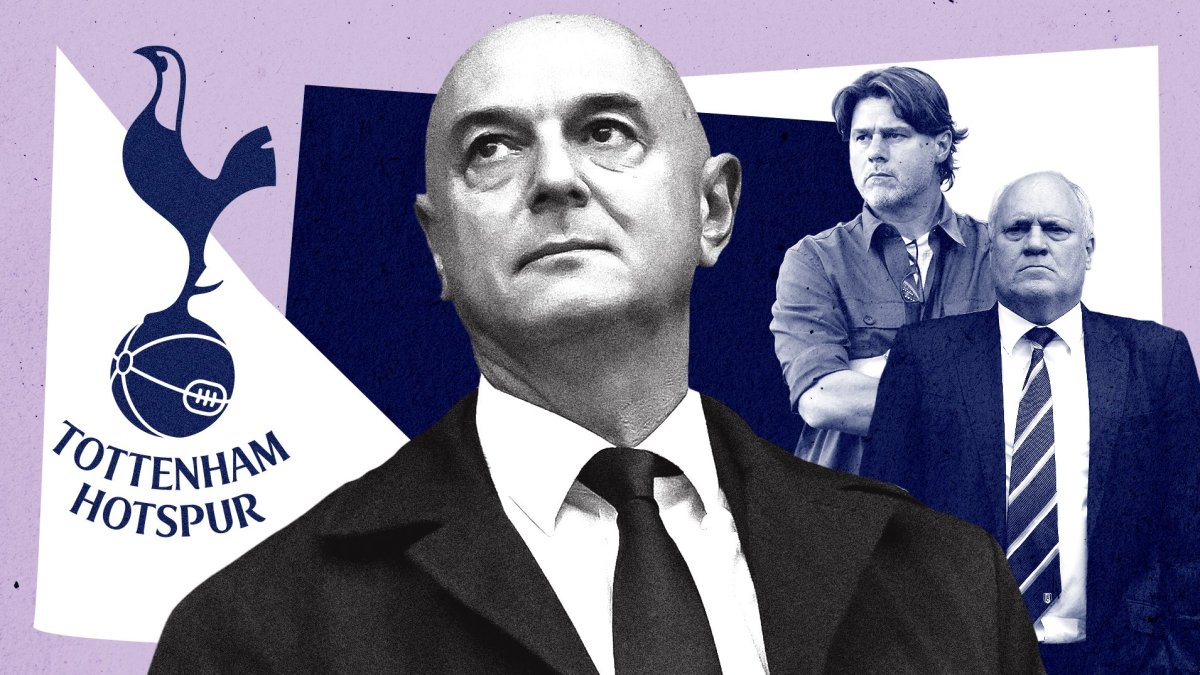
‘He didn’t sack me, Joe Lewis did’: Inside Daniel Levy’s Spurs, one year on
Full Article
Original Source
Read the full article at Inews →KhanList aggregates and links to publicly available news content. We do not host full articles from third-party sources. Always verify important information with original sources.