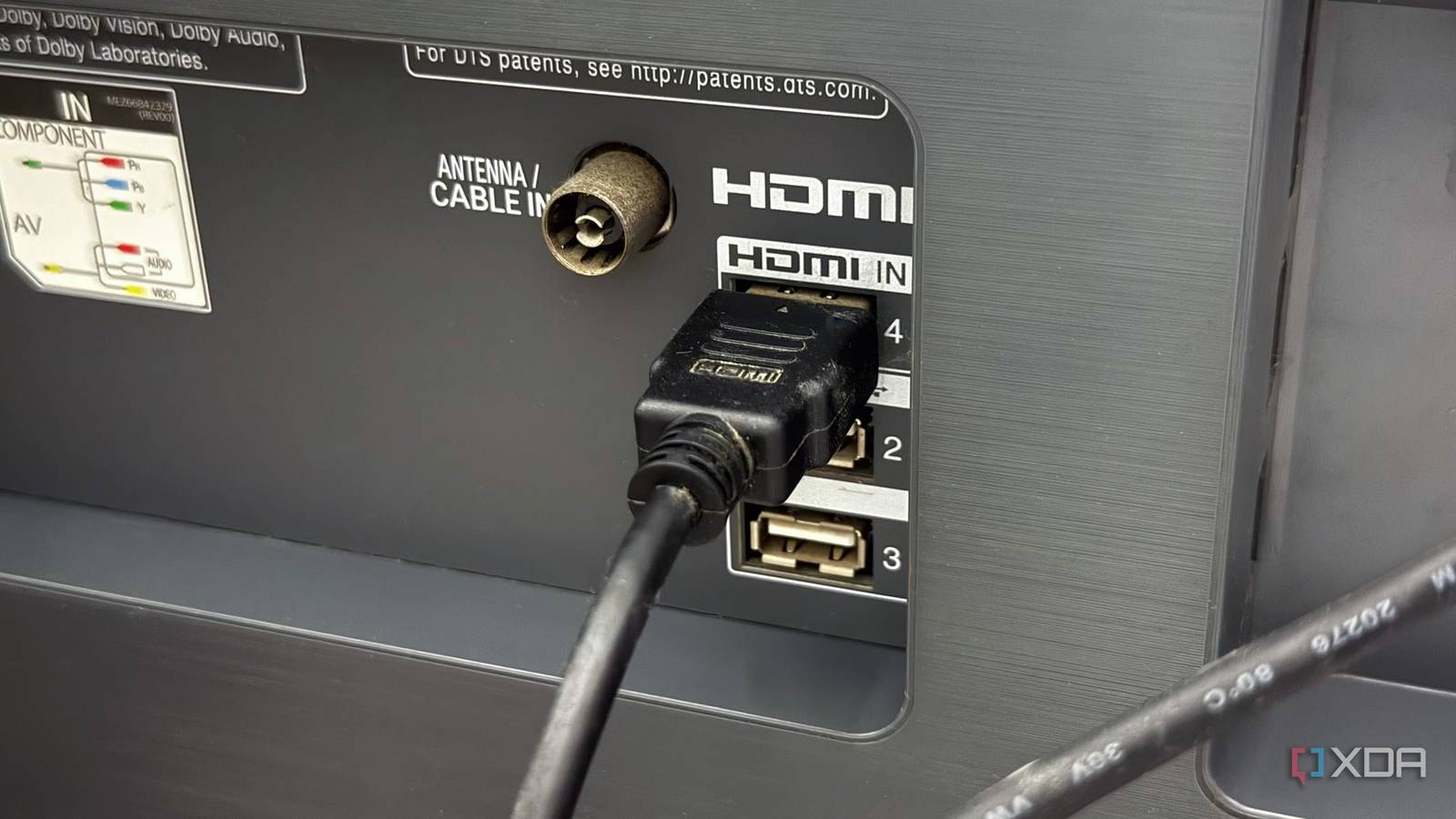
Published Aug 1, 2026, 4:30 PM EDT Hamlin has been in the tech field for over nine years. Since 2017, his work has appeared on MakeUseOf, Android Police, OSXDaily, Beebom, and more. He served as the Senior Editor at Valnet's MakeUseOf for over two years before joining XDA. He uses a high-end gaming rig for desktop use and a MacBook for traveling, but dislikes some of the quirks of macOS. You're more likely to catch him at the gym or on a flight than anywhere else. HDMI 2.2 was first announced at CES 2025, but it was too early to say much about it back then because the specs weren't even released to device and cable manufacturers. At CES earlier this year, though, we saw Ultra96 cables being showcased, which means we're closer to seeing the first wave of HDMI 2.2 devices hit the market. But as interesting as a new HDMI standard may sound, especially for a gamer like me, HDMI 2.1 is still more than enough for the devices I use it with, like my OLED TV and PS5. On paper, HDMI 2.2 offers twice the bandwidth of HDMI 2.1, supporting up to 96Gbps, and that's enough to drive higher refresh rate 4K and 8K displays without compression. It's a huge leap for HDMI, especially considering it has been playing catch-up with DisplayPort 2.1 in terms of bandwidth for the past few years. But what's the point when I rarely even take advantage of 120Hz or VRR on my OLED TV anyway? Even if HDMI 2.2 devices start showing up next year, I still don't see a compelling reason to upgrade. HDMI 2.1 already offers plenty of bandwidth Do I really need HDMI 2.2 when I'll probably never utilize 96Gbps? One of the standout features of current-gen consoles that launched six years ago is support for 4K gaming at 120Hz. But as someone who has owned a PS5 since 2021, I can count the number of times I took advantage of 120Hz on my OLED TV with one hand. Even the AAA games that support 120Hz, like Call of Duty: Warzone and Battlefield 6, usually get there by dropping the resolution. Despite that, it's not a locked 120FPS experience. That’s true even with the PS5 Pro, which is more powerful yet still can't consistently deliver 4K at 120Hz. Sure, you could say HDMI 2.2 could benefit PC gamers who use high refresh rate 4K monitors. But the HDMI 2.1 port on my Alienware AW2725Q already supports 4K/240Hz with Display Stream Compression. In fact, its older DisplayPort 1.4 port can also handle that with DSC enabled, which makes it even harder for me to justify caring about HDMI 2.2 right now. If I'm not truly limited by HDMI 2.1 on either my console or gaming PC, that extra bandwidth feels like headroom I simply won't need for at least a few more years. It will take years for devices to catch up With 8K TVs being a dying breed, HDMI 2.2 feels unnecessary for most people Remember the hype around 8K TVs a few years ago? These days, Samsung is the only major manufacturer still making 8K TVs, while LG, Sony, and TCL have completely moved on. Now that I know 8K isn't the future of TVs, I see no reason why the average consumer would bother upgrading to cables that offer more bandwidth than they really need. Unless you're a gamer, most of the content you watch probably won't even benefit from a panel that goes beyond 60Hz. On top of that, even if we get a 4K/240Hz OLED TV in the next year or two, you still need the rest of your hardware to support HDMI 2.2. For instance, the RTX 5090 can handle 4K gaming at those refresh rates, but it doesn't support HDMI 2.2. And if you're a console gamer, you'll probably need to wait for the next-gen PS or Xbox before HDMI 2.2 becomes relevant. Either way, what are the chances you'll actually be gaming at 4K/480Hz anytime soon? With 4K/120FPS being a struggle even on high-end PCs, we're talking about years before devices can fully utilize HDMI 2.2's bandwidth. That doesn't mean HDMI 2.2 is useless today But these niche use cases don't matter to me anyway HDMI 2.2 is worth looking forward to if you have a complicated home theater setup with an AV receiver or soundbar. It introduces the Latency Indication Protocol (LIP), which is designed to address lip-sync issues by improving audio and video synchronization across devices in the signal chain. Another benefit of HDMI 2.2's bandwidth is that you won't have to rely on Display Stream Compression, especially if you've been using DisplayPort 1.4 to connect your 4K/240Hz monitors. The catch, though, is that you'll need to upgrade your entire setup just to reap those benefits. Having an HDMI 2.2 monitor isn't enough to get 4K/240Hz without DSC, because you'll need a next-gen GPU that supports the standard too. Likewise, you'll need a new AV receiver, TV, and cables just to fix lip sync issues. These problems aren't relevant to me since I don't have a home theater setup. And I'm totally fine using DSC because it's not like anybody can tell the difference. But if I really want an uncompressed signal, current-gen GPUs and newer monitors already give me that option through DP 2.1. It's just too early for HDMI 2.2 to matter HDMI 2.2 is, without a doubt, a huge upgrade in terms of bandwidth. Going from 48Gbps to 96Gbps is going to open the door to higher refresh rate displays down the line. But most of us have no real reason to get excited about this standard when HDMI 2.1 isn't limiting us outside of a couple of niche scenarios. Maybe this will change once we start getting hardware that can actually take advantage of those refresh rates, but I don't see us getting there for at least a few years.
HDMI 2.2 is almost here, but I have no reason to upgrade
Full Article
Original Source
Read the full article at Xda-developers →KhanList aggregates and links to publicly available news content. We do not host full articles from third-party sources. Always verify important information with original sources.