
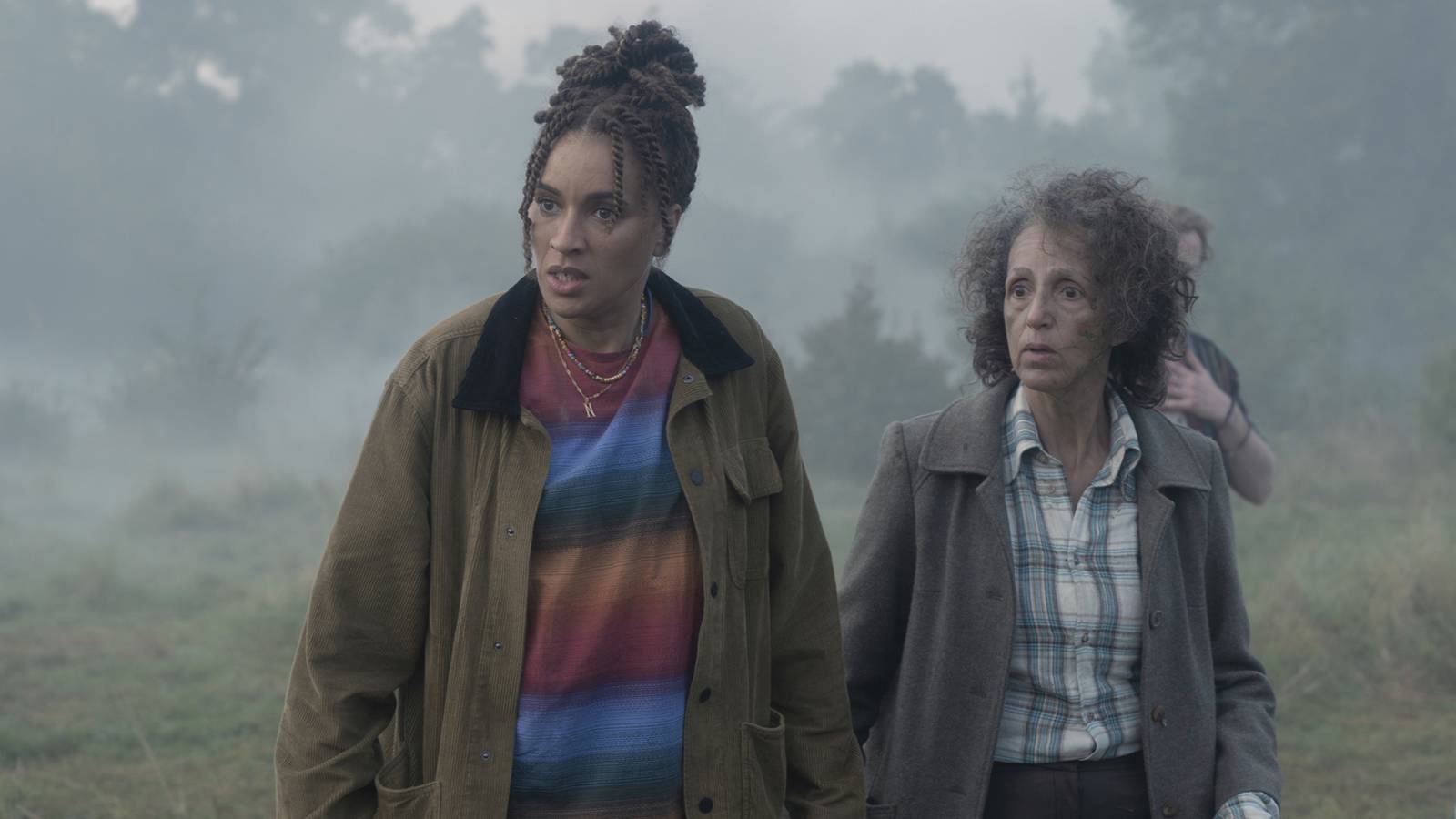
Image via HBO Published Aug 9, 2026, 9:20 PM EDT Currently a features writer at Collider, Elisa Guimarães is an arts and entertainment journalist and a critic with over a decade of experience. Passionate about movies and TV shows as a whole, she started her career when she was still in college, writing for a local newspaper after a brief stint in film school. However, her love for all things media-related can be dated back to her childhood, as she was raised in a family of librarians and cinephiles. She adores coming of age stories, true crime, teen dramas, science fiction, horror, and some other things as well. Elisa is also a published author of short stories in Portuguese, as well as a translator and a master in linguistics. As of 2023, she's in the process of working towards her PhD. Sign in to your Collider account Demonic children are nothing new to the world of horror. Whether they're the actual spawn of the devil, like the titular baby from Rosemary’s Baby, just plain evil, like Orphan’s not-so-little Esther (Isabelle Fuhrman), or something in between, like the various children touched by the supernatural from The Ring, The Exorcist, and many, many other movies, this particular kind of enfant terrible has been making the rounds ever since the dawn of the genre. They appear in stories about the corruption of the innocent, the fear of evil hiding in plain sight, and, of course, the trials and tribulations of becoming a parent — particularly, a mother. There is, after all, something inherently terrifying in bringing a whole new human being into the world and raising them without a blueprint, with no clear idea of what they’ll become. Thus, it isn’t rare to find horror stories that are, in the end, about nothing more than the strangeness of fostering another person into your own body or discovering that your sweet baby isn’t as sweet as you thought. All of these stories take a complex look at a part of many women’s lives that is usually romanticized, giving us a somewhat exaggerated glimpse of how hard becoming a mother can be. But no story accomplishes this goal quite like HBO’s horror-comedy miniseries The Baby. What Is 'The Baby' About? Created by Lucy Gaymer and Siân Robins-Grace, The Baby tells the story of 38-year-old Natasha (Michelle de Swarte), a carefree and child-free woman who is less than thrilled by the fact that all her friends are suddenly having babies. Unable to deal with the shift in her friends’ lifestyles, Natasha pushes them away with her callousness and even seems to judge them for being mothers. However, her life takes an unexpected turn when a small, adorable, and utterly diabolical baby comes into her life. Collider Exclusive · Horror Survival Quiz Which Horror Villain Do You Have the Best Chance of Surviving? Jason Voorhees · Michael Myers · Freddy Krueger · Pennywise · Chucky Five killers. Five completely different ways to die — if you're not smart enough, fast enough, or self-aware enough to avoid it. Only one of them is the villain your particular set of instincts gives you a fighting chance against. Eight questions will figure out which one. 🏕️Jason 🔪Michael 💤Freddy 🎈Pennywise 🪆Chucky TEST YOUR SURVIVAL → 01 Something feels wrong. You can't explain it — you just know. What do you do? First instincts are the difference between the survivor and the first act casualty. ALeave immediately. I don't need to understand a threat to respect it. BStay quiet and observe. If I can see it, I can understand it. If I can understand it, I can avoid it. CStay awake. Whatever this is, I am not going to sleep until I feel safe again. DConfront it directly. Fear grows in the dark — I'd rather know what I'm dealing with. ECheck everything, trust nothing. The threat might be closer than I think — and smaller. NEXT QUESTION → 02 Where are you most likely to find yourself when things go wrong? Setting is everything in horror. Where you are determines which rules apply. ASomewhere remote — a cabin, a campsite, off the grid and away from people. BA quiet suburban neighbourhood where nothing ever happens. Except tonight. CIn my own head — the most dangerous place of all, depending on what's already in there. DWherever children are — because something about this place attracts the worst things. ESomewhere ordinary — a house, a toy store, a place where the last thing you'd expect is a threat. NEXT QUESTION → 03 What is your most reliable survival asset? Every survivor has a quality the villain didn't account for. What's yours? APhysical fitness — I can run, I can swim, I can outlast something that relies on brute persistence. BSpatial awareness — I always know the exits, the hiding spots, the fastest route out. CPsychological resilience — I've faced my worst fears before. They don't have the same power over me. DEmotional steadiness — I don't panic. Panic is what gets you caught. EScepticism — I don't underestimate threats because of how they look. Size is irrelevant. NEXT QUESTION → 04 What kind of fear is hardest for you to fight through? Knowing your weakness is the first step to not dying because of it. AThe unstoppable — something that will not stop, cannot be reasoned with, and is always getting closer. BThe invisible — a threat I can feel but can't locate, watching from somewhere I can't see. CThe psychological — something that uses my own mind and memories against me. DThe unknowable — something ancient, shapeless, that feeds on the fear itself. EThe mundane — a threat so ordinary-looking that no one will believe me until it's too late. NEXT QUESTION → 05 You're with a group when things start going wrong. What's your role? Horror movies are brutally clear about who survives group situations and who doesn't. AThe one who says "we need to leave" first — and means it, even when no one listens. BThe one who stays quiet, watches the others, and figures out the pattern before anyone else does. CThe one who holds the group together when panic sets in — because someone has to. DThe one who asks the questions nobody wants to ask — because ignoring them gets people killed. EThe one who takes the threat seriously when everyone else is laughing it off. NEXT QUESTION → 06 What's the horror movie mistake you're most likely to make? Honest self-assessment is a survival skill. Denial is not. AGoing back for someone — I know I shouldn't, but I can't leave them behind. BAssuming I'm safe once I've found a hiding spot. That's when it finds me. CFalling asleep when I absolutely cannot afford to. Exhaustion is its own enemy. DLetting my curiosity override my instincts — I always need to understand what I'm dealing with. EDismissing the threat because of how it looks. That's exactly what it wants. NEXT QUESTION → 07 What's your best weapon against something that can't be stopped by conventional means? Every horror villain has a weakness. The survivors are always the ones who find it. AThe environment itself — I use the terrain, the water, the geography against it. BPatience — I wait, I watch, and I strike at the one moment it doesn't expect. CLucidity — if I can stay in control of my own mind, it loses its primary weapon. DCourage — facing it directly, refusing to run, taking away the fear it feeds on. EImprovisation — I use whatever's at hand, however unconventional. Creativity over brute force. NEXT QUESTION → 08 It's the final scene. You're the last one standing. How did you make it? The final survivor always has a reason. What's yours? AI kept moving. I never stopped, never hid for too long, never let it corner me. BI figured out the pattern before anyone else did — and I used it against the thing following it. CI stayed awake, stayed lucid, and refused to give it the one thing it needed most. DI stopped being afraid of it. And the moment I did, everything changed. EI took it seriously from the start — and I never once made the mistake of underestimating it. REVEAL MY VILLAIN → Your Survival Odds Have Been Calculated Your Best Chance Is Against…Your instincts, your strengths, and your particular way of thinking under pressure point to one villain you actually have a fighting chance against. Everyone else — good luck. Jason VoorheesJason is relentless, but he is also predictable — and that is the gap you would exploit. He moves in straight lines toward his target. He doesn't strategise, doesn't adapt, doesn't outsmart. He simply pursues. Your ability to keep moving, use the environment, and resist the panic that freezes most victims gives you a genuine edge. The Crystal Lake survivors were always the ones who stopped running in circles and started thinking about terrain, water, and distance. You think like that. Which means Jason, for all his indestructibility, would face someone who simply refused to be where he expected. Michael MyersMichael watches before he moves. He is patient, methodical, and almost impossible to detect — until it's too late for anyone who isn't paying close enough attention. But you are paying attention. You notice the shape in the window, the car parked slightly wrong, the silence where there should be sound. Michael's power lies in the invisibility of ordinary suburbia — the fact that nothing ever looks wrong until it already is. Your spatial awareness and instinct to map every room, every exit, and every shadow before you need them is precisely the quality Laurie Strode had. You are not a victim waiting to happen. You are someone who already suspects something is wrong — and acts on it. Freddy KruegerFreddy wins by getting inside your head — using your own fears, your own memories, your own subconscious as weapons against you. That strategy requires a target who can be destabilised. You are harder to destabilise than most. You've faced uncomfortable truths about yourself and you haven't looked away. The survivors on Elm Street were always the ones who understood what was happening and chose to face it rather than flee from it. Freddy's greatest weakness is that his power evaporates in the presence of someone who refuses to give him the fear he feeds on. Your psychological resilience — the ability to stay grounded when reality itself becomes unreliable — is exactly the quality that keeps you alive here. PennywisePennywise is ancient, shapeshifting, and feeds on terror — but it has one critical vulnerability: it cannot function against someone who genuinely stops being afraid of it. The Losers Club didn't survive because they were braver than everyone else. They survived because they faced their fears together, and faced them honestly. You ask the questions others avoid. You look directly at what frightens you rather than turning away. That directness — the refusal to let fear fester in the dark — is Pennywise's worst nightmare. It chose the wrong target when it chose you. You are exactly the kind of person whose fear tastes like nothing at all. ChuckyChucky's greatest advantage is that nobody takes him seriously until it's already too late. He exploits the gap between how something looks and what it actually is. You don't have that gap. You take threats seriously regardless of how they present — and you never make the mistake of underestimating something because of its size or appearance. Chucky relies on surprise, on the delay between recognition and response. You close that delay faster than almost anyone. Your instinct to treat every unfamiliar thing with appropriate scepticism — rather than dismissing it because it seems absurd — is the exact quality that keeps you breathing. Against Chucky, not laughing is already winning. You are very good at not laughing. ↻ RETAKE THE QUIZ Brought to life by twins Albie and Arthur Hills and a team of skilled VFX professionals, the titular baby doesn’t enter Natasha’s life through any conventional way. There are no disturbing pregnancies or creepy orphanages in her path. The infant simply falls into Natasha’s arms as she is standing on an empty beach by a cliff where she was hoping to catch some rest from day-to-day stress. Right away, the baby imprints on Natasha, and there’s absolutely nothing she can do to get rid of him. No matter how much she tells people that this is not her baby, everyone reacts to seeing them together either by congratulating her for becoming a mother or by complaining that she didn’t tell them sooner. To add insult to injury, the baby simply kills or maims everyone who stands in their way using his seemingly endless energy and psychic abilities. And who’s to blame for the chaos that ensues but Natasha? The True Villain of 'The Baby' Is, Unsurprisingly, the Patriarchy Image via HBO Right off the bat, it’s easy to see the most obvious way in which The Baby forces us to look at mothers under a different light. For being so judgy and unaccommodating towards her child-rearing friends, Natasha receives the visit of the demon baby equivalent of the Ghost of Christmas Present and learns that she needs to step up. Her friends are stressed, lonely, and in need of help, and it’s not their fault that their children have insomnia right in the middle of poker night. By the end of the series, Natasha learns her lesson and becomes someone on whom her mommy friends can rely on to feel more like full human beings instead of someone who just exists to look after a child. It’s all plain and simple, and yet, this PSA side of The Baby is the least interesting of the many ways in which the show casts a humanizing look on being a mother. The show slowly reveals the baby's origins through Mrs. Eaves (Amira Gahazalla), who has been tracking the child, and the revelation of what the baby represents is more nightmarish than the baby. He is, in Mrs. Eaves words, “a bottomless pit of need”. He attaches himself to women who don’t have and don’t want children and demands from them unconditional, undivided love and attention. When they fail to give it to him, he gets rid of them, usually in pretty gruesome ways. Through flashbacks, we learn that back in the 60s, when Mrs. Eaves was just Nour (Seyan Sarvan), she fell in love with a woman named Helen (Tanya Reynolds). Her love was reciprocated, but there was a catch: Helen was married and pregnant with her first child. In much more homophobic times, Helen’s husband drags her away from Nour, claiming that his wife is being corrupted, and forces her to take the pregnancy to term under inhumane circumstances. Helen is treated as a living, breathing incubator. In such an environment, there is no room for motherly love to flourish. Helen has an ideal of motherhood shoved down her throat — or into her arm, with a hypodermic needle — and the result is that it is impossible for her to have a healthy relationship with her child. Being forced to become a mother means that the ideal nuclear family she's part of is less than ideal. Even after she escapes, Helen is trapped in the patriarchal mold that society has forced on her. This all leads her to kill herself, while the baby, on the other hand, lives on as a flesh-and-bone reminder of all the expectations and the strain that is put on mothers. 'The Baby' Makes Helen Into the Perfect Foil for Bobbi and Barbara Helen’s story stands in sharp contrast to that of Natasha’s estranged sister, Bobbi (Amber Grappy). Energetic and great with children, Bobbi is desperate to adopt a baby of her own. Not only does she believe that a baby will help heal her relationship with Sam (Genesis Lynea), she also feels that she has so much love to give that a child could find no better home than with her. But it’s precisely her enthusiasm that makes the social worker put her on a one-year waiting period before she can go through the adoption process again. While Helen didn’t want a baby at all, Bobbi wants a baby too much. She isn’t attuned to the reality of being a mother, and her high expectations are far from realistic. The same societal pressures towards motherhood that were at play in Helen’s storyline are at play in Bobbi’s own life. But the most intriguing parallel is between Helen’s story and that of Barbara (Sinéad Cusack), Natasha’s mother, whom she loathes for having abandoned her and Bobbi when they were kids. Now living in a commune, Barbara tries to win back Natasha’s trust and give her advice about the baby, not knowing the true danger he poses. Natasha is enraged by the fact that her absent mother is trying to give her parenting advice. Having grown up idolizing her father for taking care of her and Bobbi all by himself, Natasha can’t accept when her mother tells her that it was her father who asked her to leave. Barbara spent most of Natasha’s childhood lying in bed, too depressed to do anything. Natasha took care of her, and Barbara couldn’t help but feel guilty that she wasn’t able to love her daughter with the same intensity. That sadness and guilt were the reason why she left Natasha behind, but not before giving her a little sister whom she could shower that love on. When this revelation hits, Natasha is forced to deal with two harsh realities at the same time. The first one is that she also failed as a mother figure. She failed to give Bobbi all the love that was expected of her. Then, she has to face the fact that her mother isn’t the bad person she believed her to be. She was simply a human being, a woman who was just as tired as Natasha is now. On the other hand, little Natasha was just as demanding as her demon baby, even if she didn’t have the same psychic abilities. Her mother left not because she hated her nor because she didn’t think things through before having a child. She left because she couldn’t take it anymore. It was either leaving or dying. After learning this truth, Natasha is given the insight she never would have gotten had a supernatural killer baby not dropped onto her lap. While the horror and comedy elements are equally entertaining, it's this deeper aspect of The Baby that makes it a perfect watch — just maybe not for new mothers.
HBO’s Disturbing 8-Episode Horror-Comedy Is Too Good To Stay Forgotten
Full Article
Original Source
Read the full article at Collider →KhanList aggregates and links to publicly available news content. We do not host full articles from third-party sources. Always verify important information with original sources.