
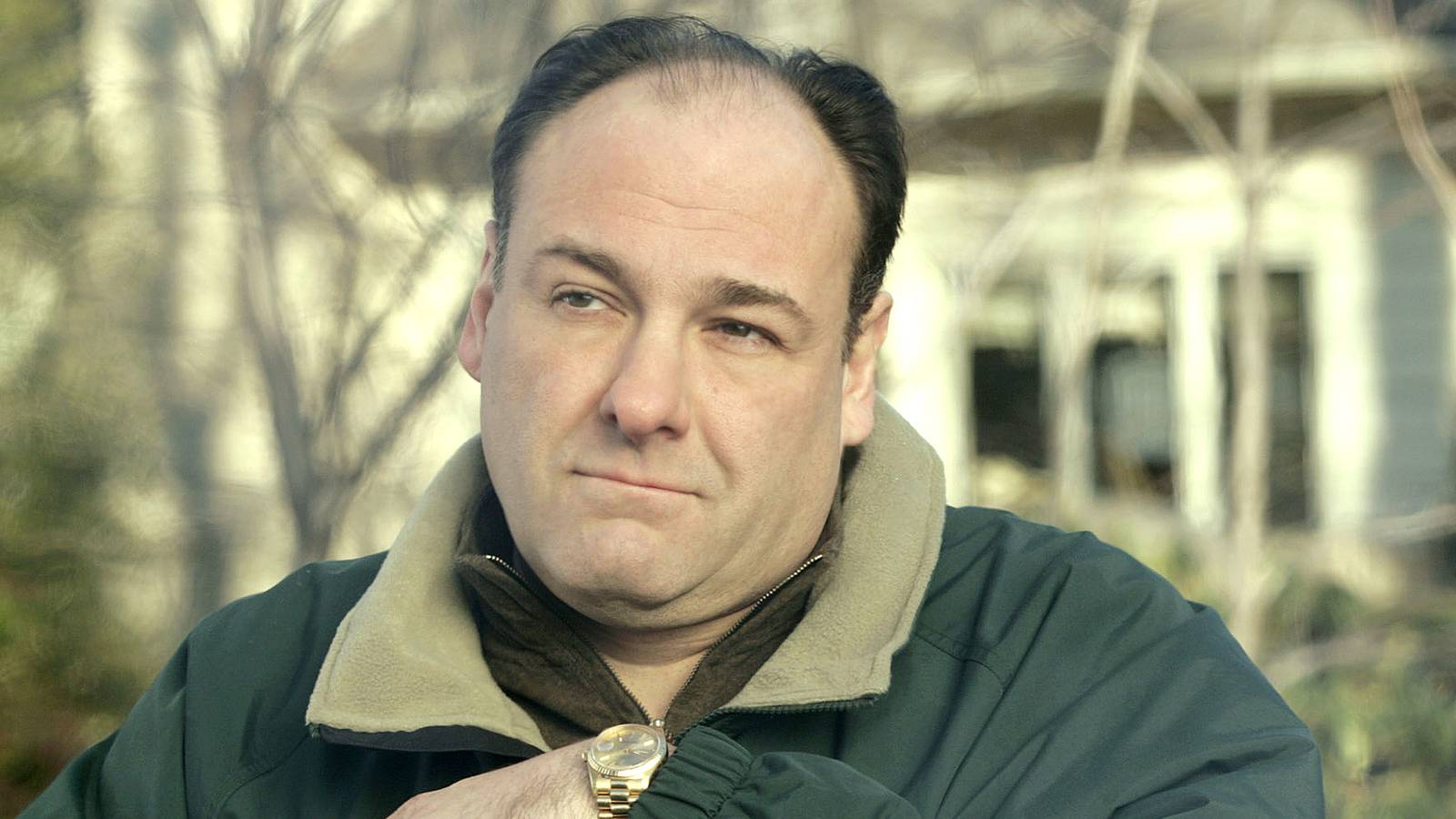
Published Aug 30, 2026, 7:27 PM EDT Shawn Van Horn is a Senior Author for Collider. He's watched way too many slasher movies over the decades, which makes him an aficionado on all things Halloween and Friday the 13th. Don't ask him to choose between Michael Myers and Jason Voorhees because he can't do it. He grew up in the 90s, when Seinfeld, Everybody Loves Raymond, and TGIF were his life, and still watches them religiously to this day. Larry David is his spirit animal. His love for entertainment spreads to the written word as well. He has written two novels and is neck deep in the querying trenches. He is also a short story maker upper and poet with a dozen publishing credits to his name. He lives in small town Ohio, where he likes to watch professional wrestling and movies. In 1999, David Chase created one of the most iconic series in history with The Sopranos, making him one of television's biggest creators and turning series star James Gandolfini into a Hollywood sensation. Over six seasons, millions of viewers spent every Sunday night glued to their televisions to find out what would happen, which often involved who would die next. In the HBO two-part docuseries Wise Guy: David Chase and the Sopranos, the creator talks about the inspiration for the series that he originally intended as a feature film. None of the big TV networks were interested in a story about a mob boss who had panic attacks and saw a therapist, but it got HBO's attention when Chase made one significant change that allowed the pieces to fall into place. 'The Sopranos' Allowed Creator David Chase To Write About His Family In Wise Guy, Chase discusses how the initial idea for The Sopranos came to be. In 1988, he was working on a show called Almost Grown. While looking for writers, he met future Sopranos writer Robin Green at a restaurant. The two hit it off immediately when the conversation turned to their mothers. Growing up, Chase's mom was a cold woman who didn't support his dreams or show him much affection. Green told Chase he should write a show about his mother and a TV producer. Chase didn't think much of the idea of basing a character on himself, and was more intrigued by the thought of making his lead a mobster instead. Chase also considered spinning this idea into a movie, and admits in Wise Guy that he wanted to go big with his dream casting, saying, "I wanted to get [Robert] De Niro and Anne Bancroft." Chase ultimately fleshed out the idea of a troubled mobster who has to see a therapist because he's having panic attacks. A major part of his problems stems from his uncle and his mother, the latter of whom he has put in a nursing home. The two are conspiring to have the mobster killed, and the shrink helps him in the wake of this revelation. The film was originally planned to end with the mobster killing his mother by suffocating her to death. After deciding to turn his feature into a TV pilot instead, Chase took his script to the four major TV networks. None of them were interested in the idea of a mob boss seeing a shrink, and Chase refused to abandon the premise, so the pitch originally died. David Chase Decided To Add Murder to His Pilot Script for 'The Sopranos' After his original pitch was rejected, Chase continued to work in network TV on series like Bill Bixby's The Magician, The Rockford Files, I'll Fly Away, and Northern Exposure while dreaming of becoming a movie director. While he had a secure career, Chase admitted in Wise Guy that he knew "what the limits were." Network TV had rules about what you could and couldn't show on screen, and even though writers tested those rules, they always lost. Chase was so stuck under the rules of network TV, in fact, that his dream pilot script had no actual murder in it! On Wise Guy, he refers to The Sopranos as "a mob show where nobody got killed," mostly because he didn't think a network would accept that. After thinking about the old black-and-white mobster movies of the 1930s, or Francis Ford Coppola's The Godfather, and how important death and murder were to the plot, Chase then questioned why he would ever leave that out of The Sopranos. He rewrote his first script to add more deaths on-page and decided to repitch the show to HBO in 1997. Not only was this a major risk, but it was also considered a downgrade at the time. HBO was still mostly considered a premium movie channel, airing only a few small series like The Larry Sanders Show and Oz. Because of this significant last-minute change, HBO was interested. In 'The Sopranos,' Death Is Part of the Story Without Being Glamorized Image via HBO So, so many people die in The Sopranos. With every season that aired, viewers knew that there was a good chance their favorite character was going to get whacked. Heck, for almost two decades, the biggest question of The Sopranos has revolved around whether Tony dies in the finale when the screen cuts to black. In Wise Guy, however, Chase admits that any character deaths in the series "had to be integral to the narrative." This point is proven by the fact that it takes until the fifth episode of Season 1 for Tony to even kill someone. In "College," Tony is taking his daughter, Meadow (Jamie-Lynn Sigler), to visit potential schools when he stumbles upon a former member of the DiMeo crime family who is now under witness protection after becoming an informant for the state. Tony sneaks away from Meadow to kill the guy, but HBO, which signed on when The Sopranos' pilot had been rewritten to include murder, now had qualms. As Chase recalls in Wise Guy, "You created one of the most dynamic characters in television history, and you're gonna blow it all." When they saw how gruesome the kill was, with Tony strangling this man to death, HBO was concerned that the audience would hate Tony and stop watching the show. Chase explained that Tony had to do it. He's a captain, and he's just discovered a rat. If he doesn't take drastic measures, viewers lose faith in him immediately. The Sopranos has plenty of murder, but it's often justified by those committing it, and it's rarely gory. On a character level, it also adds to who Tony Soprano is. Killing people doesn't make him more of a cool badass; instead, it makes him even more troubled. He doesn't want to resort to murder, but he has to embrace it at times, and that only contributes to the series' drama and lasting legacy. Almost 30 years later, The Sopranos couldn't have existed without it.
HBO Only Agreed To Make 'The Sopranos' After Its Creator Made This Shocking Change
Full Article
Original Source
Read the full article at Collider →KhanList aggregates and links to publicly available news content. We do not host full articles from third-party sources. Always verify important information with original sources.