
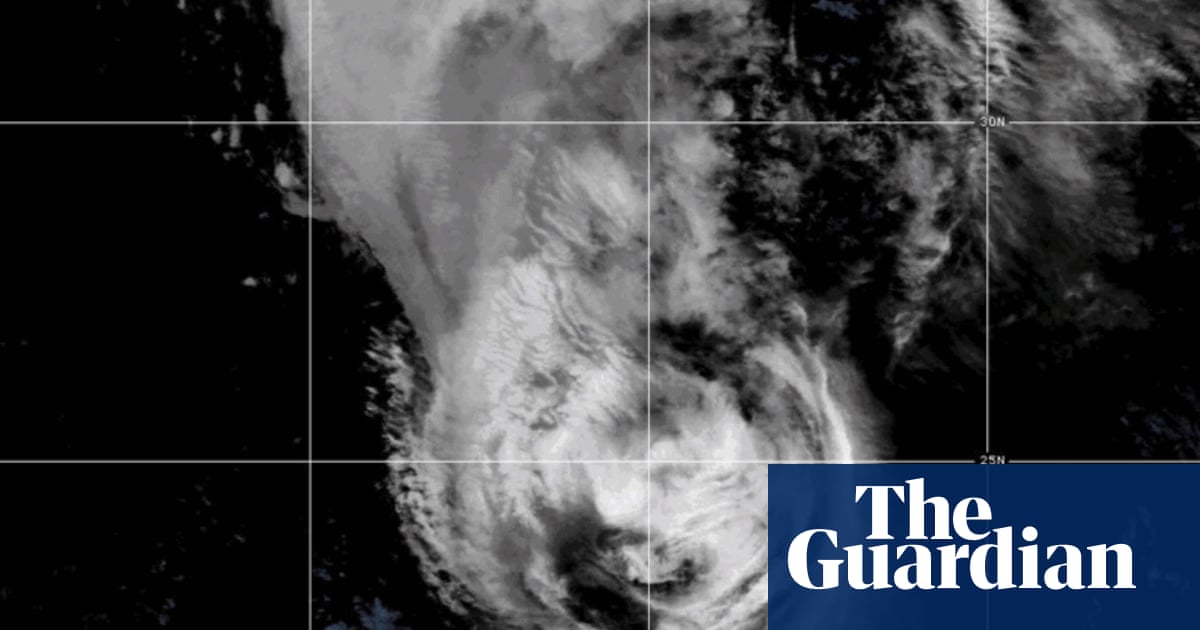
Hurricane Lowell surged near the Hawaiian Islands this week, leaving a trail of downed trees and power lines, crumbled roads, sunken boats and destroyed piers on the island of Kauai.Residents were left to grapple not only with the damage, but the rising risks to the tropical archipelago as sea surface temperatures climb.Despite its location, stretching across roughly 1,500 miles in the central north Pacific Ocean, Hawaii typically avoids the worst effects from hurricanes. In fact, the island chain so often dodges direct hits from the violent storms, that it’s been quipped they have a force field around them.But Lowell was the second named storm to brush by the islands so far this year. In August, Hurricane Lala hit the Big Island and Oahu with damaging winds, the first time hurricane-force gusts have been recorded there in 155 years.“An event of this magnitude is somewhat rare,” Michael Brennan, director of the National Hurricane Center said during a recent broadcast discussion on Lowell’s forecast, adding that Hawaii has not had a direct hurricane landfall since Iniki in 1992. That violent storm unleashed 145 mile-per-hour winds as it tore through Kauai, destroying or damaging roughly 70% of the island’s homes and businesses.It’s not luck (or a force field) that typically protected the islands, but location, according to Dr Nicholas Grondin, assistant professor of Environmental Science at the University of Tampa. Among the most isolated chain of islands on Earth, Hawaii is simply a small target in the vast open ocean, Grondin explained in an editorial published by the Conversation.Most approaching storms also must pass over cooler water temperatures to the east of the islands, which helps calm them. “Without warm oceans to provide fuel, hurricanes tend to weaken and fizzle out as they approach the islands,” Grondin said.Sea-surface temperatures in the tropical Pacific are, however, exceptionally warm this year due to El Niño. The climate phenomenon has already developed, but is expected to strengthen through the coming months typically limits hurricane activity in the Atlantic and enhances the development and strength of storms in the Pacific. Forecasters have warned it could reach a historic intensity.El Niño has caused hurricanes to form further to the south and west this year, according to Matthew Rosencrans, Noaa’s lead forecaster for the seasonal hurricane outlook, which “puts them in a place where they could make that westward run towards the Hawaiian islands”.It also makes for a lagging storm season. Hurricane risks typically extend from July to the end of November but fall off into the later months. September and October are far busier in El Niño years.The climate crisis has also played a part in strengthening the storms. The effects of El Niño are layered on top of the warming trends.Hurricane Lowell temporarily became a category 5 on 2 September. It swept over waters that were unusually warm, which helped fuel its ferocity. The sea surface temperatures along its path were “made up to 60 times more likely because of human-caused climate change”, according to a report from Climate Central, an organization of scientists and advocates who research impacts from global heating.Together, the climate crisis and El Niño are expected to supercharge extreme weather events around the world over the next year. For Pacific storms, Rosencrans said, it means they may carry more moisture and produce stronger winds.As efforts begin to clear debris and repair roads and infrastructure damaged during Lowell, emergency management officials must continue keeping close watch on the waters for the next big storm.“They just need to reset and regard any potential upcoming impacts,” Rosencrans said. “The season is not over – there is still a long bit to go.”
Hawaii has often dodged the path of hurricanes. Why did it see so many storms this summer?
Full Article
Original Source
Read the full article at Theguardian →KhanList aggregates and links to publicly available news content. We do not host full articles from third-party sources. Always verify important information with original sources.