
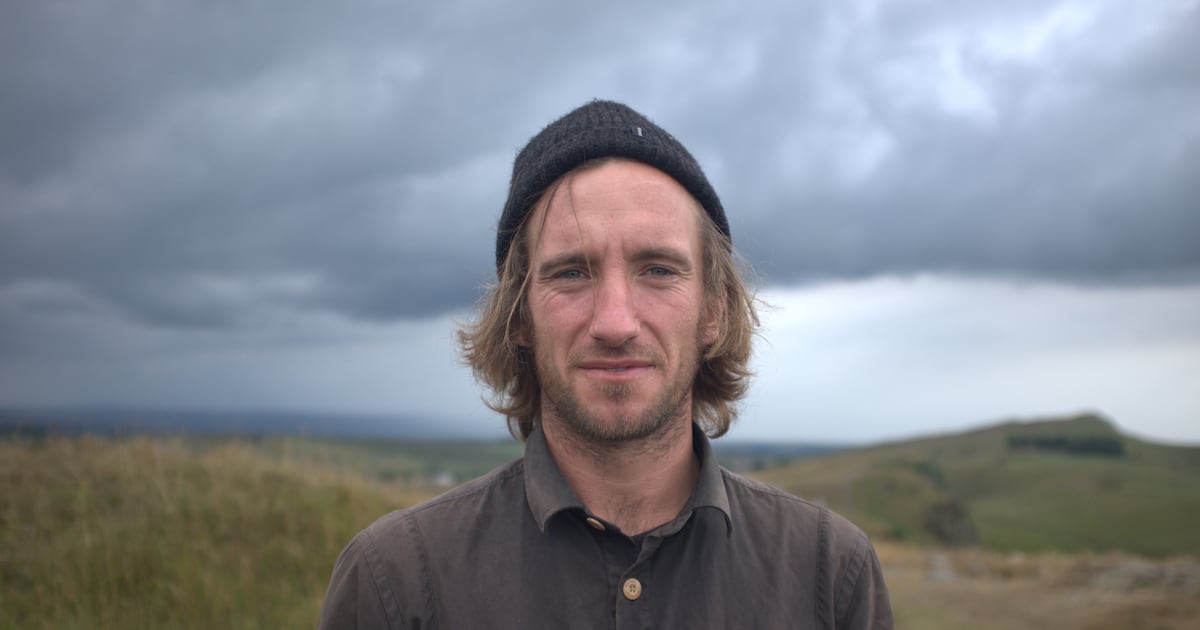
I can’t remember where I was exactly, maybe the Pacific or Indonesia, when my friend sent me a message saying, “I’ve just found the best wave in the world; you’re not going to believe it.”This was in 2007, and I came to the Cliffs of Moher for Aileen. It was waves like we’d never seen, and it had just been sitting there, forever unsurfed.I’m Cornish, and Ireland, especially the west coast, felt really like what I remember Cornwall to be.I travelled over with two other boys, and we had a really sweet time just surfing here. We spent like 100 days sleeping together in a double bed and tents, just trying to save money, surfing and making friends.READ MOREThe three of us had a trip planned to the Canary Islands, when one of our friends changed his plans and flew to London a day early. He got killed by a bus that night.When that happened, it really shook our little surf community.After the funeral, everyone went a bit psychotic on the waves. We had people with broken legs and arms and backs, and near-drownings. We were 19 years old and thinking, if we can get hit by a bus, then why are we holding back?In that small group of friends, it had a really big impact. Everyone has gone on to have an interesting life.Even though I left Ireland to go sailing around the world, hitchhiking, moving boats, exploring, I would always come back here two or three months a year. I just felt so much more at home here than in Cornwall.Matt Smith of Hometree in Co Clare. Photograph: Jem Smith On one of the trips back to Clare, two of my friends, Fergal Smith and Mitch Corbett, had started growing vegetables and I got involved. We started a farm called Moy Hill Community Farm, and we ran it as community-supported agriculture. People bought a share of the harvest rather than individual products.It was working really well, and then in 2014, Manchán Magan and I set up Hometree to restore woodlands within the landscape and connect people with nature.At the beginning it was just a community garden project, a weekend thing where we’d do tree-planting. Initially we used surfing connections to get the first few donations. The likes of Finisterre gave us €1,000, and we would buy a bag of trees and plant them at the farm.Manchán was a really big part of Hometree for many years. He wasn’t operational, but he was one of the founders and sat on the board. For me, as an expat, having him as part of that journey was pretty deep and meaningful.I used to ask him once or twice a year: “Do we need to remake the website so that it’s in Irish?” And he always said, “No, you just need to get on and do the nature thing.” I really miss him.After a few years, we saw that Hometree had tons of potential and it needed to go out and have a bigger impact in the wider landscape, so in 2020 we hired staff and gave it our full attention. We let it do whatever it could, and the phone kept ringing, and we worked hard. We got our first staff member in October 2021, and now there are 40 of us.[ ‘Grand Canyon-esque’: Atlas of the unseen brings Ireland’s deep sea wonders into the lightOpens in new window ]Over the next 10 years, we are trying to add nearly 60,000 acres of land into restoration through land partnerships and site acquisition. We are working with communities to ensure they are part of the restoration process both financially and practically.We’ve heard the stats over and over again that our landscape is in the worst condition it’s ever been in, and while Hometree might now be the biggest nature restoration NGO in the country, we probably don’t make any more than a fancy Dublin coffee shop.It is a hard thing for anybody to hear, but when we look back in 20 years, and we think, “I knew this, and yet I invested my money in that coffee shop every single day because it was slightly more convenient, or it took away the pain of existing a tiny bit more, rather than doing everything I could ... ” I wonder does that feel okay for people?It can be hard to consider these things, so I always say to turn it into an anecdote, a real one.Ask yourself whether the land that’s in your family, or the land that you know, has gotten better or worse in your lifetime. Be truthful to yourself.The next question is: what is a realistic response to the ecological situation that we’re in? Is a realistic response that you decide to join a nature charity and give them 25 bucks a month? Does that really change things? Or does it need to be more radical than that? I believe yes.Radical responses often turn people off. But I always think that with these big points of view, you need to ask yourself: in 20 or 30 years, will I regret not doing something about nature, or will I regret planting trees in my garden?I’m pretty sure you’re going to wish you’d done something.In conversation with Rosanna Cooney
‘Having Manchán Magan as part of the Hometree journey was pretty deep and meaningful’
Full Article
Original Source
Read the full article at Irishtimes →KhanList aggregates and links to publicly available news content. We do not host full articles from third-party sources. Always verify important information with original sources.